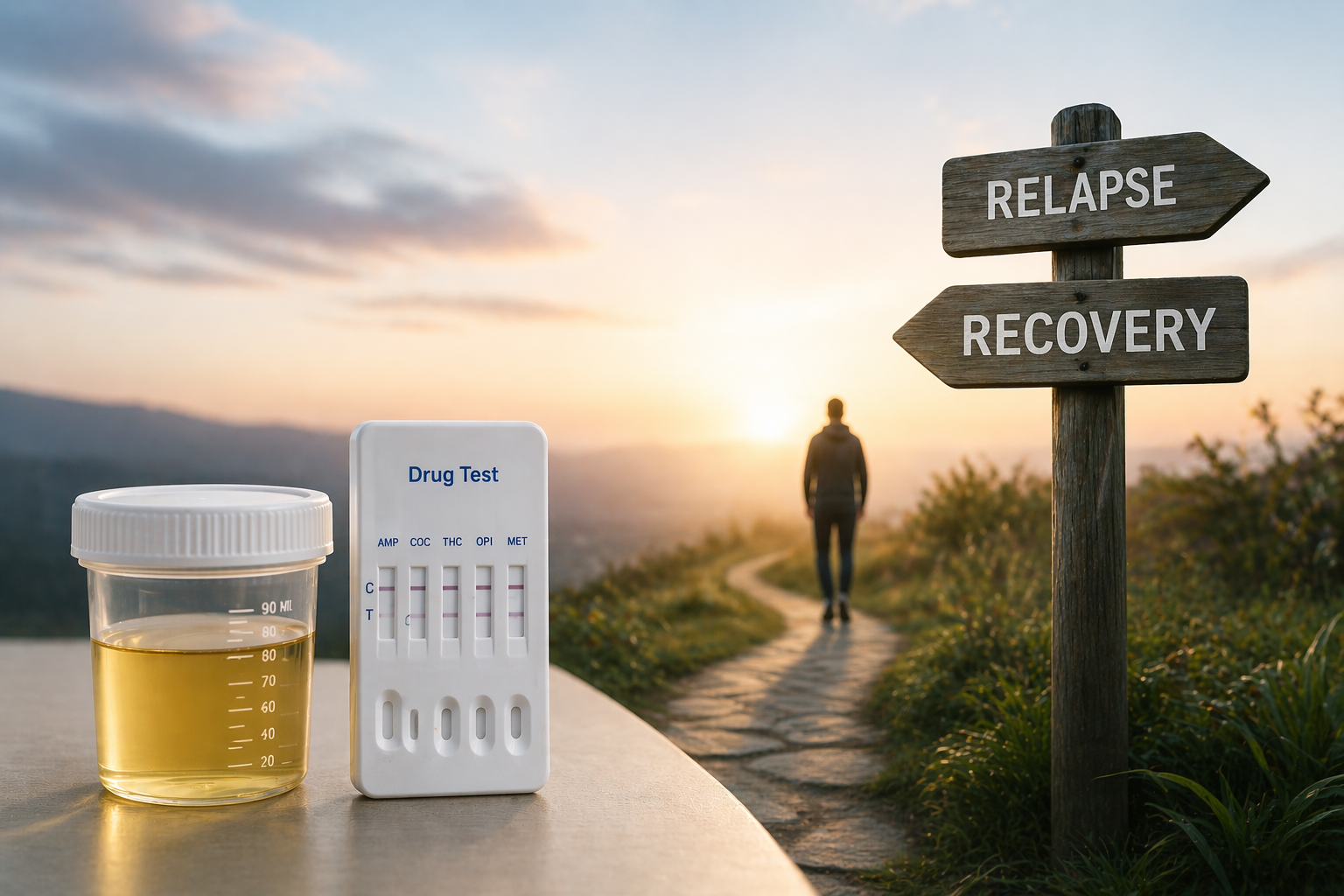
The link between drug testing and reduced relapse rates is very important in addiction treatment. Many people in addiction recovery face challenges every day. These challenges can lead to relapse if they are not managed well. Drug testing helps keep people on track and supports relapse prevention.
In drug rehab and substance abuse treatment, drug testing is used to check for drug use. It helps treatment teams understand what is happening in a person’s recovery process. When used the right way, it becomes a powerful relapse prevention tool.
What Is Drug Testing in Addiction Treatment?
Drug testing is a process that checks for drugs or alcohol in the body. It can detect alcohol, illicit drugs, and other substances. Common methods include urine, saliva, and blood tests.
In clinical addiction medicine, drug testing is used to:
Monitor substance use
Support treatment plans
Improve treatment outcomes
Help people remain abstinent
Lynk Diagnostics supports rehab centers by providing accurate drug test results. This helps healthcare teams make better decisions and improve recovery outcomes.
Why Relapse Happens During Recovery
Relapse occurs when someone returns to drug or alcohol use after trying to stop. It is common in substance use disorder and alcohol use disorder.
There are different stages of relapse:
Mental relapse (thinking about using again)
Initial lapse (a small return to use)
Full blown relapse (regular use again)
Triggers for relapse include:
Withdrawal symptoms
High risk situations
Stress and mental health issues
Lack of social support
Understanding these risks helps create strong relapse prevention programs.
How Drug Testing Helps Prevent Relapse
Drug testing plays a big role in addiction relapse prevention. It works in several ways.
Accountability and Awareness
When individuals recovering know they will be tested, they are more likely to stay committed. This creates accountability and helps prevent uncontrolled use.
Early Detection of Drug Use
Drug testing can detect alcohol and other substances early. This helps treatment teams act quickly before a full relapse happens.
Support for Treatment Plans
Drug test results give real data. This helps adjust treatment plans based on what is working or not working.
Encouraging Positive Behavior
Programs may use positive reinforcement. When tests are clean, patients feel proud and motivated to continue their recovery.
Drug Testing as a Significant Predictor of Success
Research shows that drug testing is a significant predictor of improved outcomes. Studies and clinical trials suggest that people who are monitored closely have better treatment effectiveness.
A systematic review of addiction treatment programs found that consistent monitoring helps lower relapse rates. It also supports long term recovery.
This shows that drug testing is not just about catching drug use. It is about helping people stay on track.
Combining Drug Testing With Therapy
Drug testing works best when combined with behavioral therapies and psychosocial interventions.
Cognitive Behavioral Therapy (CBT)
Cognitive behavioral therapy helps people change negative thoughts. It teaches coping skills to handle high risk situations.
Motivational Interviewing
Motivational interviewing helps individuals stay focused on their goals. It builds confidence in the recovery process.
Contingency Management
This approach uses rewards for staying clean. Drug testing confirms progress and supports this method.
Together, these therapies improve recovery outcomes and help prevent relapse.
The Role of Pharmacological Treatments
Pharmacological treatments are also important in addiction treatment. These include medications for opioid use disorder and alcohol addiction.
Examples include:
Opioid agonist therapy for opioid dependence
Medications to reduce alcohol relapse
Drug testing helps make sure these treatments are working. It also helps avoid adverse effects and misuse of medications.
Supporting Recovery With Peer Groups
Peer support groups play a key role in relapse prevention. Groups like:
Alcoholics Anonymous
Narcotics Anonymous
SMART Recovery
These groups offer a supportive environment. They provide social support and help people stay motivated.
Drug testing adds another layer of support by giving clear proof of progress.
Family Members and Social Support
Family members are important in the recovery process. They help create a stable and supportive environment.
When combined with drug testing, families can:
Encourage accountability
Support relapse prevention interventions
Help individuals remain abstinent
Strong social support reduces the risk of relapse and improves long term recovery.
Drug Testing in Clinical Practice
In clinical practice, drug testing is used as part of a complete treatment program. It is guided by organizations like the national institute focused on addiction and mental health.
Healthcare providers use testing to:
Track patient progress
Adjust treatment plans
Improve treatment outcomes
Lynk Diagnostics helps rehab centers by providing reliable and fast testing services. This supports better care and improved outcomes.
Addressing Different Types of Addiction
Drug testing is useful for many types of addiction, including:
Opioid addiction
Alcohol addiction
Drug addiction involving certain drugs or other substances
Each type of addiction has unique challenges. Drug testing helps monitor use disorder and prevent relapse in all cases.
High Risk Situations and Relapse Prevention
High risk situations can lead to relapse. These include:
Stressful life events
Exposure to drug alcohol environments
Emotional struggles
Drug testing helps identify when someone may be at higher risk. This allows early intervention and better relapse prevention.
The Importance of Long Term Monitoring
Recovery is a long journey. Long term recovery requires ongoing support.
Regular drug testing:
Keeps individuals accountable
Tracks progress over time
Helps prevent relapse
This is especially important for individuals recovering from opioid use disorder or alcohol abuse.
How Drug Testing Improves Treatment Outcomes
Drug testing improves treatment effectiveness in many ways:
Provides clear data
Supports clinical decisions
Encourages positive behavior
Reduces relapse rates
It is a key part of successful addiction treatment and relapse prevention programs.
The Role of Lynk Diagnostics in Recovery
Lynk Diagnostics is a trusted partner for rehab centers. They provide accurate and timely drug testing services.
Their work supports:
Better treatment outcomes
Improved recovery outcomes
Stronger relapse prevention programs
By offering reliable testing, they help patients and providers succeed.
Future of Drug Testing in Addiction Recovery
Current research and further research continue to show the benefits of drug testing. New methods and technologies are being developed.
These advances will:
Improve accuracy
Detect alcohol and other substances faster
Support better clinical practice
This will lead to even better outcomes for individuals recovering from addiction.
FAQs
How does drug testing help reduce relapse rates?
Drug testing helps reduce relapse rates by providing accountability, early detection of drug use, and support for treatment plans.
Can drug testing detect alcohol use?
Yes, drug testing can detect alcohol and other substances depending on the test used.
Is drug testing used in all treatment programs?
Most treatment programs use drug testing as part of relapse prevention and to improve treatment outcomes.
What happens if a test is positive?
A positive test does not mean failure. It helps treatment teams adjust care and prevent a full relapse.
Does drug testing work with therapy?
Yes, drug testing works best when combined with behavioral therapies like cognitive behavioral therapy and motivational interviewing.
Conclusion
The link between drug testing and reduced relapse rates is clear. Drug testing supports addiction recovery by providing structure, accountability, and real data.
When combined with therapy, peer support groups, and pharmacological treatments, it becomes a powerful tool. It helps individuals recovering stay on track, avoid relapse, and achieve long term recovery.
With support from providers like Lynk Diagnostics, treatment programs can improve outcomes and help more people build a healthy, substance-free life.
Resources
National Institute on Drug Abuse (NIDA): https://nida.nih.gov
Substance Abuse and Mental Health Services Administration (SAMHSA): https://www.samhsa.gov
National Institutes of Health (NIH): https://www.nih.gov
American Society of Addiction Medicine (ASAM): https://www.asam.org