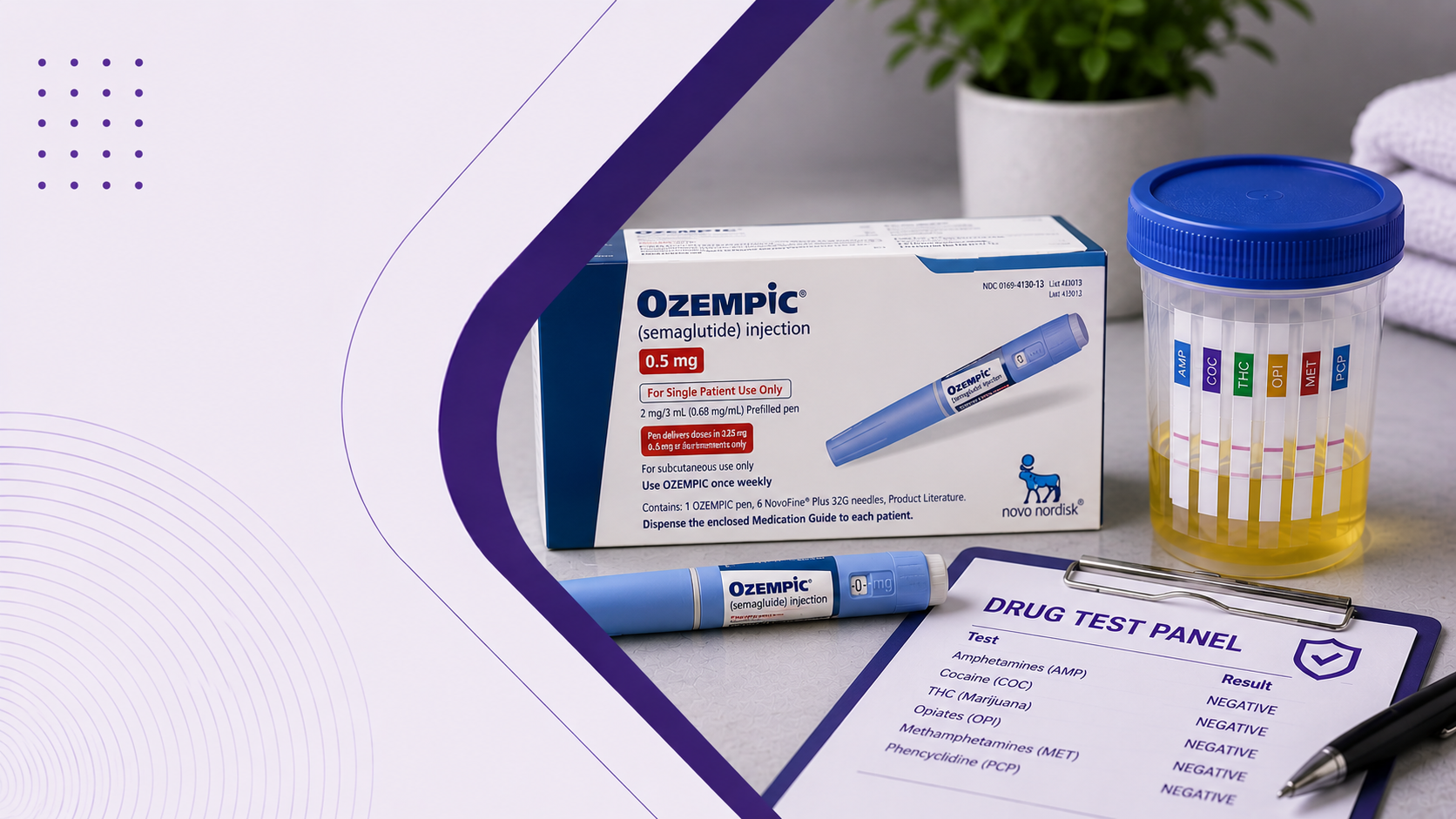
Does ozempic show up on a drug test? In most cases, no. Standard drug tests do not look for Ozempic or semaglutide. These tests are made to find controlled substances, illegal substances, and certain prescription drugs that may affect safety, recovery, or care.
Ozempic is an injectable medication used for diabetes management. Its active ingredient is semaglutide. Semaglutide is part of a class of medications called glp 1 receptor agonists. These medications work in a very different way than drugs tested in most drug screenings.
At Lynk Diagnostics, we help rehab facilities understand drug testing clearly. Our goal is to give simple answers, accurate testing support, and trusted information for teams caring for people in recovery.
What Ozempic Is and How It Works
Ozempic is a medication used to help control blood sugar in adults with type 2 diabetes. It may also support weight loss in some people because it can lower food intake and slow gastric emptying. This means food leaves the stomach more slowly.
Ozempic works like a hormone the body naturally produces. This hormone is called glp 1. The full name is glucagon-like peptide-1. Glp 1 helps the body respond to food. It helps the pancreas release insulin when blood sugar is high. It can also lower glucagon release, which may help improve blood glucose levels.
Glp 1 receptor agonists can help with blood glucose, fasting glucose, and long-term diabetes management. Some people may also see metabolic improvement, better lipid profiles, lower ldl cholesterol, lower total cholesterol, and improved cardiovascular risk markers over time.
Semaglutide generally stays in the body for a while because it has a long half life. But this does not mean it shows up on standard drug tests. A drug test is not the same as routine blood work or standard blood tests.
Why Standard Drug Tests Do Not Usually Detect Semaglutide
Standard drug tests are made to look for certain substances. These may include opioids, amphetamines, cocaine, marijuana, benzodiazepines, barbiturates, alcohol markers, and other controlled substances. Federal workplace drug testing focuses on specific drug classes and does not include glp 1 medications.
Ozempic is not an opioid, stimulant, sedative, hallucinogen, or illegal drug. It is not part of standard drug testing panels. This means most drug screenings will not detect semaglutide unless a special test is ordered for that exact medication.
A lab can detect semaglutide only when the test is designed to look for it. This type of test is not common in workplace, rehab, court, or federal workplace drug testing settings. Most standard drug tests are not built for glp 1 receptor agonists.
Drug testing looks for signs of substance use. Blood tests and blood work look at health markers. These are different tools used for different reasons.
Drug Testing vs. Blood Work
Drug testing checks for controlled substances and illegal substances. It may use urine, saliva, hair, or blood. Drug screenings are often used in rehab facilities, workplace programs, treatment centers, and safety programs.
Blood work checks health markers. Blood tests may look at blood sugar, kidney function, liver function, thyroid function, lipid panel numbers, metabolic markers, and signs of potential complications. Standard blood tests do not usually list Ozempic as a “positive” or “negative” drug result.
Routine blood work ordered by a healthcare provider may include comprehensive metabolic panels, lipid profiles, fasting glucose, liver enzymes, kidney and liver function, estimated glomerular filtration rate, and other metabolic markers. These blood test results may show changes linked to diabetes management, weight management, or treatment response, but they do not work like drug screenings.
For example, a person taking Ozempic may have improved blood glucose levels or lower blood sugar. They may also lose weight due to appetite suppression and reduced caloric intake. These are health changes, not drug test positives.
Can Ozempic Affect Blood Test Results?
Ozempic can affect some blood tests because it can change how the body handles blood sugar, weight loss, and metabolic health. It may improve fasting glucose, blood glucose, and other diabetes-related numbers. It may also affect lipid panel results, such as ldl cholesterol and total cholesterol.
A healthcare provider may order blood work before starting therapy and during routine monitoring. This can help check kidney function, liver enzymes, liver function, pancreatic enzymes, and other health markers. These standard laboratory panels help track safety and treatment response.
Some patients may need closer care if they have chronic kidney disease, kidney problems, or signs of kidney injury. Severe nausea, persistent vomiting, or dehydration may raise the risk of acute kidney injury. A healthcare professional may check kidney function with blood tests, urine tests, or estimated glomerular filtration rate.
Most patients do not need special drug testing for Ozempic. But they may need blood work if they have side effects, medical risks, or a change in health.
Safety Issues to Share With a Healthcare Provider
People should communicate openly with their healthcare provider about all medications they take. This includes Ozempic, oral semaglutide, insulin, and other diabetes medications. It is also important to share supplements, over-the-counter drugs, and any medication used for weight management.
A healthcare provider may ask about personal or family history of certain thyroid problems. Semaglutide carries a warning about thyroid c cell tumors based on animal studies. People with a personal or family history of medullary thyroid carcinoma may be told not to use this medication. A healthcare professional may also ask about thyroid nodules or other thyroid function concerns.
People should get medical help for severe or persistent abdominal pain, especially if it comes with persistent vomiting. Abdominal pain may be a sign of possible pancreatitis or other potential complications. A provider may order pancreatic enzymes or other blood tests when needed.
Dose escalation should be done only as directed. Medications work best when taken the right way. Taking more medication than prescribed can raise the risk of side effects.
Why Rehab Facilities May Ask About Ozempic
Rehab facilities may ask about Ozempic because they need a full medication list. This does not mean Ozempic is treated like an illegal drug. It means the care team needs to understand the person’s health, nutrition, blood sugar, and possible side effects.
Some people in recovery may also be managing diabetes, weight loss, or chronic illness. Weight management can affect appetite, food intake, hydration, and energy. These changes may matter during treatment.
Drug testing at a rehab facility is usually focused on substance abuse, relapse risk, medication safety, and treatment planning. Ozempic does not usually cause a positive result on standard drug tests. Still, it is wise to tell the treatment team about it.
Lynk Diagnostics supports rehab facilities with clear drug testing services. We help teams understand what standard drug tests can show, what they cannot show, and when extra testing may be needed.
Can a Special Test Detect Ozempic?
Yes, a special lab test may be able to detect semaglutide, but this is not part of normal drug testing. It would need to be ordered for a specific reason. Most drug screenings do not include glp 1, glp 1 receptor agonists, or receptor agonists like semaglutide.
A specific formulation may matter in medical care. Ozempic is an injectable medication, while oral semaglutide is taken by mouth. Both are glp 1 receptor agonists, but they are not part of standard drug tests.
In clinical trials, semaglutide has been studied for blood sugar control, weight loss, cardiovascular risk, and kidney outcomes. Clinical trials also help researchers study safety, side effects, and beneficial effects. This type of research is different from drug testing.
What To Do Before a Drug Screening
Before a drug screening, share your medication list if asked. Include Ozempic, oral semaglutide, insulin, and any other medication you take. This helps the testing team and medical review staff understand your care.
Do not stop taking a prescribed medication just because you have a drug test. Talk with your healthcare provider first. Stopping diabetes medication can affect blood sugar and may be unsafe.
If you are worried about blood glucose, kidney injury, liver enzymes, or other blood work, ask your provider what tests are needed. Blood tests can help check kidney function, liver function, lipid profiles, fasting glucose, thyroid function, and metabolic markers.
How Lynk Diagnostics Helps Rehab Facilities
Lynk Diagnostics is a drug testing center dedicated to rehab facility needs. We understand that drug testing must be clear, accurate, and easy to use. Rehab teams need results they can trust.
Our services help treatment teams screen for controlled substances and illegal substances. We also help explain the limits of standard drug tests. Not every medication will show up on a drug test, and not every health change is related to substance use.
When a rehab facility has questions about drug screenings, standard blood tests, blood work, or medication concerns, Lynk Diagnostics can help guide the next step. Our goal is to support safer care and better decisions.
FAQs
Does Ozempic cause a positive drug test?
No, Ozempic does not usually cause a positive result on standard drug tests. Standard drug tests look for controlled substances and illegal substances, not glp 1 medications like semaglutide.
Can blood tests show that I take Ozempic?
Normal blood tests do not usually show Ozempic by name. But blood tests may show changes in blood sugar, fasting glucose, lipid panel results, kidney function, and liver function. These may reflect treatment response or metabolic improvement.
Can drug screenings detect semaglutide?
Most drug screenings do not detect semaglutide. A lab would need a special test to detect semaglutide. This is not common in workplace, rehab, or federal workplace drug testing.
Should I tell a rehab facility I take Ozempic?
Yes. You should communicate openly about all medications. This helps the care team watch blood sugar, appetite, food intake, kidney problems, side effects, and other health needs.
What side effects should I report?
Tell a healthcare provider about persistent abdominal pain, persistent vomiting, signs of dehydration, or severe stomach issues. These may need medical care and blood work to check kidney injury, pancreatic enzymes, or other potential complications.
Get Clear Drug Testing Support From Lynk Diagnostics
Ozempic is not part of most standard drug tests. It is a glp 1 medication used for diabetes management and, in some cases, weight management. Drug testing checks for substance use, while blood work checks health markers.
For rehab facilities, clear testing matters. Lynk Diagnostics helps treatment teams understand results, reduce confusion, and make informed care decisions. If your facility needs accurate drug testing support, Lynk Diagnostics is here to help.
Resources