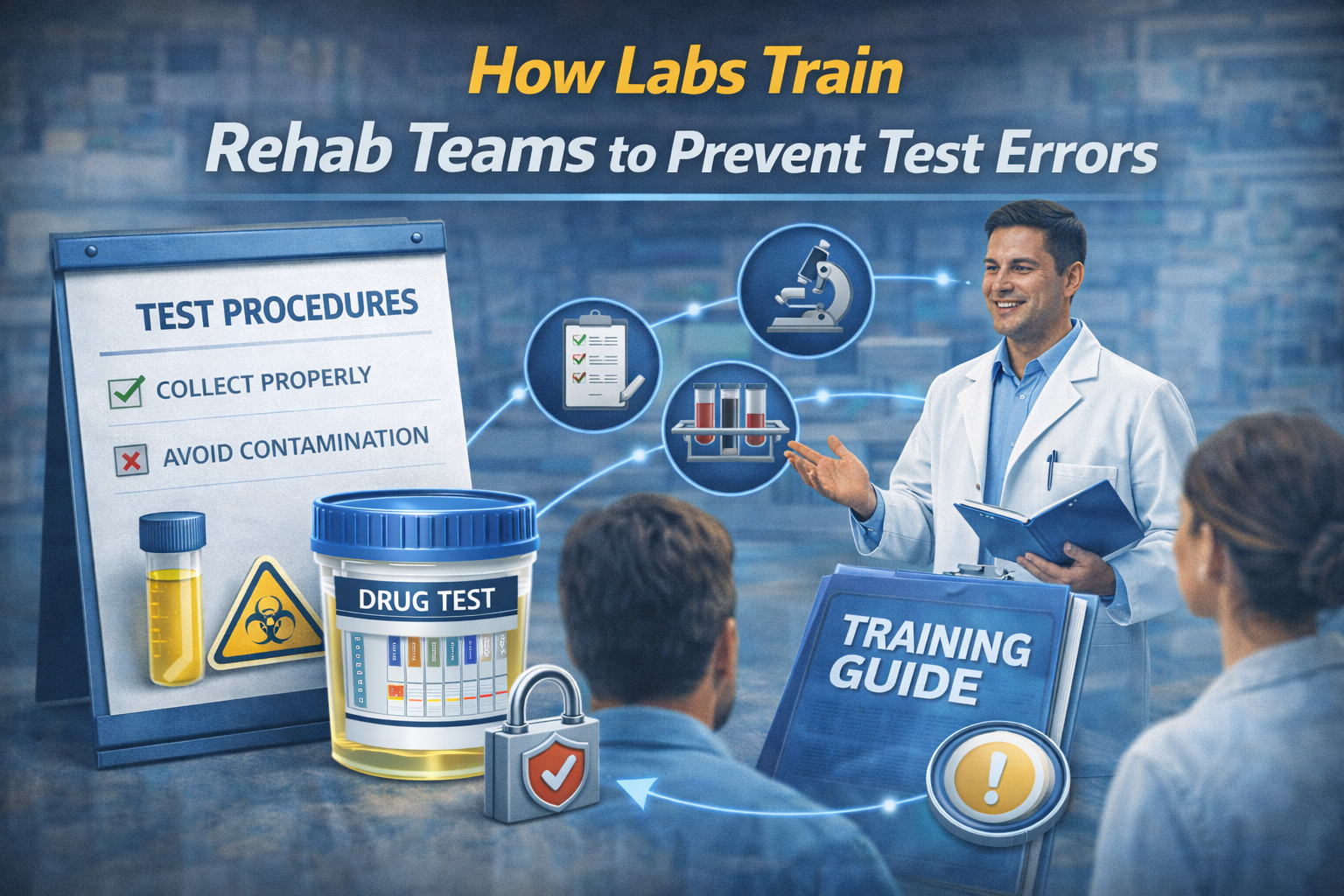
Why Reducing Drug Test Errors Matters in Rehab
Drug testing plays a big role in rehab centers. It helps protect patient health, improve safety, and support recovery from substance abuse, addiction, and alcohol misuse. But even a small mistake can cause big problems.
If a sample is contaminated or labeled wrong, the results may not be correct. This can affect treatment plans, trust, and even legal or regulation compliance. It may also increase risk for the facility.
That is why labs like Lynk Diagnostics provide strong training and education for rehab teams. Their goal is to reduce sample contamination and labeling errors and protect the integrity of every drug test.
What Is Sample Contamination?
Sample contamination happens when a specimen, such as urine or saliva, becomes mixed with something it should not have. This can happen in several ways:
- Using unclean containers
- Touching the inside of the cup
- Leaving samples uncovered
- Not following proper collection steps
Contamination can change test results. This may lead to a false positive or false negative. In cases of substance abuse or alcohol testing, that mistake can harm patient care.
Proper laboratory processes and staff knowledge help prevent this.
What Are Labeling Errors in Drug Testing?
Labeling errors happen when a sample is:
- Labeled with the wrong name
- Missing patient information
- Given the wrong date or time
- Mixed up with another patient’s sample
In rehab centers, correct labels are critical. A labeling mistake can affect a patient’s recovery plan. It may also cause problems with medical review, policy compliance, and documentation.
For facilities that follow strict workplace drug testing standards or dot rules, labeling errors can also create legal risk.
How Labs Train Rehab Teams to Reduce Sample Contamination and Labeling Errors
Labs like Lynk Diagnostics use clear steps and structured training programs. These programs focus on simple, repeatable actions that lower error rates.
Standardized Collection Procedures
The first step is teaching clear collection steps. Rehab teams learn:
- How to prepare clean collection areas
- How to use sealed containers
- How to avoid touching inside surfaces
- How to seal samples properly
Standardized steps reduce confusion. When every employee follows the same process, errors drop.
Clear Labeling Protocols
Labs train staff to label samples immediately after collection. This includes:
- Confirming patient identity
- Writing full legal names
- Adding date and time
- Double-checking before sealing
This process protects the integrity of the sample and lowers the risk of mix-ups.
Lynk Diagnostics also teaches the “two-check system.” This means two staff members confirm labeling before the sample leaves the room.
Chain of Custody Training
Chain of custody is the paper trail that tracks a sample from collection to the laboratory. It shows who handled the sample and when.
Training includes:
- Filling out custody forms correctly
- Avoiding blank spaces
- Securing documentation
- Storing samples safely
This protects against fraud, loss, or contamination. It also supports compliance with regulation standards and dot requirements when required.
Education on Reasonable Suspicion Testing
In some cases, staff may need to perform testing based on reasonable suspicion. This often happens in a workplace setting, especially for safety-sensitive roles.
Lynk Diagnostics provides education about:
- Recognizing concerning behavior
- Following written policy
- Documenting observations
- Protecting patient and employee rights
Clear knowledge reduces mistakes during high-stress situations.
Hands-On Training and Practice
Learning by doing is one of the best ways to reduce mistakes.
Mock Collection Drills
Labs often hold practice sessions. During these drills, rehab teams:
- Collect test samples
- Complete paperwork
- Apply labels
- Package samples
Mistakes are reviewed in a safe setting. This builds confidence and improves accuracy.
Error Review and Feedback
When an error happens, it becomes a learning moment. Lynk Diagnostics may provide:
- Written feedback
- Process correction steps
- Updated training materials
This approach builds a culture of integrity and growth.
The Role of Medical Review
A proper medical review checks drug test results before they are final. The review process looks for:
- Incomplete paperwork
- Missing signatures
- Unclear patient information
- Lab inconsistencies
Training rehab teams to prepare clean documentation helps the review process run smoothly. This supports faster results and better patient care.
Why Training Protects Patient Health and Safety
Accurate drug testing supports:
- Better addiction treatment plans
- Safer recovery environments
- Reduced relapse risk
- Clear communication with care teams
When samples are clean and labeled correctly, results are reliable. This protects patient health and builds trust.
It also supports workplace safety, especially in facilities where employees work closely with patients recovering from substance abuse or alcohol use.
Supporting Workplace Drug Testing Programs
Many rehab facilities also perform testing for staff as part of a workplace drug testing program. This helps protect:
- Patient safety
- Employee productivity
- Professional standards
- Compliance with regulation
Proper training reduces the chance of mistakes during staff drug test collection.
Background Check and Drug Testing Standards
Some rehab centers combine background check processes with employee testing. When handling both types of sensitive information, training becomes even more important.
Labs help staff understand:
- Confidential data protection
- Privacy rules
- Secure storage of documents
- Clear written policy guidelines
This protects both the facility and its employees.
Building a Culture of Accuracy and Integrity
Training is not just about steps. It is about culture.
When leadership values accuracy, staff follow the example. Lynk Diagnostics encourages:
- Ongoing education
- Updated policy reviews
- Clear communication
- Accountability
A culture of integrity lowers errors and supports strong workplace standards.
Reducing Risk Through Standard Policies
Written policies reduce confusion. Rehab centers should have:
- Clear collection procedures
- Labeling standards
- Storage guidelines
- Reporting steps
Labs help review and improve these policies. This lowers legal and clinical risk.
It also supports compliance with federal and state regulation, including dot alcohol testing requirements when needed.
The Link Between Training and Productivity
Mistakes cost time and money. When samples must be recollected, staff time increases. Delays slow treatment planning.
Good training improves:
- Staff confidence
- Workflow efficiency
- Patient trust
- Overall productivity
This benefits both patients and the organization.
Ongoing Education and Refresher Courses
Training should not happen only once. Staff turnover, new regulation, and policy updates require ongoing learning.
Lynk Diagnostics offers:
- Annual refresher sessions
- Updated training materials
- New employee onboarding support
- Compliance updates
Continuous education keeps everyone aligned with best practices.
How Lynk Diagnostics Supports Rehab Facilities
Lynk Diagnostics focuses only on drug testing services for rehab centers. This specialized focus brings:
- Deep knowledge of addiction treatment needs
- Strong laboratory standards
- Clear communication
- Reliable turnaround times
Their goal is simple: reduce errors, protect patient health, and support recovery from drugs and alcohol misuse.
By providing structured training, practical tools, and compliance guidance, Lynk Diagnostics helps facilities maintain high standards of care.
FAQs
What causes most sample contamination in drug testing?
Most contamination happens when collection procedures are not followed. This includes touching inside containers, using unclean areas, or failing to seal samples properly.
Why are labeling errors such a big risk in rehab centers?
Labeling errors can lead to wrong treatment decisions. They may also create legal issues and violate regulation standards, especially in workplace drug testing programs.
How often should rehab staff receive drug testing training?
Most experts recommend annual refresher training. New employees should also receive training during onboarding.
What is chain of custody in drug testing?
Chain of custody is the documentation that tracks a sample from collection to the laboratory. It protects integrity and prevents tampering.
How does training improve workplace safety?
Training reduces mistakes, improves accuracy, and protects patient and employee health. This supports a safer workplace and stronger recovery outcomes.
Resources
- Substance Abuse and Mental Health Services Administration (SAMHSA) – Mandatory Guidelines for Federal Workplace Drug Testing Programs
https://www.samhsa.gov/workplace - U.S. Department of Transportation (DOT) – Drug and Alcohol Testing Regulations
https://www.transportation.gov/odapc - U.S. Department of Labor – Drug-Free Workplace Guidance
https://www.dol.gov/agencies/eta/RRW-hub/Getting-started/Employers/drug-free-workplace - Equal Employment Opportunity Commission (EEOC) – Employer Testing and Background Check Guidance
https://www.eeoc.gov