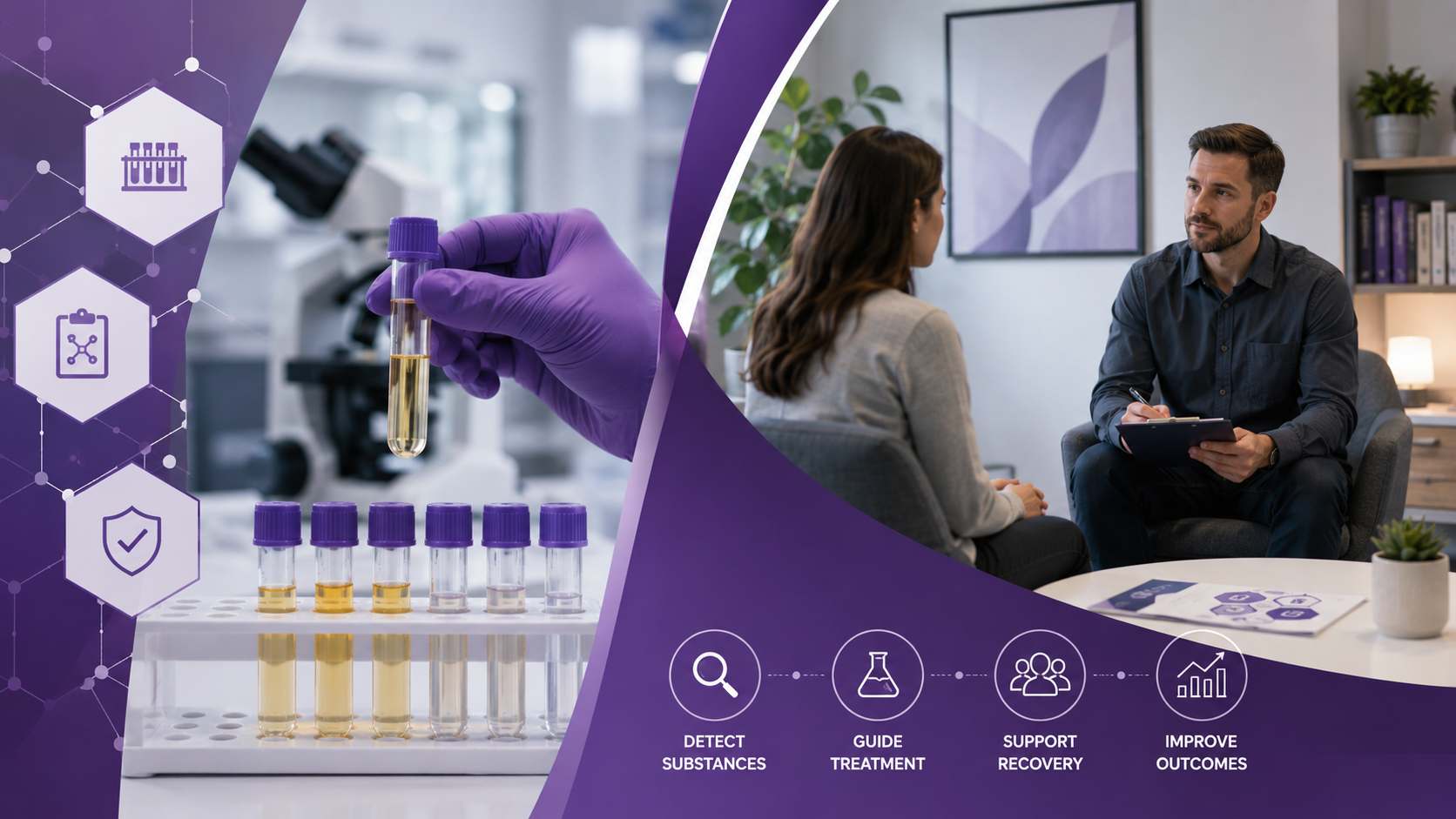
Toxicology testing for addiction treatment helps rehab centers and health care providers support people in recovery. These tests can help identify drug use, monitor prescribed medication, and improve patient safety during treatment. At Lynk Diagnostics, we provide trusted toxicology testing and drug testing services for rehab facilities and addiction treatment programs.
Toxicology testing is an important therapeutic tool in addiction medicine. It can help providers determine if patients are staying consistent with their treatment plans. It can also help identify illegal drugs, synthetic opioids, heroin, and other common substances that may increase the risk of relapse.
Many treatment programs use urine drug screening, oral fluid testing, and other testing methods to support substance use treatment. These tests help providers better understand a patient’s recovery journey while using non stigmatizing language and respectful care.
What Is Toxicology Testing for Addiction Treatment?
Toxicology testing for addiction treatment is the process of testing biological sample materials like urine, blood, or oral fluid for drugs and drug metabolites. These tests are used in addiction treatment and disorder treatment programs to monitor substance use and recovery progress.
Drug testing can help detect:
Opioids
Heroin
Synthetic opioids
Synthetic cannabinoids
Prescribed medication
Illegal drugs
Alcohol
Other drugs and certain substances
Testing is often part of substance abuse treatment and opioid use disorder care. Providers may use urine tests and laboratory testing to help patients stay focused on recovery.
Why Toxicology Testing Matters in Addiction Treatment
Toxicology testing supports addiction treatment by helping providers make informed decisions. Test results can show the presence or absence of drugs in the body. This information can help improve treatment and patient safety.
Some reasons toxicology testing is important include:
Monitoring substance use disorder treatment
Supporting therapy and recovery goals
Helping identify drug abuse
Detecting relapse risk
Confirming prescribed medication use
Helping providers adjust medicine or treatment plans
Improving communication between patients and staff member teams
Drug test results should never be used to shame patients. Instead, toxicology testing should be used as a therapeutic tool to support healing and recovery.
Common Testing Methods Used in Rehab Facilities
Different testing methods may be used depending on the treatment program and patient needs. Each method has benefits and limitations.
Urine Drug Screening
Urine drug screening is one of the most common tests used in addiction medicine. A urine sample can detect many drugs and drug metabolites.
Urine drug testing may help identify:
Opioids
Heroin
Cocaine
Methamphetamine
Marijuana
Synthetic cannabinoids
Benzodiazepines
Urine tests are popular because they are affordable, easy to collect, and provide rapid results.
Oral Fluid Testing
Oral fluid testing uses saliva instead of urine. This method can help identify recent drug use and is often used when direct observation is needed during sample collection.
Oral fluid tests may be useful because:
They are less invasive
They are easy to collect
They can provide rapid results
They reduce sample tampering concerns
Blood Testing
Blood testing is less common in routine addiction treatment but may be used in special cases. Blood tests can help determine the presence of drugs currently active in the body.
This method is sometimes used when providers need very accurate laboratory results.
How Urine Drug Testing Works
Urine drug testing starts with sample collection. Patients provide a urine sample in a controlled setting. The sample is then sent to a laboratory for testing.
The laboratory checks for drug metabolites. Drug metabolites are chemicals left behind after the body processes drugs.
Initial urine drug screening tests can provide fast results. If a positive result happens, a confirmatory test may be ordered.
Confirmatory testing helps reduce false positives and improves accuracy.
What Is a Confirmatory Test?
A confirmatory test is a second laboratory test used to confirm positive test results from an initial screen.
This testing method is important because some supplements, medicine, environmental exposures, or common substances can create false positives through cross reactivity.
Cross reactivity happens when one substance reacts similarly to another substance during testing.
A confirmatory test helps identify:
Exact drugs present
Specific drug metabolites
Accurate laboratory results
False positive concerns
Confirmatory testing is important in addiction medicine because treatment decisions should be based on reliable information.
Frequent Testing vs Less Frequent Testing
Treatment programs may use frequent testing or less frequent testing depending on patient needs and recovery progress.
Frequent Testing
Frequent testing may be used during early recovery or high-risk periods. It can help providers monitor substance use and identify relapse quickly.
Frequent testing may support:
Opioid use disorder treatment
Early recovery
Intensive outpatient programs
Residential addiction treatment
Less Frequent Testing
Less frequent testing may be used when patients show consistent recovery progress and stable test results.
This approach may help patients feel trusted while still supporting accountability.
Providers should determine testing schedules based on individual treatment goals and risk factors.
Drugs Commonly Found in Toxicology Testing
Toxicology testing can identify many drugs and substances used in substance abuse treatment settings.
Commonly tested drugs include:
Heroin
Opioids
Synthetic opioids
Marijuana
Synthetic cannabinoids
Cocaine
Methamphetamine
Benzodiazepines
Alcohol
Prescription medicine
Testing may also help identify illegal drugs found in the drug supply.
The Role of Medical Review Officers
Medical review officers are trained professionals who review drug test results. They help determine if positive results are connected to legal prescribed medication or possible drug abuse.
Medical review officers may:
Review laboratory results
Check prescribed medication records
Investigate false positives
Confirm legal medicine use
Help providers understand testing concerns
This process helps improve fairness and accuracy during addiction treatment.
How Toxicology Testing Supports Recovery
Toxicology testing can support recovery when used respectfully and consistently. Testing should help patients feel supported, not punished.
When providers use non stigmatizing language, patients may feel safer discussing concerns related to addiction and substance use.
Drug testing may help:
Build trust in treatment
Encourage honesty
Support therapy goals
Improve accountability
Identify relapse risk early
Monitor medicine safety
Toxicology testing works best when combined with therapy, counseling, and medical care.
Toxicology Testing and Opioid Use Disorder
Opioid use disorder continues to affect many people across the United States. Addiction treatment centers often use toxicology testing to monitor opioids, heroin, and synthetic opioids.
Testing may help providers:
Determine if opioids are present
Monitor medication assisted treatment
Identify relapse risk
Improve patient safety
The national institute and other health organizations support evidence-based addiction medicine practices that include proper drug testing and monitoring.
False Positives and Testing Concerns
False positives can happen in some drug tests. This means a test shows positive even when the patient did not use illegal drugs.
False positives may happen because of:
Supplements
Prescribed medication
Certain substances
Environmental exposures
Cross reactivity
This is why confirmatory testing is important. Confirmatory tests help laboratories provide accurate results for patients and providers.
Why Rehab Facilities Choose Lynk Diagnostics
Lynk Diagnostics works closely with rehab centers and substance use treatment programs. We understand the importance of accurate toxicology testing for addiction treatment.
Our laboratory team supports providers with:
Urine drug screening
Oral fluid testing
Confirmatory test services
Rapid results
Reliable laboratory results
Professional sample collection support
We help addiction treatment centers improve patient care while supporting recovery and treatment goals.
A Patient-Focused Approach to Drug Testing
Patients in recovery deserve respect and support. Drug testing should never be used to shame or discharge patients without proper review and clinical discussion.
At Lynk Diagnostics, we believe toxicology testing should support recovery, therapy, and long-term treatment success.
Using non stigmatizing language and compassionate care can help patients stay engaged in substance abuse treatment and addiction recovery.
FAQs About Toxicology Testing for Addiction Treatment
What is toxicology testing for addiction treatment?
Toxicology testing for addiction treatment is laboratory testing used to identify drugs, drug metabolites, and substance use in patients receiving addiction treatment or substance abuse treatment.
What samples are used in toxicology testing?
Common biological sample types include urine, blood, and oral fluid. Urine testing is one of the most commonly used methods in rehab facilities.
Why do rehab centers use urine drug screening?
Urine drug screening helps providers monitor recovery progress, identify substance use, and support patient safety during treatment programs.
Can drug tests have false positives?
Yes. False positives may happen because of supplements, prescribed medication, environmental exposures, or cross reactivity. Confirmatory testing helps improve accuracy.
How does toxicology testing help recovery?
Toxicology testing can support recovery by helping providers identify relapse risk, monitor treatment progress, and encourage accountability in addiction treatment.