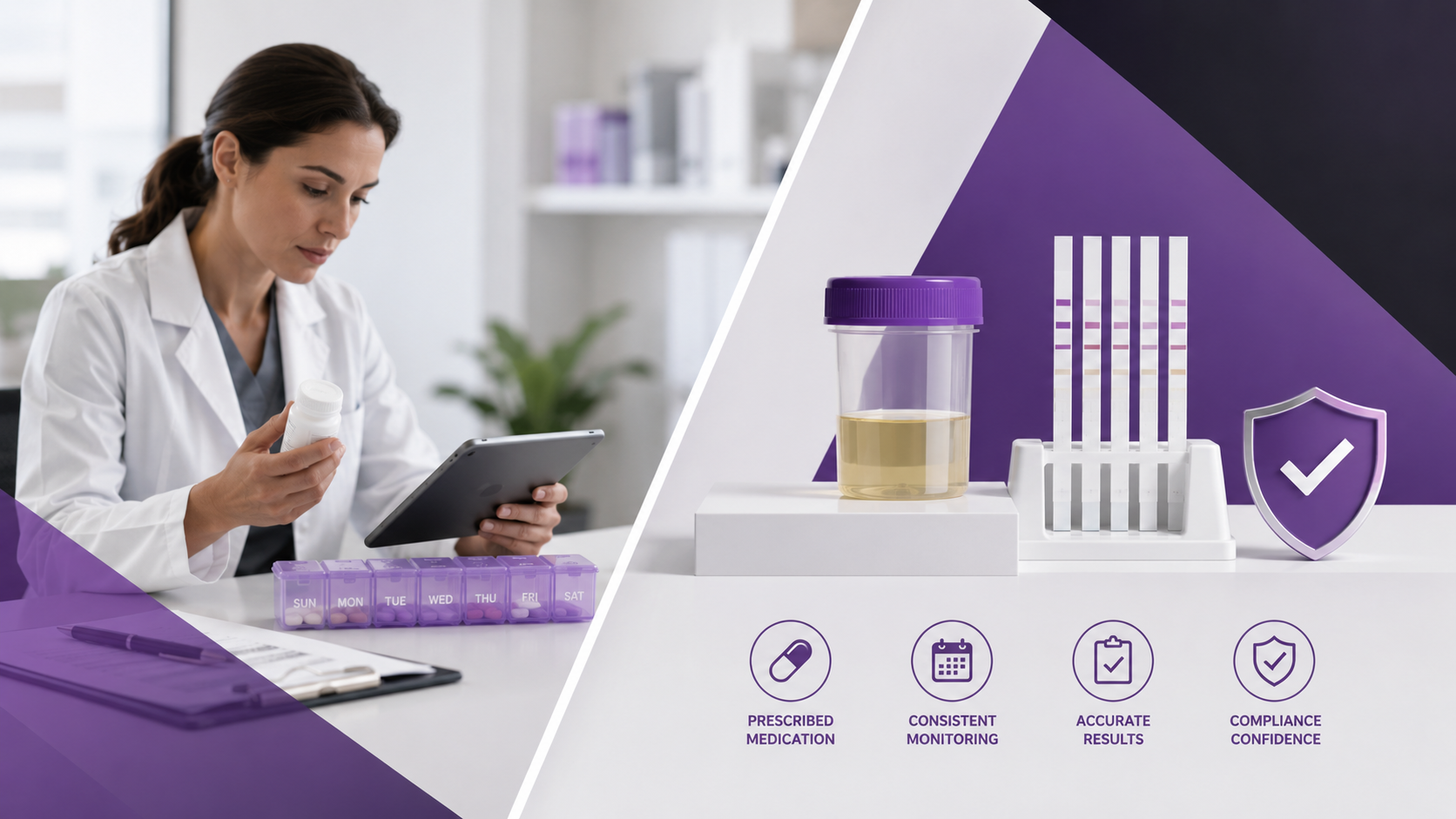
Medication compliance testing helps health care providers see if patients are taking prescribed medications the right way. This type of test is important in addiction treatment, pain management, behavioral health, and primary care. At Lynk Diagnostics, we provide medication compliance testing services for rehab facilities and treatment programs that need clear and accurate results.
Medication compliance testing can help improve patient care, lower risk, and support better health outcomes. It can also help clinicians identify non adherence, misuse of medications, and the use of illicit drugs or illicit substances. By using definitive testing methods, providers can confirm if medications prescribed are present in urine or oral fluid samples.
What Is Medication Compliance Testing?
Medication compliance testing is a type of drug testing that checks if a person is taking medicines as prescribed. It may also detect drugs that were not prescribed. The testing process helps health care providers measure medication adherence and understand medication use.
This testing is commonly used in:
Substance abuse treatment
Pain management programs
Mental health services administration programs
Primary care clinics
Behavioral health facilities
Chronic diseases management
Medication compliance testing can help determine if a patient is following a treatment plan correctly. It also helps assess if medications are being overused, underused, or mixed with illicit drugs.
Why Medication Adherence Matters
Medication adherence is very important for patient health. When patients do not take medicines correctly, health problems can become worse. Non adherence may lead to hospitalization, poor blood pressure control, relapse, or other serious concerns.
Health care systems and providers use medication compliance testing to support better outcomes. Studies from researchers show a significant increase in health risks when patients stop taking medicines or misuse drugs.
For example, antihypertensive medication adherence is important for people with hypertension. If antihypertensive medications are not taken correctly, blood pressure control may fail. This can increase the risk of heart disease, stroke, and hospitalization.
Medication compliance testing helps providers:
Confirm medications prescribed are being taken
Identify non use of medicines
Detect illicit substances
Monitor pharmacotherapy plans
Improve patient care
Support recovery and adherence
Reduce risk of relapse or overdose
How Medication Compliance Testing Works
The testing process usually starts with sample collection. A patient may provide urine or oral fluid for analysis. These samples are sent to a clinical laboratory for testing.
At Lynk Diagnostics, we use advanced definitive testing methods to provide accurate results. Definitive testing can confirm the exact drugs and medicines present in a sample. This testing is more detailed than simple screening methods.
The process may include:
Sample collection
Laboratory analysis
Review of prescription information
Data reporting
Clinical assessment by providers
Clinicians and pharmacists can review the data to determine if a patient is following the prescribed treatment protocol.
Types of Samples Used
Medication compliance testing can use different sample types depending on the clinical need.
Urine Testing
Urine testing is one of the most commonly used methods. Urine samples can detect many medications, illicit drugs, and prescription medicines. Urine testing is often cost effective and provides useful insight into medication use.
Oral Fluid Testing
Oral fluid testing is another option. Oral fluid samples are easy to collect and may help identify recent drug use. Some providers use oral fluid testing when urine collection is unable to be completed.
Both urine and oral fluid testing help providers assess adherence and confirm medications prescribed.
Medications Commonly Monitored
Medication compliance testing can monitor many types of medications. These may include:
Opioid medicines
Benzodiazepines
ADHD medicines
Antidepressants
Antihypertensive medications
Medication assisted treatment drugs
Sleep medicines
Anxiety medicines
Providers may also test for illicit substances such as fentanyl, cocaine, methamphetamine, heroin, and synthetic drugs.
The goal is to identify if the patient is taking prescribed medications correctly while avoiding dangerous drugs or combinations.
Medication Compliance Testing in Substance Abuse Treatment
Substance abuse treatment programs often use medication compliance testing to support recovery. Drug testing helps treatment teams monitor patients and manage relapse risks.
Patients in treatment may receive medications as part of pharmacotherapy programs. Testing helps clinicians confirm adherence and detect non adherence early.
Medication compliance testing can also help:
Support accountability
Improve trust between providers and patients
Confirm prescription medication use
Detect illicit drugs
Reduce overdose risk
Improve long term recovery outcomes
At Lynk Diagnostics, we work with rehab centers and behavioral health programs to provide fast and reliable testing support.
The Role of Health Care Providers
Health care providers play an important role in medication adherence. Providers, pharmacists, clinicians, and care teams work together to support patients and improve health outcomes.
Providers may use testing to:
Determine if medicines are present
Assess medication use
Identify barriers to adherence
Confirm prescription compliance
Monitor chronic diseases
Support patient safety
In some cases, providers may discover that a person is unable to follow treatment because of cost, side effects, transportation, or mental health concerns.
Testing gives providers better insight into patient behavior and helps them manage treatment plans more effectively.
Barriers to Medication Adherence
There are many factors that can affect medication adherence. Some patients may forget medicines. Others may stop because of side effects, cost, or fear of addiction.
Common barriers include:
High medication cost
Mental health struggles
Substance abuse
Poor support systems
Limited pharmacy access
Complex treatment schedules
Fear of side effects
Lack of education
Medication compliance testing helps providers identify these concerns early. This allows clinicians to adjust treatment plans and improve patient care.
The Importance of Definitive Testing
Definitive testing is an important part of medication compliance testing. It gives more accurate results than basic screening tests.
Definitive testing can:
Confirm specific drugs
Identify illicit substances
Detect low levels of medicines
Reduce false positives
Improve clinical assessment
This level of analysis is important in rehab settings, pain management, and primary care. It helps providers make safer decisions for patients.
Medication Compliance Testing and Chronic Diseases
Patients with chronic diseases often take medicines for long periods of time. Medication adherence is very important for conditions like:
Hypertension
Diabetes
Depression
Anxiety
Chronic pain
Substance use disorder
Poor adherence may lead to worsening symptoms and hospitalization. Researchers continue to study ways to improve medication compliance across large population groups.
Testing helps health systems establish better monitoring programs and improve quality of care.
Cost Effective Testing Solutions
Many providers look for cost effective ways to monitor medication use. Medication compliance testing can help reduce long term health care cost by lowering emergency visits, relapse rates, and hospitalization.
Early identification of non adherence may prevent serious health problems before they become worse.
At Lynk Diagnostics, we focus on providing reliable and cost effective testing services for rehab facilities and treatment programs.
Medication Compliance Testing vs Basic Drug Screening
Basic drug screening may only show if a drug is present. Medication compliance testing goes further by helping providers confirm if medications prescribed are being used correctly.
Medication compliance testing may provide:
More detailed analysis
Better assessment tools
Confirmation testing
Clinical insight
Accurate reporting
Improved monitoring
This is especially important when managing high risk patients or complex pharmacotherapy programs.
How Lynk Diagnostics Supports Rehab Facilities
Lynk Diagnostics provides medication compliance testing services designed for rehab facilities, behavioral health programs, and health care providers.
Our testing services help:
Monitor medication adherence
Detect illicit drugs
Confirm prescription use
Improve patient care
Support treatment goals
Reduce risk
Provide fast turnaround times
We understand the importance of accurate testing in addiction treatment and behavioral health settings. Our team works closely with providers to deliver dependable laboratory support.
The Future of Medication Compliance Testing
Health care systems continue to improve how they monitor adherence and medication use. Researchers are studying better testing methods, stronger protocols, and improved patient support programs.
As clinical testing grows, providers will have more ability to identify non adherence early and improve health outcomes across different populations.
Medication compliance testing will continue to play an important role in patient safety, recovery support, and chronic disease management.
Why Choose Lynk Diagnostics?
Lynk Diagnostics is dedicated to helping rehab facilities and treatment providers with accurate medication compliance testing services.
We focus on:
Reliable definitive testing
Fast results
Accurate analysis
Clinical support
Cost effective solutions
Patient centered care
Our team understands the importance of adherence, monitoring, and patient safety in behavioral health and substance abuse treatment.
FAQs
What is medication compliance testing?
Medication compliance testing is a type of drug testing used to confirm if patients are taking prescribed medications correctly and avoiding illicit drugs.
Why is medication adherence important?
Medication adherence helps improve health outcomes, reduce hospitalization, support recovery, and improve blood pressure control and chronic disease management.
What samples are used for medication compliance testing?
Testing commonly uses urine or oral fluid samples to detect medicines, prescription drugs, and illicit substances.
What is definitive testing?
Definitive testing is a more advanced type of laboratory analysis that confirms the exact drugs and medicines present in a sample.
Who uses medication compliance testing?
Health care providers, rehab centers, primary care clinics, behavioral health programs, pharmacists, and clinicians commonly use medication compliance testing to support patient care.