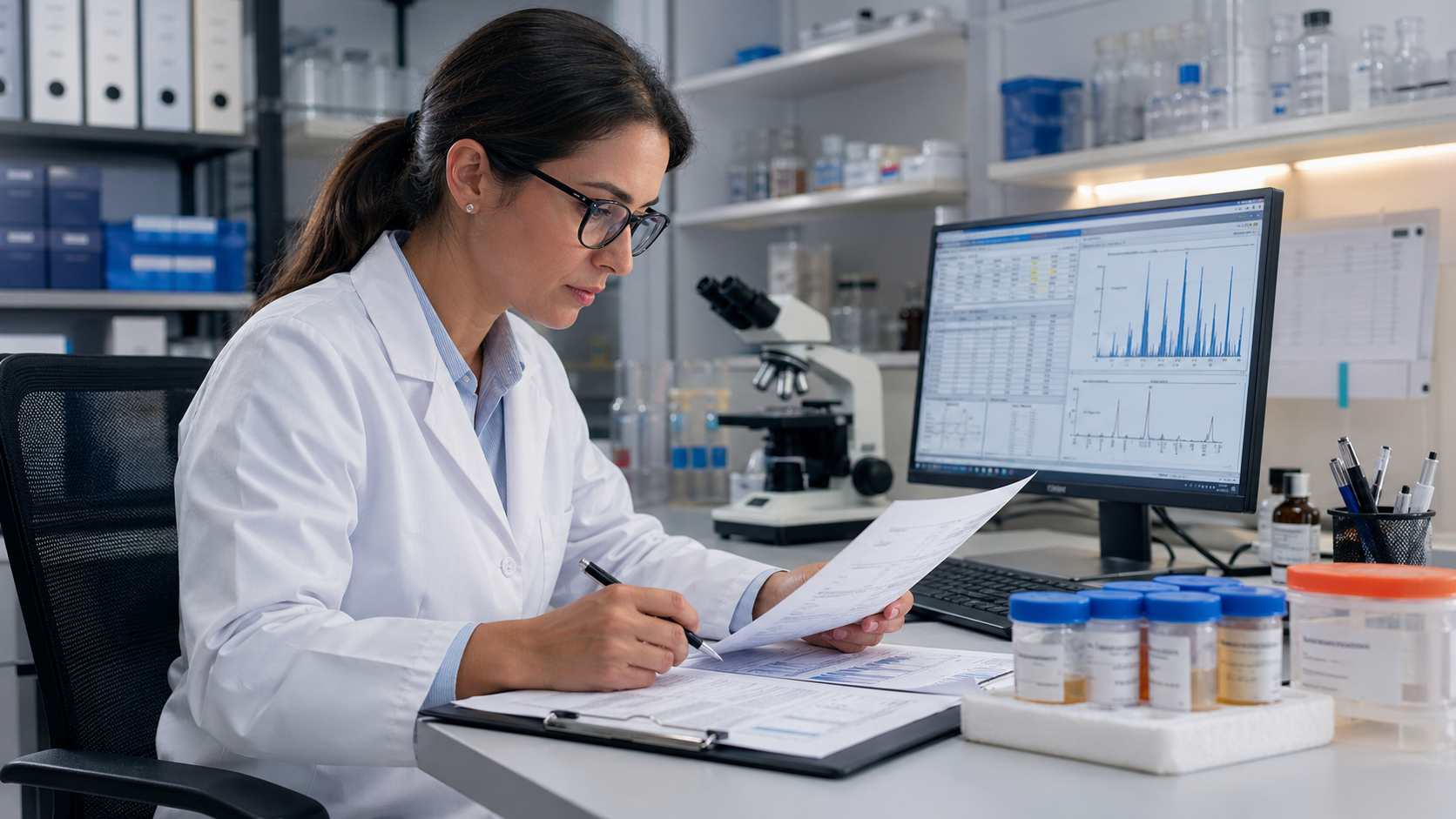
A toxicology report is a lab report that shows if drugs, alcohol, poisons, toxins, or other substances are present in a sample. A sample may be blood, urine, tissue samples, stomach contents, or other body samples. In many cases, the report helps a medical team understand substance use, drug use, exposure, misuse, or possible abuse.
For rehab facilities, a toxicology report can help show if a patient used illicit drugs, illegal drugs, prescription drugs, prescription medicines, over the counter medicines, alcohol, or synthetic drugs. It can also help show if a prescribed medicine is present at the right level. Drug testing should not be used alone to remove a patient from treatment, because results need a careful review and clinical context.
Lynk Diagnostics is a drug testing center dedicated to rehab facilities. Our goal is to help treatment teams get clear reports, safe testing methods, and support for better care.
Why Toxicology Reports Matter in Rehab Care
A toxicology report gives objective evidence. This means it gives facts from a lab test, not guesses. In addiction treatment, this can help the medical director, doctors, therapists, and case managers understand what is happening in the body.
A report may help a rehab team:
Find substances found in blood urine samples.
Detect drugs that may affect recovery.
Determine if a positive result needs more review.
See if prescription medicines match medical prescriptions.
Check for unknown substances or other substances.
Support a safer treatment plan.
A toxicology report can also help with patient data. It may show patterns over time. For example, repeat reports may show if substance use is going down, if a medication is being taken as prescribed, or if new drugs are present.
What Can Be Found in a Toxicology Report?
Common Substances Found
A toxicology report may show many types of compounds. These may include alcohol, cannabis, cocaine, methadone, morphine, amphetamines, and other drugs. It may also show prescription medicines, over the counter medicines, toxins, poisons, carbon monoxide, or synthetic drugs.
Some reports are made to detect a narrow group of drugs. Other reports look for many substances at once. A lab may use different testing methods based on the purpose of the test, the sample type, and the substances that need to be found.
Positive, Negative, and Present Results
A positive result means the test found a substance. A negative result means the test did not detect that substance in the sample. “Present” means the substance was found, but the meaning depends on the test, the sample, and the concentration.
A positive result does not always mean misuse. A patient may have a valid prescription. They may also have taken over the counter medicine that affects the testing process. This is why detailed interpretation matters.
Concentration Levels
Some toxicology reports show concentration. This means how much of a substance was found. Concentration can help toxicologists, the medical director, and the lab understand if a substance is low, high, recent, or possibly harmful.
Still, concentration is not always simple. The body breaks down drugs at different speeds. A person’s age, health, hydration, medicine use, and sample type can affect the result.
Types of Toxicology Testing
Urine Testing
Urine is one of the most common samples for drug testing. Urine testing can detect many drugs and substances. It is often used in rehab care because sample collection is simple and non-invasive.
Urine testing may be used to check for:
Cannabis
Cocaine
Amphetamines
Methadone
Morphine
Alcohol markers
Prescription drugs
Illicit drugs
Synthetic drugs
Other substances
Blood Testing
Blood testing can help show what is active in the body closer to the time of sample collection. Blood may be used when there is a concern about acute poisoning, overdose, alcohol, carbon monoxide, or other medical issues.
Blood testing may be used to help determine:
Recent drug use
Alcohol exposure
Toxic exposure
Poisoning risk
Substance concentration
Medical safety concerns
Tissue Samples and Stomach Contents
In forensic toxicology, testing may use tissue samples, stomach contents, blood, urine, and other evidence. This may happen after an autopsy or during a death investigation. A medical examiner may request these samples when a deceased person has died and drugs, poisons, or toxins may be involved.
Hair, Oral Fluid, and Other Samples
Some testing methods use hair or oral fluid. Each sample has a different detection window. This means each one can show substance use over a different time period. The right sample depends on the goal of the test.
What Is Forensic Toxicology?
Forensic toxicology is toxicology used for legal or investigation needs. It may be used in court, family law cases, criminal cases, workplace cases, or death investigations.
A forensic toxicology report may help determine whether drugs, alcohol, poisons, or other substances were involved in a case. It may also help show if a substance was present in the body at the time of death.
In a death case, a medical examiner may review the toxicology report with autopsy findings, body findings, medical history, police reports, and other evidence. The toxicology report is one part of the full investigation.
How the Testing Process Works
Step 1: Sample Collection
The testing process starts with sample collection. The lab or care team must collect the sample the right way. This helps protect the patient and the result.
For rehab drug testing, urine is often obtained in a safe and private way. The sample may be sealed, labeled, and sent to the laboratory. Good sample collection helps lower errors and protects the evidence.
Step 2: Lab Analysis
Next, the laboratory does the analysis. The lab may use screening tests first. If needed, it may use confirmatory testing. Confirmatory tests can be more exact and can help identify specific drugs or compounds.
Step 3: Advanced Testing Methods
Mass spectrometry is one advanced method used in toxicology testing. It can help detect and measure substances with a high level of detail. Some testing may use gas chromatography mass spectrometry, also called GC-MS, to identify drugs or medicines in urine samples.
Step 4: Report Review
After testing, the lab creates reports. A medical director, toxicologists, or trained medical staff may review the results. This step is important because a report needs detailed interpretation.
The report should be reviewed with:
Patient data
Prescriptions
Medical history
Symptoms
Treatment goals
Sample type
Testing methods
Other evidence
Why Interpretation Is So Important
A Report Is Not Just “Positive” or “Negative”
A toxicology report can look simple, but it often needs expert review. A positive result may be caused by a prescribed medicine, substance use, misuse, or a testing issue. A negative result may mean the substance was not present, was below the cutoff, or was outside the detection window.
This is why Lynk Diagnostics supports rehab facilities with clear reports and lab guidance. A result should help care, not create confusion.
Prescription and Over the Counter Medicines Matter
Prescription drugs, prescription medicines, medical prescriptions, and over the counter medicines can all affect toxicology testing. A patient may test positive for a substance they are allowed to take.
For example, a patient may be prescribed methadone or another medicine as part of care. If the medicine is found, the team must compare the result to the treatment plan.
Unknown Substances Need Careful Review
Sometimes a report may point to unknown substances, synthetic drugs, or other substances that need more testing. In these cases, the lab may need advanced testing methods.
Synthetic drugs can be hard to detect because new compounds may change over time. A basic test may not find every substance.
Toxicology Reports in Rehab Facilities
Supporting Better Treatment Plans
In rehab care, toxicology reports can help staff update treatment plans. If drugs are found, the team can talk with the patient, review triggers, and add support.
A positive result should not be used as shame. It should be used as medical evidence to guide care. Addiction is a health issue. Drug testing can help the team respond with facts.
Helping With Patient Safety
A toxicology report can show if a patient may be at risk. For example, alcohol, opioids, benzodiazepines, stimulants, or other drugs can affect breathing, mood, sleep, and safety.
If a report shows concerning substances, the medical team can act fast. This may include:
Checking vital signs
Reviewing current medicine
Updating the treatment plan
Adding more clinical support
Talking with the patient about risk
Sending the patient for emergency medical care when needed
Tracking Progress Over Time
Reports can help show progress. If a patient has fewer substances found over time, this may show that the treatment plan is helping. If new drugs appear, the team can adjust care.
This makes toxicology testing useful for both accountability and support.
Toxicology Reports in Legal and Medical Cases
Family Law Cases
In family law cases, a toxicology report may be used as evidence. It may help a court understand drug use, alcohol use, or possible misuse. Courts may also look at other evidence, medical records, and witness information.
Death and Autopsy Cases
In a death investigation, a toxicology report may help determine if drugs, alcohol, poisons, carbon monoxide, or toxins were involved. A deceased person may have blood, urine, tissue samples, or stomach contents tested after an autopsy.
The medical examiner uses the report with other facts. The report alone may not determine the cause of death. It is part of a larger medical and legal review.
Acute Poisoning Cases
In acute poisoning, toxicology can help detect poisons, medicines, or toxins that may affect the body. Carbon monoxide is one example of a toxic exposure that can cause sudden illness or death when present at high levels.
What Information Is Usually in the Report?
Patient and Sample Details
A toxicology report may include patient data, sample type, sample collection time, lab number, and testing methods. It may say whether the sample was blood, urine, tissue, or another sample.
Substances Tested
The report may list substances such as:
Drugs
Alcohol
Prescription medicines
Illegal drugs
Illicit drugs
Over the counter medicines
Synthetic drugs
Toxins
Poisons
Other substances
Result Details
The report may show:
Positive
Negative
Detected
Not detected
Present
Concentration
Substances found
Notes from the laboratory
Notes from the medical director
Lab Notes and Limits
Every test has limits. A lab may not detect every substance. A report may say that more testing is needed. It may also say that a result should be compared with medical history and prescriptions.
How Lynk Diagnostics Helps Rehab Facilities
Lynk Diagnostics helps rehab facilities use drug testing and toxicology reports in a clear and useful way. We understand that treatment teams need fast, accurate, and easy-to-read reports.
Our testing support can help with:
Drug testing for rehab programs
Toxicology testing for patient care
Reports that help guide treatment
Testing methods that fit clinical needs
Support for detailed interpretation
Clear lab communication
A toxicology report should help a rehab team make better choices. It should support patient care, safety, and recovery.
Common Mistakes to Avoid
Reading the Result Without Context
A toxicology report should be read with the patient’s full story. This includes prescription history, medical prescriptions, over the counter medicine use, symptoms, and treatment goals.
Treating Every Positive Result the Same
A positive result can mean many things. It may mean new drug use. It may also mean prescribed medicine, old exposure, or a need for confirmatory testing.
Ignoring Test Limits
No test is perfect. Some tests may miss certain compounds. Some may need mass spectrometry or another advanced method to confirm the result.
Using Reports to Punish Patients
Drug testing should support care. In rehab, a toxicology report works best when it helps the team talk with the patient, update treatment, and lower risk.
FAQs
What is a toxicology report?
A toxicology report is a lab report that shows whether drugs, alcohol, poisons, toxins, or other substances were found in a sample like blood or urine.
What does toxicology testing detect?
Toxicology testing can detect many substances, such as prescription drugs, illicit drugs, illegal drugs, alcohol, cannabis, cocaine, methadone, morphine, amphetamines, synthetic drugs, and over the counter medicines.
Can a toxicology report be wrong?
A report can be misunderstood if it is read without context. Some screening tests can have false positives or false negatives. Confirmatory testing and medical review may be needed.
Why do rehab facilities use toxicology reports?
Rehab facilities use toxicology reports to support treatment plans, track patient progress, detect substance use, and help keep patients safe during recovery.
Is a positive result always drug abuse?
No. A positive result does not always mean abuse. It may be from a prescribed medicine, over the counter medicine, or a valid treatment plan. The result needs detailed interpretation.
Resources