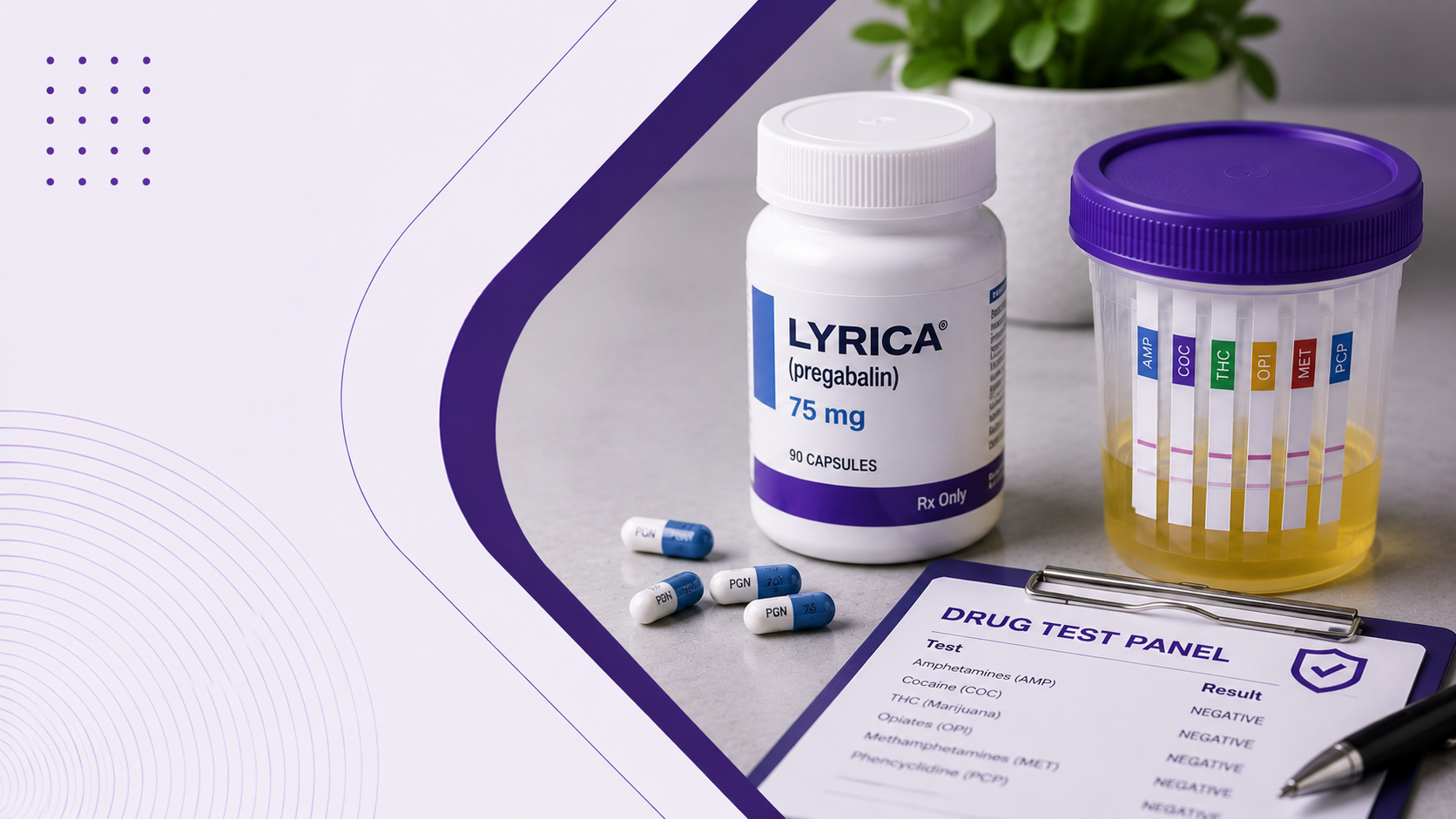
Does Lyrica show up on a drug test? In most cases, Lyrica does not show up on a basic drug test unless the test is made to detect pregabalin. Lyrica is the name many people know, but the active ingredient is pregabalin. Pregabalin is not the same as a narcotic, opioid, benzodiazepine, or illegal drug. Still, Lyrica is a controlled substance because it has abuse potential.
A standard drug test often checks urine for common drug groups. These may include opioids, cocaine, marijuana, amphetamines, benzodiazepines, and other drugs. A normal urine drug test may not detect Lyrica pregabalin unless the lab adds pregabalin to the panel. A special urine test, blood test, or lab test may be needed to detect pregabalin.
Lynk Diagnostics helps rehab facilities get clear drug testing answers. We work with programs that need accurate test results, clean reporting, and support for patients in treatment. When a rehab center needs to know if a person is taking Lyrica, misusing Lyrica, or mixing it with other drugs, the right drug test matters.
What Is Lyrica?
Lyrica is a prescription medication. The drug class is anticonvulsant medicine. Lyrica belongs to a group of drugs that calm certain nerve signals in the central nervous system. Doctors may use Lyrica to treat pain from nerve damage, diabetic neuropathy, spinal cord injury, fibromyalgia, and partial onset seizures.
Pregabalin can help treat nerve pain because it lowers pain signals sent by damaged nerves. People may be taking Lyrica for nerve pain, seizures, or pain linked to diabetic neuropathy. Some patients may also use Lyrica CR, which is an extended-release form. Lyrica CR is taken in a different way than regular Lyrica, so patients should follow the doctor’s dose plan.
Lyrica affects the brain and nerves. Some people feel sleepy or dizzy after taking Lyrica. This can make it unsafe to drive or operate machinery. Alcohol, a narcotic, or other medications that slow the body can increase breathing problems and other serious side effects.
Why Lyrica May Be Tested in Rehab Settings
Many rehab facilities need more than a basic drug test. A person in treatment may have a prescription for Lyrica, or there may be concern about Lyrica abuse, Lyrica addiction, or illicit use. Some people abuse pregabalin because it can cause calm feelings, sleepiness, or a high feeling when taken in high amounts or mixed with other drugs.
Lyrica abuse can lead to safety risks. Taking Lyrica with alcohol, opioids, sedatives, or other drugs can lead to trouble breathing, overdose, and poor well being. A Lyrica overdose may cause deep sleep, confusion, weakness, breathing problems, or loss of consciousness. If overdose signs happen, call 911 or go to the nearest emergency room.
A drug test can help a treatment team understand drug use. It can also help check if patients are taking Lyrica as prescribed. Testing should be used with care, respect, and clinical judgment. Medical professionals should review the full treatment plan, medical conditions, other medications, and patient history.
Will a Standard Drug Test Detect Lyrica?
A standard drug test does not always detect Lyrica. Many basic panels do not include pregabalin. If a rehab facility needs to detect Lyrica, the lab should order a pregabalin-specific test.
A urine drug test is often the most common way to test for Lyrica pregabalin. Urine is easy to collect and may show recent use. A urine test can help detect pregabalin after the drug has moved through the body. Blood may also be used in some cases, but blood testing is less common for routine rehab testing. Saliva tests may be used for some drugs, but saliva tests for pregabalin are not as common as urine testing.
A positive specimen means the lab found the drug or drug marker above the cutoff level. If the first test is unclear, the lab may run a confirmation test. This is important because a screening test and a confirmation test do not always give the same level of detail.
How Long Does Lyrica Stay in Your System?
Many people ask, “how long does Lyrica stay in your system?” The answer depends on the dose, kidney function, timing of the last dose, and the type of test. The half life of pregabalin is often about 6 hours in people with healthy kidneys. A half life means the time it takes for the body to remove one half of the drug.
Lyrica’s half life helps explain why Lyrica stay times can vary. After one half life, part of the drug remains. After several half life cycles, most of the drug leaves the body. Even then, a drug test may still detect Lyrica for a short time, especially in urine.
So, how long does Lyrica stay in urine? Many detection times are a few days, but this can change. Lyrica stay times may be longer for people with kidney problems because the kidneys help process Lyrica. If kidney function is low, pregabalin may stay in your system longer. People with chronic kidney disease or kidney problems should talk with a doctor about the right dose.
What Affects Lyrica Detection Times?
Detection times are not the same for every person. The following factors can affect how long Lyrica stay time lasts:
Dose and New Intake
A higher dose may stay in your system longer than a lower dose. New intake also matters. If someone keeps taking Lyrica each day, the drug may be easier to detect than one single dose.
Kidney Function
Kidney function is very important. The body removes most pregabalin through urine. Patients with kidney problems may process Lyrica more slowly. This can raise the chance of side effects and may change drug test detection times.
Type of Test
A urine test may detect Lyrica longer than blood in many cases. Blood may show more recent use. A urine drug test may be better for treatment monitoring. Saliva tests are not the main choice for pregabalin testing.
Other Drugs and Medications
Other drugs and other medications may affect safety. Drug interactions are more serious when Lyrica is mixed with alcohol, opioids, sleep medicine, or a narcotic. These mixes can lead to trouble breathing, overdose, and serious side effects.
Lyrica Withdrawal and Stopping Safely
People should not stop taking Lyrica without talking to a doctor. Stopping too fast can lead to Lyrica withdrawal. Lyrica withdrawal may include sleep problems, sweating, nausea, headache, anxiety, mood changes, and seizures in some patients.
Withdrawal symptoms can feel scary. Lyrica withdrawal may be worse if a person has taken a high dose or has been taking Lyrica for a long time. Patients with seizures, mental health issues, or a history of substance use should be extra careful. A doctor may lower the dose slowly as part of a safe treatment plan.
Stop taking Lyrica only if a doctor says to stop or if there is an emergency reaction. If serious side effects happen, such as swelling, trouble breathing, or signs of Lyrica overdose, seek medical care right away.
Lyrica Addiction, Abuse, and Safety Risks
Lyrica addiction can happen, even when the medication starts with a real prescription. Lyrica abuse means taking it in a way not ordered by a doctor. This can include taking a higher dose, taking it more often, mixing it with alcohol, or using it with other drugs.
Some people abuse pregabalin because it affects the central nervous system. Lyrica abuse may lead to falls, confusion, memory problems, breathing problems, and overdose. Lyrica addiction can also lead to cravings, hiding drug use, or using the drug even when it causes harm.
A person with Lyrica addiction needs care, not shame. Treatment may include medical help, therapy, drug testing, and support from trained staff. Lynk Diagnostics supports rehab facilities with drug testing that helps guide safe treatment.
Lyrica and Common Medical Uses
Lyrica pregabalin may be used for several medical conditions. Doctors may prescribe it for diabetic neuropathy, nerve pain after shingles, fibromyalgia, partial onset seizures, and nerve pain from spinal cord injury. For many patients, Lyrica can help treat pain and improve daily life.
Still, every medication has risks. Lyrica can cause dizziness, swelling, weight gain, blurry vision, and sleepiness. It may affect the digestive system and may cause nausea or constipation. Lyrica affects each person in a different way.
Patients should tell their doctor about all other medications, alcohol use, birth control, kidney problems, mental health issues, and any history of drug use. This helps the doctor decide if Lyrica is safe.
Why Accurate Drug Testing Matters
Drug testing in rehab is not just about finding a drug. It is about helping patients stay safe. A drug test can show if someone is taking Lyrica, not taking it, or mixing it with other drugs. This can help the treatment team make better choices.
Lynk Diagnostics works with rehab facilities that need clear testing for urine, blood, and other drug monitoring needs. If a facility needs to detect Lyrica or detect pregabalin, the right test must be ordered. A basic drug test may miss pregabalin if it is not included.
Clear results can also protect patients. For example, if someone has a positive specimen, the care team can ask about prescriptions, dose timing, and treatment needs. If the test does not find Lyrica when it should, the team may check for missed doses, diluted urine, lab limits, or timing issues.
In clinical pharmacology and ther drug monit settings, test results must be matched with the patient’s full story. A drug test should not be the only source of truth. Medical professionals should review symptoms, prescriptions, dose records, and safety risks.
How Lynk Diagnostics Helps Rehab Facilities
Lynk Diagnostics is a drug testing center dedicated to rehab facility support. We help programs choose testing options that match real treatment needs. If a rehab center needs a urine drug test for pregabalin, we help support that process with clear lab testing and reporting.
Our role is to help treatment teams get answers they can use. Drug testing can help with intake, ongoing care, relapse concerns, medication checks, and discharge planning. It can also help identify drug use that may put patients at risk.
When a rehab facility asks how long does Lyrica stay in the body, the answer depends on the person and the test. When they ask if a standard drug test will detect Lyrica, the answer depends on the panel. Lynk Diagnostics helps remove guesswork so treatment teams can focus on care.
FAQs
Does Lyrica show up on a standard drug test?
Lyrica does not always show up on a standard drug test. A lab usually needs a pregabalin-specific drug test to detect Lyrica pregabalin. Many basic urine panels do not include this drug.
How long does Lyrica stay in your system?
Lyrica stay time depends on dose, kidney function, half life, and test type. The drug’s half life is often about 6 hours, but detection times may last longer in urine. People with kidney problems may have longer detection times.
Can a urine test detect Lyrica?
Yes, a urine test can detect Lyrica if pregabalin is included in the test. A urine drug test made for pregabalin can help show recent use. A basic urine test may not find it.
Is Lyrica a narcotic or controlled substance?
Lyrica is not a narcotic, but it is a controlled substance. This is because pregabalin has abuse potential. Lyrica addiction and Lyrica abuse are possible, especially when mixed with alcohol or other drugs.
What should I do if I want to stop taking Lyrica?
Do not stop taking Lyrica without talking to a doctor. Stopping too fast can cause Lyrica withdrawal and withdrawal symptoms. A doctor can help lower the dose safely and protect your health.
Get Clear Lyrica Drug Test Answers With Lynk Diagnostics
Lyrica can be helpful for nerve pain, diabetic neuropathy, spinal cord injury pain, and seizures, but it can also create risks when misused. A basic drug test may not detect pregabalin, so rehab facilities need the right testing plan.
Lynk Diagnostics helps rehab programs order drug testing that fits patient care. Whether a facility needs a urine drug test, a blood test, or support with detection times, our team helps make the process clear. Accurate testing can lead to safer treatment, better planning, and stronger patient support.
Resources