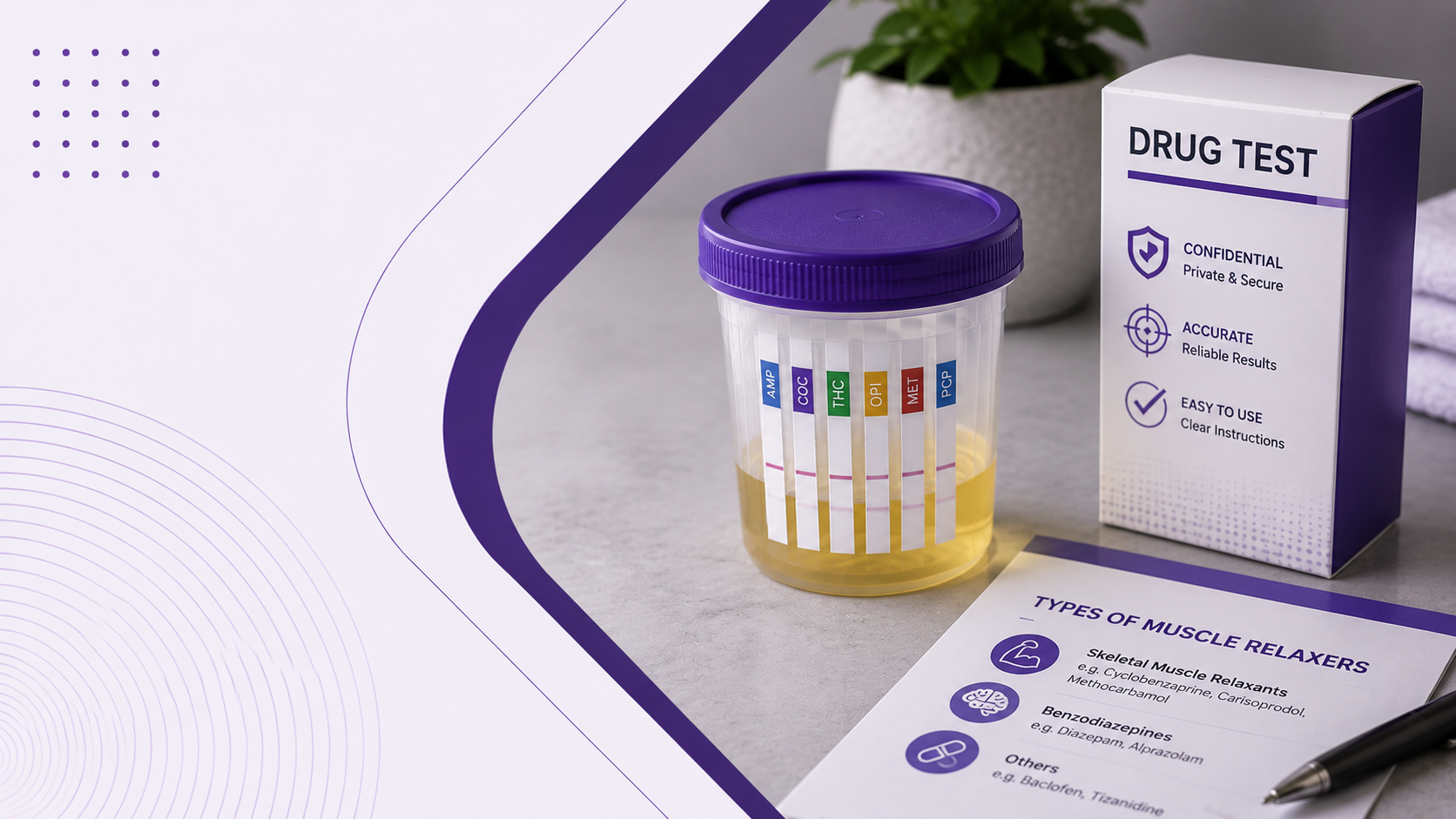
Muscle relaxers are prescription medications that help reduce pain, stiffness, and discomfort caused by injuries and medical conditions. While many muscle relaxers are not included in a standard drug test, some medications can appear during specialized drug screening programs.
At Lynk Diagnostics, we provide reliable drug test services for rehab facilities, healthcare organizations, and addiction treatment programs. Understanding how muscle relaxers affect drug test results can help you prepare for testing and avoid confusion.
What Are Muscle Relaxers?
Muscle relaxers are medications used to ease muscle spasms, reduce muscle tension, and improve comfort after injuries. They work by affecting the central nervous system or directly influencing muscles.
Doctors often prescribe muscle relaxers to:
Treat muscle spasms
Reduce muscle pain
Improve muscle function
Help patients recover from muscle strains
Manage muscle spasticity
Some medications are commonly prescribed for conditions such as back pain, neck injuries, multiple sclerosis, and cerebral palsy.
Many common muscle relaxers work by slowing signals within the central nervous system, helping patients experience relief from pain and stiffness.
Do Muscle Relaxers Show Up on a Drug Test?
In most cases, muscle relaxers show up only when the test specifically looks for them. A standard drug test is designed to detect commonly abused substances, not necessarily prescription medications used for medical purposes.
Most standard drug panels focus on:
Marijuana
Cocaine
Amphetamines
Opiates
PCP
Because of this, most standard drug tests and most routine drug tests do not routinely detect muscle relaxers.
However, certain employers, rehab facilities, and healthcare programs may order expanded drug screening tests that can detect drug compounds beyond traditional panels.
Whether muscle relaxers show on testing depends largely on the testing method used and the specific medication being taken.
Which Muscle Relaxers Are More Likely to Be Detected?
Not all muscle relaxants behave the same way. Some are easier to identify than others.
Certain muscle relaxers may trigger additional review because they share chemical similarities with other medications. Some prescribed muscle relaxers have been associated with false positives during initial screening.
Examples include:
Cyclobenzaprine
Carisoprodol
Baclofen
Tizanidine
Methocarbamol
A specific muscle relaxer may have different testing outcomes compared to other muscle relaxants.
If you are taking prescribed medications, always inform the testing administrator before providing a sample.
Can Muscle Relaxers Cause False Positives?
One of the biggest concerns during a drug test is the possibility of false positives.
Some muscle relaxers and other prescription medications have occasionally been linked to false positive results. This means the initial screening may incorrectly identify a substance that is not actually present.
Several factors can contribute to false positives, including:
Similar chemical structures
Laboratory screening limitations
Interactions with other substances
Cross-reactivity with testing equipment
Certain medications may occasionally resemble tricyclic antidepressants during screening. Because of this, some muscle relaxers have been associated with false positives for tricyclic antidepressants.
When false positive results occur, laboratories use confirmatory tests to determine the actual substance present.
These advanced confirmatory tests greatly reduce the risk of inaccurate reporting and help ensure reliable drug test results.
Types of Drug Testing Used
Different forms of drug screening can affect whether muscle relaxers show during testing.
Urine Tests
Urine tests are the most common form of drug screening. Many employers, treatment programs, and healthcare organizations rely on this method.
A urine-based drug test is affordable, accurate, and widely accepted.
Although many muscle relaxers are not included in a standard drug test, expanded testing panels may identify certain medications.
Blood Tests
Blood tests provide a more immediate view of recent medication use.
Because medications circulate through the bloodstream, blood tests may identify recent use of prescription drugs more effectively than some other methods.
Saliva Tests
Saliva tests are increasingly common in workplace settings.
These tests detect recent exposure and may identify certain medications shortly after use. Some saliva tests can detect substances for several hours or days depending on the medication.
Hair Tests
Hair tests offer one of the longest testing periods available.
Many hair tests can detect medication use for up to 90 days. However, they are less common than urine-based screening.
Hair Follicle Tests
Hair follicle tests examine substances deposited in hair over time. Like hair tests, they provide long-term detection and may reveal patterns of drug use.
How Long Do Muscle Relaxers Stay in Your System?
People often wonder how long muscle relaxers stay in the body.
The answer depends on the medication and individual health factors. Different muscle relaxers stay in the body for different lengths of time.
The primary factor is the medication’s half life.
The half life refers to how long it takes the body to eliminate half of a drug. Medications with a longer half life generally remain detectable longer.
Several factors influence how long medications stay in your system, including:
Age
Weight
Metabolism
Dosage
Overall health
Activity level
Because muscle relaxers varies depending on the medication involved, there is no single answer for every person.
Some medications may stay in your system for a few days, while others may remain detectable for longer periods.
Detection Windows for Muscle Relaxers
Understanding detection windows can help you prepare for testing.
Typical detection windows depend on the medication and testing type.
Common influences include:
Frequency of use
Higher doses
Duration of treatment
Individual metabolism
For some medications, detection windows may be extended when people take higher doses or use medications regularly.
A person’s kidney function, liver health, and overall health can also impact how quickly medications leave the body.
Factors That Affect Detection
Several factors influence whether a medication appears on a drug test.
Kidney and Liver Function
Healthy kidney function helps remove medications from the body. Reduced kidney function can slow elimination.
Likewise, liver health and proper liver function play important roles in processing medications.
Dosage and Frequency
People taking higher doses may retain medication longer than those taking occasional doses.
Overall Health
Health conditions, body composition, and metabolism can affect how long medications stay in your system.
Other Substances
Using other drugs, supplements, or over the counter medications may affect testing outcomes in some situations.
These and several factors together determine how likely a medication is to appear during drug screening.
Why Are Muscle Relaxers Prescribed?
Doctors often prescribe prescribed muscle relaxers to help patients manage painful conditions.
These medications may:
Relieve muscle spasms
Reduce muscle tension
Improve mobility
Reduce discomfort from injuries
Many are commonly prescribed after accidents, surgeries, or sports injuries.
Some patients with neurological disorders such as multiple sclerosis or cerebral palsy may also benefit from muscle relaxants.
In some cases, treatment plans may include physical therapy, exercise, and medication together.
Are Muscle Relaxers Controlled Substances?
Not all muscle relaxers are classified as controlled substances.
However, some medications fall into categories regulated by federal and state laws because of their potential for misuse.
Certain controlled substances may require closer monitoring and specialized drug screening procedures.
Because some medications have abuse potential, they may be monitored within addiction treatment programs.
Can Muscle Relaxers Lead to Dependence?
Most patients use muscle relaxers safely under a doctor’s guidance.
However, some medications can cause physical dependence when used for long periods or in ways not prescribed.
Stopping certain medications suddenly may lead to withdrawal symptoms.
Possible withdrawal symptoms may include:
Anxiety
Restlessness
Sleep problems
Discomfort
Medical professionals recommend medical supervision when discontinuing medications that may cause physical dependence.
What Should You Do Before an Upcoming Drug Test?
If you have an upcoming drug test, honesty is important.
Before arriving at the testing site, bring information about your prescription medications and any prescribed medications you currently take.
You should:
Inform the testing administrator
Provide documentation if requested
Discuss concerns with your healthcare provider
Avoid taking medications differently than prescribed
A qualified healthcare provider can explain how a medication may affect testing.
This is especially important for people working in safety sensitive industries, where accurate testing is critical.
How Lynk Diagnostics Helps With Drug Testing
Lynk Diagnostics is a professional testing facility focused on drug testing and toxicology services for rehab facilities.
Our team performs accurate drug screening using industry-standard procedures. Whether a program needs a standard drug test, expanded drug screening tests, or testing designed to detect commonly abused substances, we provide dependable solutions.
Our testing facility uses advanced processes to reduce false positives, confirm any positive result, and deliver reliable results.
For organizations involved in substance abuse, recovery monitoring, and mental health support programs, accurate testing is essential.
If a screening produces a positive result, additional testing can help determine whether the result came from a legitimate prescription or another source.
Conclusion
So, will a muscle relaxer show up in a drug test? In many cases, the answer is no. Most standard drug panels are designed to detect commonly abused substances rather than prescription muscle relaxers.
However, some certain muscle relaxers may appear during expanded testing, and some medications may contribute to false positives during initial screening. Factors such as the medication used, dosage, half life, testing type, and overall health all play a role.
If you take prescribed muscle relaxers and have concerns about drug test outcomes, speak with your healthcare provider and notify the laboratory before testing. Lynk Diagnostics is committed to delivering accurate testing services that help organizations make informed decisions with confidence.
FAQs
Will a muscle relaxer make me fail a drug test?
Most muscle relaxers do not appear on a typical drug test. However, specialized testing may identify certain medications.
Can muscle relaxers cause false positives?
Yes. Some medications have been associated with false positives, especially during initial screening. Follow-up testing can usually clarify the result.
How long do muscle relaxers stay in your system?
How long muscle relaxers stay in the body depends on the medication’s half life, dosage, and individual health factors.
Are muscle relaxers controlled substances?
Some muscle relaxers are considered controlled substances, while others are not. Classification depends on the medication.
Can a healthcare provider explain my drug test results?
Yes. A healthcare provider can review your medications, explain testing outcomes, and discuss any concerns about your drug test results.
Resources
U.S. Food & Drug Administration (FDA)
https://www.fda.gov
Provides information about prescription medications, drug safety, approved drug labeling, and medication guidance.MedlinePlus – Muscle Relaxants
https://medlineplus.gov
A trusted resource from the U.S. National Library of Medicine with information about muscle relaxants, side effects, and safe use.Substance Abuse and Mental Health Services Administration (SAMHSA)
https://www.samhsa.gov
Offers information on substance use, addiction treatment, recovery support, and drug testing programs.National Institute on Drug Abuse (NIDA)
https://nida.nih.gov
Provides research-based information on prescription drugs, substance use disorders, drug screening, and treatment.Mayo Clinic – Prescription Drug Information
https://www.mayoclinic.org
Contains expert-reviewed information about medications, muscle relaxants, potential side effects, and patient safety considerations.