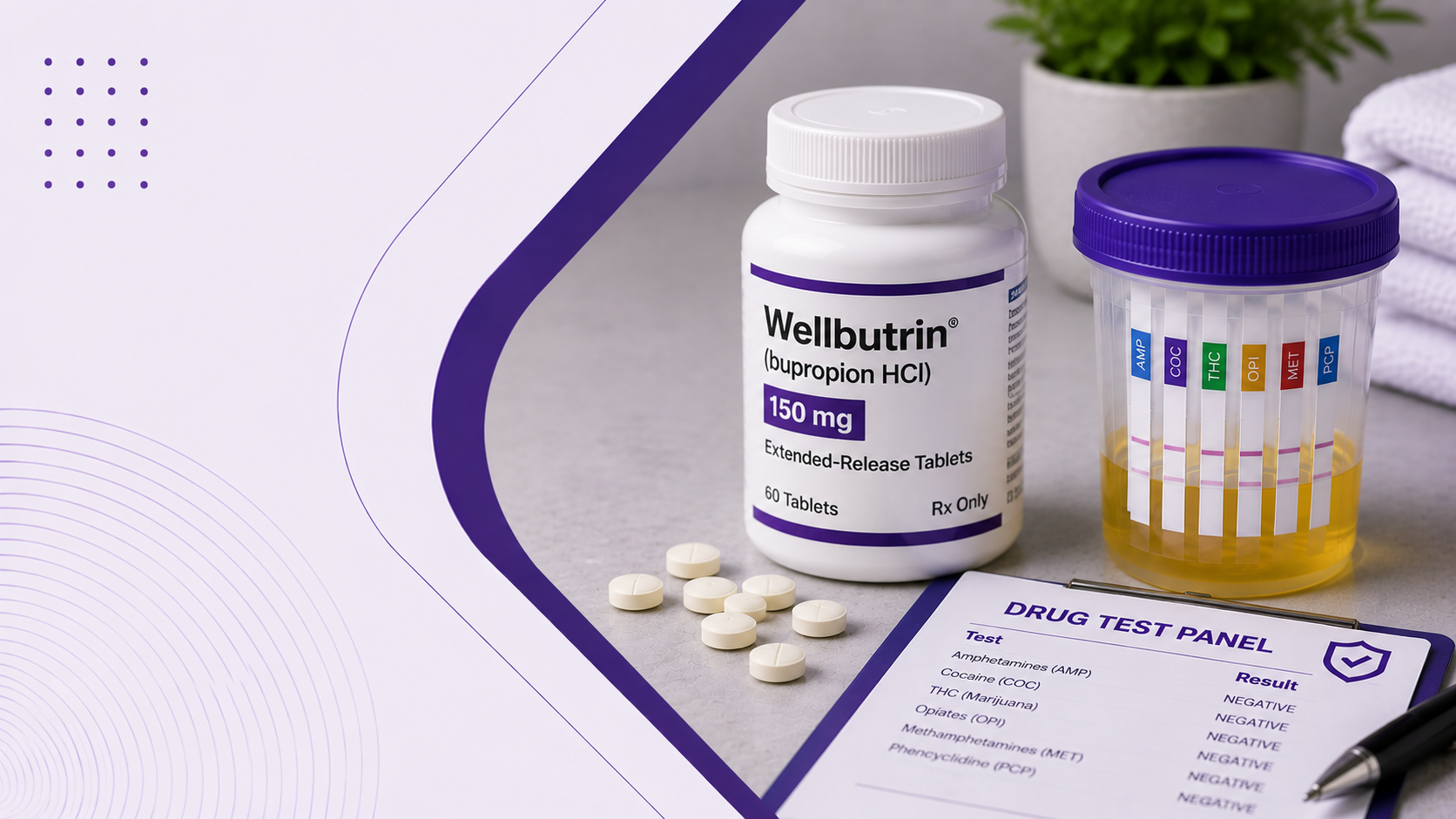
Does Wellbutrin show up on a drug test? In most cases, Wellbutrin does not show up as Wellbutrin on standard drug tests. Wellbutrin is the brand name for bupropion, an antidepressant used to treat depression, major depressive disorder, and seasonal affective disorder. It may also be used as a smoking cessation aid under medical care.
Even though Wellbutrin is not an illicit drug, it can sometimes cause a false positive on certain drug screens. The main concern is a false positive result for amphetamines. This does not mean a person used amphetamines. It means the first test may have reacted to bupropion or its active metabolites in the urine.
At Lynk Diagnostics, we help rehab facilities, treatment centers, and care teams understand drug screen results with care. Drug tests should never be judged by a simple positive result alone when medications are involved. Confirmatory testing can help avoid misinterpretation and protect patient trust.
Why Wellbutrin Can Cause a False Positive
Wellbutrin can cause a false positive because some urine drug screen tools look for drug groups by shape, not by exact drug name. Many first-step drug screens use immunoassay testing. These tests are fast and helpful, but they are not perfect.
A urine drug screen may react with bupropion because the drug and its active metabolites can create cross reactivity. Cross reactivity means the test reacts to something that looks similar enough to the target drug. In this case, the test may mark the sample as positive for amphetamines even when amphetamines were not used.
This is why false positive amphetamine screens have been reported in people taking Wellbutrin. Some studies and toxicology reports have linked bupropion with false positive drug screen findings. One known test type, the Syva EMIT II immunoassay, has been discussed in relation to bupropion and false positive results.
The term ii immunoassay is often seen in clinical writing about this issue.
A false positive drug screen can cause stress for patients, families, and rehab teams. It can also affect care plans if drug screen results are not reviewed the right way. Lynk Diagnostics supports careful review, clear records, and confirmatory testing when test results do not match the patient’s history.
What Wellbutrin Is Used For
Wellbutrin is one of the commonly prescribed medications used for mental health conditions. It is an antidepressant, but it works differently than many other antidepressant drugs. Bupropion affects brain chemicals linked to mood, energy, and focus.
Wellbutrin may be prescribed for major depressive disorder. It may also be used for seasonal affective disorder, which is depression that often happens during certain times of the year. Some forms of bupropion may also be used to help people stop smoking. A healthcare provider should guide use, dose, and any changes.
Wellbutrin SR is a sustained release form. Bupropion sustained release means the medication is released over time. Wellbutrin XL is an extended release form. Extended release drugs are made to last longer in the body. These forms can affect how long Wellbutrin stays in the system.
Wellbutrin is not a controlled substance. It is not tested for as one of the main illicit drugs on most standard drug tests. Still, drug interactions, other medications, dosage, liver function, kidney function, and personal factors can affect how a person’s body handles bupropion.
Wellbutrin, Amphetamines, and Drug Screen Results
The biggest issue with Wellbutrin and drug tests is a possible false positive result for amphetamines. Amphetamines are stimulant drugs. Some are prescribed, and some are illicit drugs. A basic urine drug test may not be able to tell the difference between a true positive and a false positive without more testing.
When a person is taking Wellbutrin, a urine drug screen may come back positive for amphetamines. This can happen even if the person has not taken amphetamines. That is why positive drug screen results should be reviewed with the full medication list.
False positive amphetamine screens do not prove substance abuse. They show that more review may be needed. In a rehab setting, this is very important. A false positive drug screen can harm trust if it is treated like proof of drug use before confirmatory testing is done.
Confirmatory testing can help show whether amphetamines are truly present. Tests such as GC MS can look more closely at the sample. GC MS is more specific than many first-step urine tests. It can help separate bupropion-related false positive results from actual amphetamines.
How Long Does Wellbutrin Stay in Your System?
Many people ask how long Wellbutrin stays in the body before a test. The answer can vary. Wellbutrin stay time depends on the dose, dosage form, last dose, metabolism, liver function, kidney function, age, and other medications.
The half life of a drug helps explain how long it may stay in your system. Half life means how long it takes for the body to remove about half of the drug. Bupropion has active metabolites that may stay longer than the main drug. This is one reason drug screens may still be affected after the last dose.
Wellbutrin SR, Wellbutrin XL, sustained release, and extended release forms may all have different timing. Long Wellbutrin stays in the body can vary by person. Older adults, people with liver function problems, and people with kidney function concerns may clear medications more slowly.
A blood test may show different timing than a urine drug test. Blood testing often has a shorter window for many drugs, while urine testing may detect drug metabolites for longer. Drug tests also vary by lab, cutoff level, and method used.
Types of Drug Tests That May Be Used
Drug tests may use urine, blood, saliva, hair, or other samples. For Wellbutrin concerns, the most common issue is with a urine drug screen. Urine drug testing is common in rehab facilities because it is fast, simple, and useful for monitoring many drugs.
A urine drug test can check for several drug groups. These may include amphetamines, opioids, cocaine, benzodiazepines, cannabis, and other drugs. Standard drug tests often use a first-step screen. If the urine drug screen is positive, the lab may recommend confirmatory testing.
Urine tests are helpful, but they can have false positive and false negatives. False negatives mean a test does not find a drug that is actually present. False positive means the test suggests a drug is present when it is not. Both issues show why drug screen results should be read with care.
Drug screens should include the person’s full medication list when possible. This includes Wellbutrin, other antidepressants, over the counter medications, and other medications. Some over the counter medications and antidepressant drugs may also trigger false positives on certain drug screens.
What to Do If Wellbutrin Causes a Positive Test
If you are taking Wellbutrin and your test is positive for amphetamines, do not panic. A positive screen is not always a final result. It is a first step. The next step should be careful review.
Tell the testing team or healthcare provider that you are taking Wellbutrin. Share the dose, last dose, and whether it is Wellbutrin SR or Wellbutrin XL. Also share other medications, over the counter medications, and any supplements. This helps the lab and care team avoid misinterpretation.
Ask whether confirmatory testing is available. Confirmatory testing can help show whether the first positive result was caused by true amphetamine use or by bupropion cross reactivity. GC MS or similar lab testing may be used when drug screen results are unclear.
Rehab facilities should avoid making major decisions based only on one unconfirmed urine drug screen. A false positive result can affect patient care, trust, and treatment planning. Lynk Diagnostics helps support clear drug screen results so care teams can make informed choices.
Why Confirmatory Testing Matters for Rehab Facilities
For rehab facilities, drug tests are more than lab reports. They help guide care, safety, accountability, and recovery support. But drug screens can be misunderstood when medications are not reviewed.
Confirmatory testing matters because it gives a clearer answer. It can help avoid misinterpretation of positive results. This is especially important when a patient is taking Wellbutrin or other antidepressants that may trigger false positives.
A patient may be taking Wellbutrin for depression, major depressive disorder, seasonal affective disorder, or other mental health conditions. If a urine drug screen is positive for amphetamines, the care team should look at the full picture before assuming substance abuse.
Health system pharmacists, lab staff, clinicians, and treatment teams all play a role in reading drug screen results. Sources such as US Pharm and toxicology journals have discussed medication-related false positives. Reports in J Med Toxicol and J Anal Toxicol also show why medical context matters.
Factors That Can Affect Test Results
Many things can affect test results. These include the type of test, the lab method, cutoff levels, timing, dose, last dose, and the person’s health. Liver function and kidney function can also affect how long Wellbutrin stays in the body.
Taking Wellbutrin with other drugs or medications may also matter. Drug interactions can change how the body breaks down bupropion. Other medications and other antidepressants may also affect drug screens. This is why a complete medication list is important.
Some people may have a false positive result, while others taking Wellbutrin may not. The possibility depends on the test method. Not all drug tests have the same risk. Some immunoassay drug screens are more likely to have cross reactivity than others.
A positive result should be checked if it does not match the patient’s history. Confirmatory testing helps protect the patient and the rehab program. It also supports fair treatment, accurate records, and better care decisions.
Lynk Diagnostics Helps Rehab Teams Read Drug Tests Clearly
Lynk Diagnostics is a drug testing center dedicated to rehab facilities. We understand that drug tests are used in sensitive care settings. A false positive can affect trust, treatment, and recovery planning.
Our goal is to help care teams use drug screens in a clear and fair way. When a patient is taking Wellbutrin, bupropion should be considered during result review. If a urine drug screen is positive for amphetamines, confirmatory testing may be needed before final action is taken.
Clear testing helps reduce confusion. It also helps avoid misinterpretation when commonly prescribed medications are part of the patient’s care plan. This matters for patients with depression, mental health conditions, and recovery needs.
Drug tests should support care, not create avoidable harm. Lynk Diagnostics helps rehab programs review drug screen results with accuracy and clinical context.
FAQs
Can Wellbutrin cause a false positive on drug tests?
Yes. Wellbutrin can cause a false positive on some drug tests, most often for amphetamines. This is more likely with certain urine drug screen methods. Confirmatory testing can help show whether the result is a true positive or a false positive.
Will Wellbutrin show up as amphetamines?
Wellbutrin may cause a urine drug screen to show positive for amphetamines. This does not always mean the person used amphetamines. Bupropion and its active metabolites can trigger false positives because of cross reactivity in some drug screens.
How long does Wellbutrin stay in your system?
How long Wellbutrin stays in the body depends on the half life, dose, last dose, form, liver function, kidney function, and personal factors. Wellbutrin XL and Wellbutrin SR may stay active longer because they are extended release or sustained release forms.
What should I do if my urine drug screen is positive while taking Wellbutrin?
Tell your healthcare provider or testing team that you are taking Wellbutrin. Share your dosage, last dose, and other medications. Ask about confirmatory testing, such as GC MS, before any final decision is made.
Can Lynk Diagnostics help with Wellbutrin drug test questions?
Yes. Lynk Diagnostics helps rehab facilities understand drug tests, urine drug screen concerns, false positive results, and confirmatory testing needs. We help care teams review drug screen results with accuracy and context.
Resources