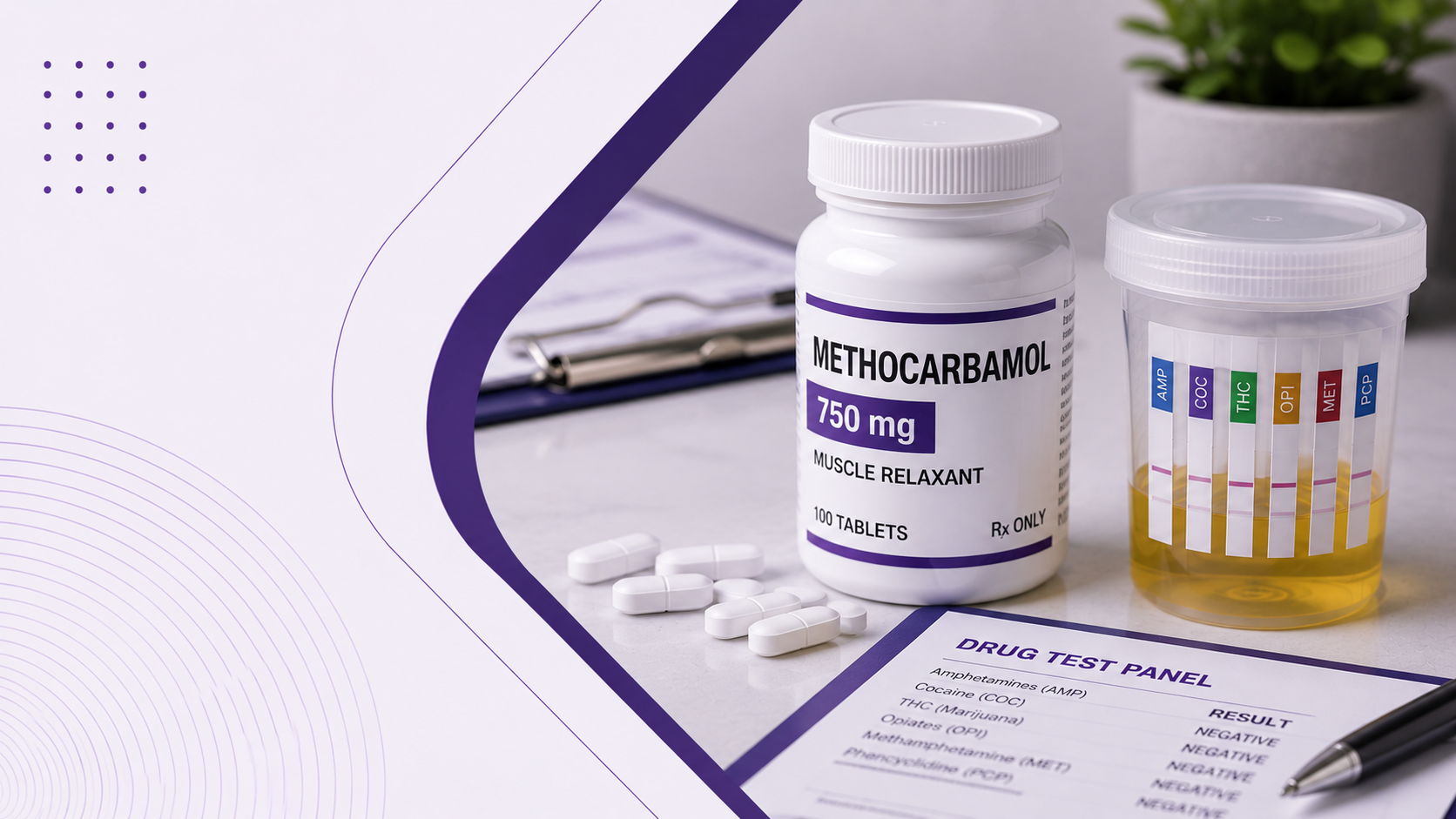
Methocarbamol is a prescription muscle relaxant often used to treat pain, muscle spasms, and muscle strains. Many people who take this medication worry about drug screening for work, court requirements, addiction treatment programs, or medical procedures. One of the most common questions is: does methocarbamol show up on a drug test?
The good news is that methocarbamol is not usually included in standard drug tests. However, there are situations where specialized tests may identify the medication. Understanding how drug tests work, how long the medication may stay in your system, and what factors affect the detection window can help you prepare for testing.
At Lynk Diagnostics, we provide accurate testing services and help rehab facilities better understand drug test results and toxicology screening.
What Is Methocarbamol?
Methocarbamol, sometimes called robaxin methocarbamol, belongs to a group of medications known as muscle relaxants. It is commonly prescribed to help relieve muscle spasms caused by injuries, overuse, or other physical conditions.
This prescription muscle relaxant works by affecting the central nervous system. Some healthcare professionals classify it as a mild central nervous system depressant because it slows certain nerve signals that contribute to pain and tension.
A healthcare provider may prescribe methocarbamol alongside physical therapy and rest to help patients recover from muscle strains and other injuries.
Unlike many prescription drugs that appear on routine screening panels, methocarbamol is not considered a high-risk drug for abuse.
Why Standard Drug Tests Usually Do Not Detect Methocarbamol
A common concern is whether does methocarbamol show up on a drug test when taking medication as directed.
Most employers use standard drug tests to identify illegal substances and certain controlled medications. These tests are not designed to detect drugs like methocarbamol.
The goal of these screenings is to detect commonly abused substances, not every medication a person may take. As a result, most standard drug tests will not identify methocarbamol.
How Long Does Methocarbamol Stay in Your System?
One of the biggest questions people have is how long methocarbamol remains in the body.
Several factors determine how long a medication will stay in your system, including age, metabolism, dosage, and overall health. Understanding how long methocarbamol remains detectable starts with understanding its half life.
The methocarbamol half life is relatively short compared to many medications. The robaxin half life is approximately one to two hours in most healthy adults.
Because of this short half life, methocarbamol leaves the body fairly quickly. However, traces may still stay in your system longer depending on individual circumstances.
If you are wondering long does methocarbamol stay in the body, the answer varies. In many cases, methocarbamol may stay in your system for about one day after the last dose, though some people may eliminate it faster or slower.
Understanding Methocarbamol Half Life
The half life of a medication measures how long it takes for half of the drug to leave the body. The medication’s half life is important because it helps estimate the overall detection window.
The methocarbamol half life is considered a relatively short half life. Since the half life is only a few hours, the medication is processed efficiently in many healthy adults.
Even though the half life is short, some individuals may experience slower clearance. Factors such as age, kidney function, and liver health can affect how quickly the body removes the medication.
Understanding the half life helps answer questions like how long methocarbamol can stay in your system and whether it may appear during drug screening.
Long Does Robaxin Stay in the Body?
People often search for long does robaxin stay because Robaxin is a common brand name associated with methocarbamol.
The answer depends on the person’s metabolism and health status. In most cases, long does robaxin stay in the body ranges from several hours to about a day after the last dose.
Several factors influence long does robaxin stay in the body:
Age
Body weight
Kidney function
Liver health
Dosage amount
Frequency of use
Taking higher doses may increase the amount of time the medication can stay in your system.
Types of Drug Tests That May Detect Methocarbamol
While most screening programs will not test for methocarbamol, some certain drug tests may identify it.
Urine Drug Tests
Urine drug tests are the most common form of drug test used in workplaces and treatment settings.
Most urine drug tests do not include methocarbamol. However, specialized tests can identify the medication when specifically requested.
A urine test may detect methocarbamol if the laboratory is instructed to look for it. For standard employment screening, urine drug tests generally focus on commonly abused substances.
Blood Testing
Blood testing is less common but can detect medications currently circulating in the bloodstream.
Because methocarbamol has a short half life, blood testing usually has a shorter detection window than other methods.
Doctors may use blood testing during emergencies, overdoses, or certain medical procedures.
Hair Tests
Hair tests can provide a longer detection window than urine-based methods.
Although hair tests can detect many medications, methocarbamol is not commonly included in routine screening panels. Some specialized tests and hair tests may identify it if specifically requested.
Comprehensive Toxicology Screen
A comprehensive toxicology screen looks for a wide range of medications and substances.
Unlike standard drug tests, a comprehensive toxicology screen may include methocarbamol and other substances depending on the purpose of testing.
Can Methocarbamol Cause False Positives?
Many people worry that methocarbamol may cause false positives on a drug test.
Research suggests methocarbamol is generally unlikely to create false positives, but no testing system is perfect. Some medications have been associated with false positives for various drug categories.
If a screening test produces a positive result, laboratories often perform confirmatory testing to verify the findings. This process helps reduce concerns about false positives and inaccurate results.
When discussing medications before a drug test, always disclose prescription medications to the testing facility.
Factors That Affect How Long Methocarbamol Stays in Your System
Many people ask long does methocarbamol stay in the body after treatment ends.
The answer depends on several factors, including:
Kidney Function
Good kidney function helps the body eliminate medications efficiently. People with reduced kidney function or kidney disease may process methocarbamol more slowly.
Liver Health
Liver health also affects how the body breaks down medications. Poor liver health can extend how long medications stay in your system.
Age
Older adults often process medications more slowly than younger individuals. As a result, methocarbamol may stay in your system longer in older adults.
Dosage
Taking higher doses may increase the amount of time methocarbamol remains in the body. The last dose and treatment duration can influence the overall detection window.
Chronic Illnesses
People with chronic illnesses may experience differences in how their bodies process medications. Certain health conditions can impact how the body processes medications.
Methocarbamol and Mental Health Concerns
Although methocarbamol is prescribed for physical conditions, it can affect the central nervous system. Some individuals may experience drowsiness, dizziness, or confusion.
People with mental health concerns should discuss medication use with a healthcare provider. Those managing mental health conditions or mental health issues may be more sensitive to medications that affect the central nervous system.
A healthcare provider can review potential drug interactions between methocarbamol and medications used to treat mental health disorders.
Methocarbamol, Substance Abuse, and Addiction Treatment
Methocarbamol is not typically considered a high-risk controlled substance, but healthcare professionals still monitor medication use.
Individuals receiving addiction treatment may undergo regular drug screening. In these programs, laboratories sometimes use specialized tests that can identify medications beyond the scope of a standard drug test.
People with a history of substance abuse should follow all instructions from their healthcare provider and discuss any concerns regarding other drugs or medication use.
What to Tell the Testing Administrator Before a Drug Test
Before taking a drug test, it is important to inform the testing administrator about any prescription medications you are currently taking.
You should also provide information about:
The medication name
Your dosage
The date of your last dose
Any recent medical procedures
Other prescription drugs
This information helps laboratories correctly interpret drug test results and reduces confusion if additional review becomes necessary.
Does Methocarbamol Show Up on a Drug Test? Final Answer
So, does methocarbamol show up on a drug test? In most situations, no.
Most standard drug tests, urine drug tests, and workplace screening programs are not designed to detect methocarbamol. Since it is not a controlled substance, it is generally excluded from standard drug test panels.
However, specialized tests, blood testing, hair tests, and a comprehensive toxicology screen may detect methocarbamol if testing is specifically requested. The medication has a short half life, meaning it does not usually stay in your system for very long.
If you are concerned about an upcoming drug test, speak with your healthcare provider, disclose all medications, and follow testing instructions carefully.
At Lynk Diagnostics, we help treatment programs, healthcare organizations, and rehab facilities understand how drug tests work, interpret screening data, and deliver accurate toxicology services.
FAQs
Does methocarbamol show up on a drug test for employment?
Most workplace drug test programs do not screen for methocarbamol. Standard panels typically focus on illegal drugs and commonly misused medications.
How long does methocarbamol stay in your system?
Many people ask long does methocarbamol stay after treatment. In most cases, methocarbamol can stay in your system for about one day, though individual factors may affect the timeframe.
Can methocarbamol cause false positives on urine drug tests?
Methocarbamol is not commonly associated with false positives, but screening errors can occur. Confirmatory testing is used to verify unexpected results.
What is the methocarbamol half life?
The methocarbamol half life is generally around one to two hours in healthy adults, making it a medication with a relatively quick elimination process.
Should I tell the testing administrator that I take methocarbamol?
Yes. Always disclose prescription medications before any drug screening. Providing accurate information helps ensure proper interpretation of your results.
Resources
For more information about methocarbamol, drug testing, and medication safety, review the following trusted resources:
U.S. National Library of Medicine (MedlinePlus) – Methocarbamol
https://medlineplus.gov/druginfo/meds/a682579.htmlNational Institute on Drug Abuse (NIDA) – Drug Testing
https://nida.nih.gov/publications/drugfacts/drug-testingSubstance Abuse and Mental Health Services Administration (SAMHSA) – Drug Testing Resources
https://www.samhsa.gov/workplaceMayo Clinic – Prescription Drug Information and Medication Safety
https://www.mayoclinic.org/drugs-supplementsU.S. Food and Drug Administration (FDA) – Medication Guides and Drug Safety
https://www.fda.gov/drugs