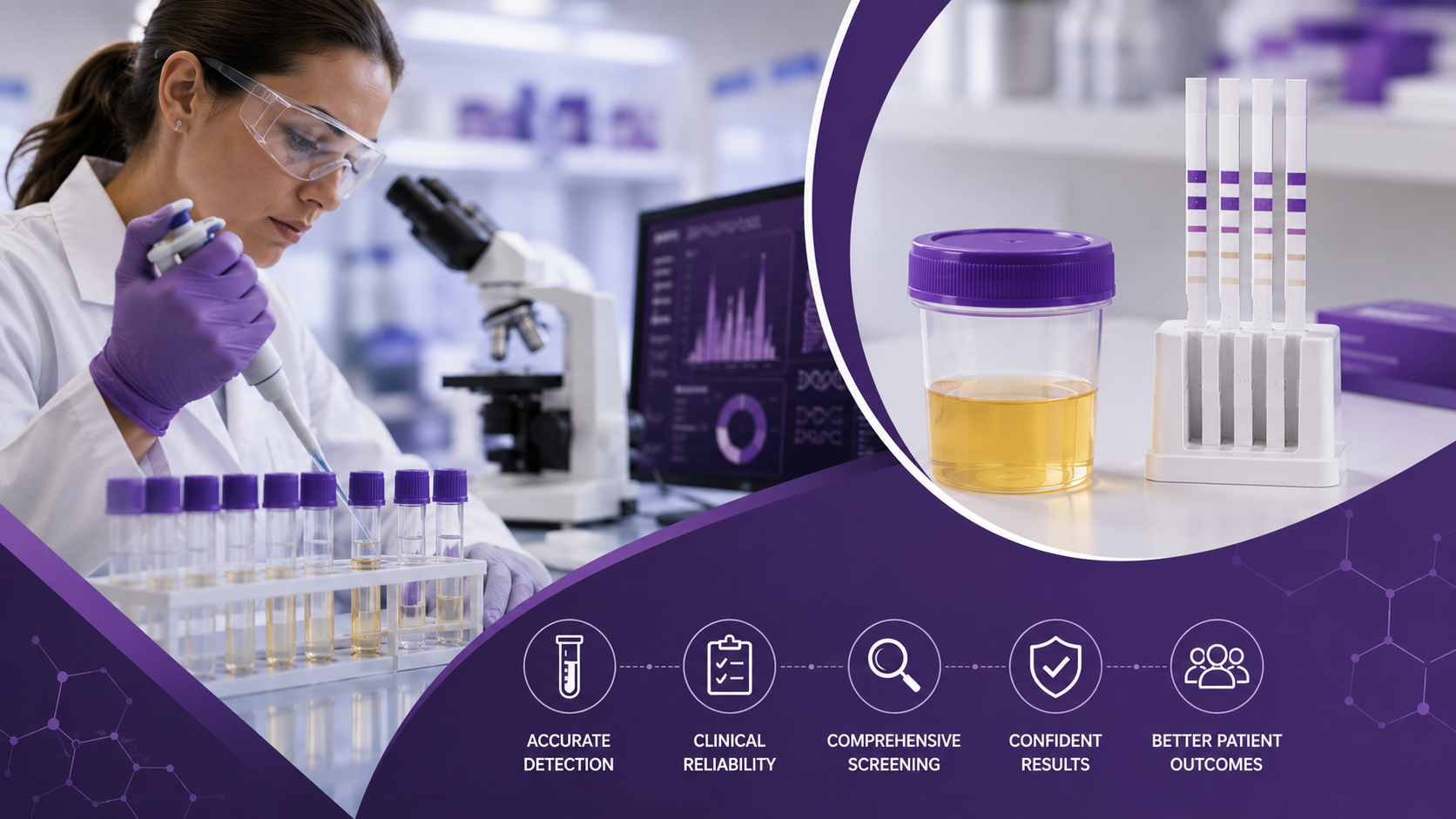
Clinical toxicology testing helps clinicians and rehab centers detect drugs, alcohol, toxins, and other harmful substances in the body. At Lynk Diagnostics, we provide reliable drug testing and toxicology testing services for rehab facilities and treatment programs. Our clinical and toxicology laboratories use advanced methods to help support diagnosis, treatment, compliance, and prevention.
Clinical toxicology plays an important role in healthcare. It helps identify drug use, chemical exposure, substance abuse, and recent exposure to dangerous substances. Testing also helps clinicians manage poisoned or overdosed patients in the emergency department and other healthcare settings.
What Is Clinical Toxicology Testing?
Clinical toxicology testing is a type of laboratory testing that checks urine, serum, blood, or other samples for drugs, chemicals, alcohol, and toxins. A clinical laboratory may perform both qualitative and quantitative testing to identify the presence and amount of substances in the body.
Clinical toxicology testing may help determine:
Drug use
Substance use
Exposure to toxins
Medication misuse
Compliance with treatment
Presence of illicit drugs
Recent exposure to harmful chemicals
This testing is often performed in rehab facilities, hospitals, emergency departments, workplace drug testing programs, and forensic investigations.
Why Clinical Toxicology Testing Matters
Clinical toxicology testing has become an important part of patient care. Substance abuse and polysubstance use are a leading cause of overdose, emergency visits, and long-term health problems.
Testing gives clinicians valuable information to guide treatment and management. It can help identify certain drugs, alcohol, benzodiazepines, cocaine, marijuana, and other illicit substances that may place patients at risk.
Clinical toxicology testing also supports:
Safer treatment plans
Faster diagnosis
Better prevention strategies
Monitoring for compliance
Therapeutic drug monitoring
Drug abuse testing
Workplace drug testing
At Lynk Diagnostics, we help rehab facilities maintain consistency and accuracy with every sample tested.
How Drug Testing Works
Drug testing begins with sample collection. A urine sample is one of the most common methods used in toxicology testing because it is easy to collect and provides useful test results.
Other sample types may include:
Serum
Blood
Saliva
Hair
Oral fluid
The clinical laboratory uses advanced methods to detect drug compounds and toxic substances. Testing may screen for:
Cocaine
Marijuana
Benzodiazepines
Alcohol
Prescription drugs
Illicit drugs
Synthetic substances
Testing is usually performed under controlled conditions to protect the integrity of the sample and reduce the risk of false positive or false negatives.
Common Types of Toxicology Testing
Qualitative Testing
Qualitative testing helps identify whether drugs or substances are present in the sample. This type of testing gives positive or negative results.
Qualitative testing is often used for:
Standard panels
Workplace drug testing
Drug abuse testing
Initial toxicology testing
Quantitative Testing
Quantitative testing measures the amount or dose of a substance found in the body. This type of testing helps clinicians better understand exposure levels and pharmacology.
Quantitative testing may help with:
Therapeutic drug monitoring
Management of overdosed patients
Monitoring prescription medications
Clinical diagnosis
Advanced Testing Methods
Modern clinical and toxicology laboratories use highly advanced testing methods for better accuracy and confirmation.
Gas Chromatography Mass Spectrometry
Gas chromatography mass spectrometry is one of the most trusted methods in toxicology. It helps identify drugs and chemicals with high precision.
This method is commonly used for:
Confirmatory testing
Detection of illicit drugs
Confirmation of positive screening results
Identification of toxins
Gas chromatography mass spectrometry helps reduce false positive results and provides reliable confirmation testing.
High Resolution Mass Spectrometry
High resolution mass spectrometry is another advanced testing method used in clinical toxicology. This technology helps detect very small amounts of substances in the body.
It is useful for:
Detect drug compounds
Identify unknown substances
Research and toxicology studies
Clinical laboratory testing
Exposure analysis
High resolution mass spectrometry provides strong expertise and accuracy for complex toxicology cases.
Therapeutic Drug Monitoring
Therapeutic drug monitoring is a special part of clinical toxicology testing. It measures therapeutic drug levels to help clinicians determine if patients are taking medications safely.
Therapeutic drug monitoring may help:
Prevent misuse
Improve compliance
Reduce overdose risk
Monitor treatment progress
Guide dose adjustments
Clinicians often use therapeutic drug monitoring for patients receiving long-term medications or substance abuse treatment.
Toxicology Testing in Rehab Facilities
Rehab centers depend on accurate toxicology testing to support recovery programs. Lynk Diagnostics works with treatment facilities to provide dependable drug testing and clinical toxicology services.
Testing may help rehab facilities:
Monitor substance use
Detect relapse
Support patient accountability
Improve treatment outcomes
Identify polysubstance use
Track compliance with treatment plans
Consistency in testing is critical for rehab programs. Reliable test selection and accurate methods help clinicians make informed decisions about patient care.
Clinical Toxicology in the Emergency Department
The emergency department often treats poisoned or overdosed patients who need fast diagnosis and management. Clinical toxicology testing helps determine what substances may be present in the body.
Testing may identify:
Alcohol
Benzodiazepines
Cocaine
Marijuana
Prescription drugs
Illicit substances
Toxic chemicals
Fast and accurate toxicology testing supports emergency treatment and may help reduce serious health risks.
Understanding False Positives and False Negatives
False positive and false negatives can happen in some types of drug testing. A false positive means the test shows drugs are present when they are not. False negatives mean drugs are missed even though they are present.
Advanced confirmatory testing helps improve accuracy and reduce errors.
Factors that may affect test results include:
Certain drugs
Prescription medications
Testing methods
Timing of recent exposure
Sample quality
Laboratory procedures
Lynk Diagnostics follows strict guidelines and controlled conditions to improve consistency and reliability.
Confirmatory Testing and Confirmation
Confirmatory testing is used after an initial positive screening result. Confirmation testing provides a more accurate identification of drugs and substances.
Clinical and toxicology laboratories often use:
Gas chromatography mass spectrometry
High resolution mass spectrometry
Advanced laboratory methods
Confirmation testing is important because it helps clinicians verify positive results before making treatment decisions.
Substance Abuse and Clinical Toxicology
Substance abuse remains a major public health problem. Toxicology testing helps clinicians identify abuse, misuse, and exposure to harmful substances.
Common substances detected during testing include:
Cocaine
Marijuana
Alcohol
Benzodiazepines
Opioids
Synthetic drugs
Illicit substances
Clinical toxicology helps support prevention, treatment, diagnosis, and recovery services for patients struggling with substance use.
The Role of Clinical Chemistry in Toxicology
Clinical chemistry is another important part of toxicology testing. Clinical chemistry measures chemicals and substances in body fluids.
Clinical chemistry testing may help determine:
Organ damage
Toxic exposure
Alcohol levels
Drug concentrations
Overall patient health
This information supports clinicians during diagnosis and treatment management.
Why Choose Lynk Diagnostics
Lynk Diagnostics is dedicated to helping rehab facilities with trusted clinical toxicology testing and drug testing services.
Our laboratory team focuses on:
Accurate test results
Fast turnaround times
Confirmatory testing
Advanced toxicology methods
Reliable clinical laboratory services
Strong compliance standards
We understand the important role toxicology plays in addiction treatment and patient care.
A Practical Guide to Toxicology Testing
A strong toxicology program should include:
Proper test selection
Reliable laboratory testing
Consistency in procedures
Confirmatory testing
Clear guidelines
Accurate identification methods
Clinicians and treatment providers rely on toxicology expertise to support safer care and better outcomes for patients.
FAQs
What is clinical toxicology testing used for?
Clinical toxicology testing is used to detect drugs, alcohol, toxins, and chemicals in the body. It helps support diagnosis, treatment, and substance abuse monitoring.
What sample is most commonly used for toxicology testing?
A urine sample is one of the most common samples used for toxicology testing because it is easy to collect and provides useful test results.
What is confirmatory testing?
Confirmatory testing is advanced laboratory testing used to verify positive drug screening results. Methods like gas chromatography mass spectrometry provide more accurate confirmation.
Can toxicology testing detect illicit drugs?
Yes. Toxicology testing can detect illicit drugs such as cocaine, marijuana, opioids, benzodiazepines, and other substances.
Why is therapeutic drug monitoring important?
Therapeutic drug monitoring helps clinicians determine if patients are taking medications safely and correctly. It supports compliance, treatment management, and overdose prevention.