Understanding how LSD works, how long it remains in the body, and what type of test can identify it is important. At Lynk Diagnostics, we provide accurate drug testing services for treatment centers and healthcare organizations that need reliable results and professional reporting.
What Is Acid?
Acid is the street name for lysergic acid diethylamide, a powerful psychedelic substance. Lysergic acid diethylamide LSD affects the brain and can change thoughts, emotions, and sensory experiences.
Because LSD is a schedule I substance, the federal government considers it to have a high potential for misuse and limited accepted medical use. The legal status of LSD makes possession illegal in most situations throughout the United States.
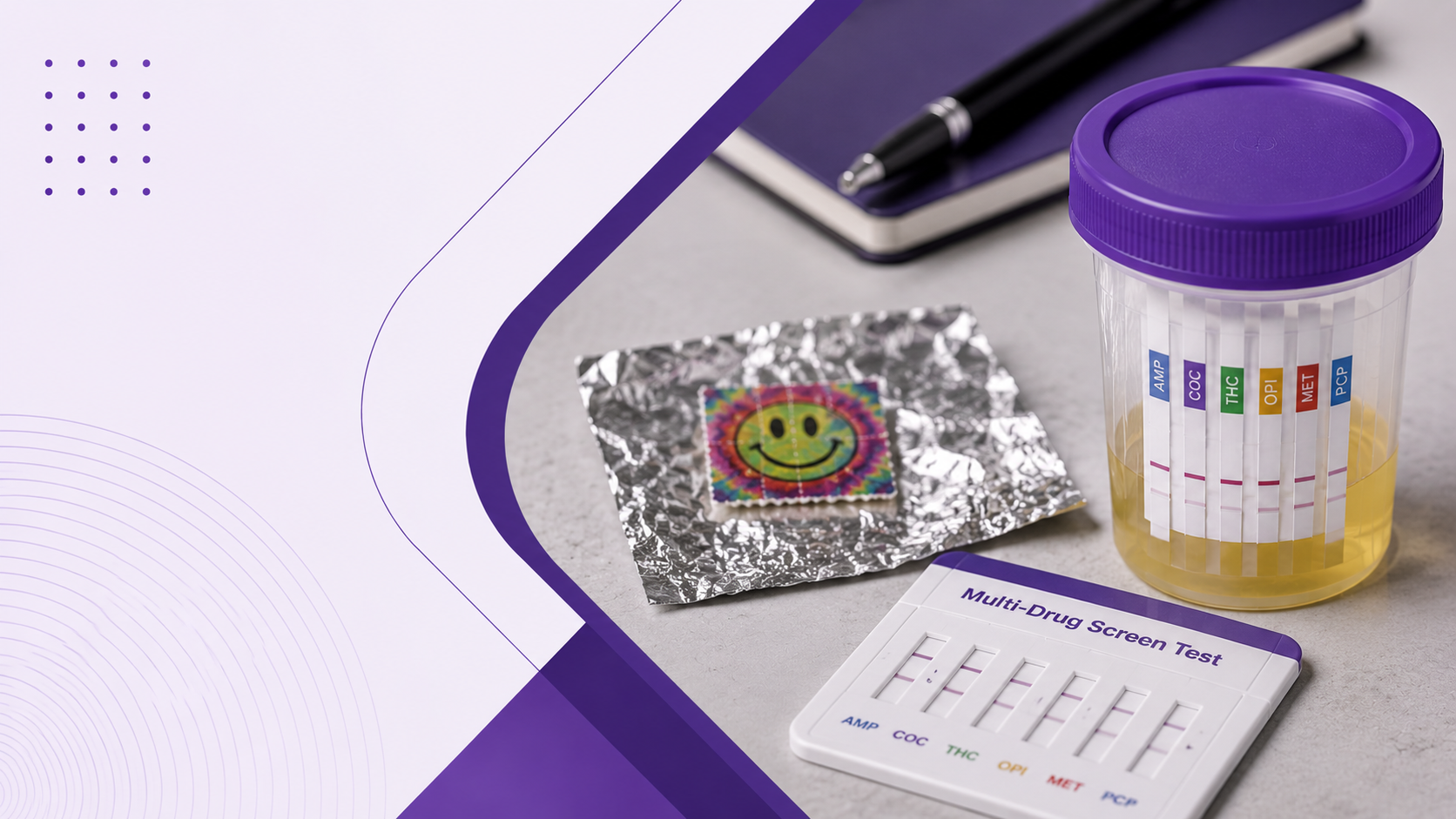
People often take acid on blotter paper, although it may also be found in liquid, tablet, or gelatin forms. After taking acid, users may experience visual hallucinations, a distorted sense of time, and altered perception of reality.
Does LSD Show Up on a Drug Test?
The simple answer is yes, LSD show up on certain tests. However, most drug tests do not routinely screen for LSD.
A standard employment drug test usually looks for substances such as marijuana, cocaine, opioids, amphetamines, and other commonly abused substances. Since LSD is used less often than many other drugs, it is not commonly included.
To detect LSD, laboratories often need specialized tests that are specifically designed to identify the substance or its metabolites. This means LSD detection is possible, but it may require a separate drug screening request.
Why LSD Is Hard to Detect
One reason it can be difficult to detect LSD is that the body processes it quickly. LSD is active at extremely small amounts, and only trace amounts remain after metabolism occurs.
Research in clinical pharmacokinetics shows that LSD’s effects can last several hours even though the substance begins leaving the body soon after use. This creates a relatively short detection window compared to many other substances.
Because LSD is potent at very low levels, laboratories must use sensitive testing equipment for objective testing. This is another reason why standard panels may not include it.
How Long Does Acid Stay in Your System?
A common question is how long does acid remain detectable. The answer depends on several factors.
When discussing how long LSD remains in the body, experts look at metabolism, body composition, dose size, and overall health.
In general:
LSD stays in blood for several hours to a couple of days.
LSD stays in urine for a short period after use.
Hair testing may detect exposure for a longer period.
The last dose taken affects how long detection remains possible.
Many people ask how long LSD can be found after use. While there is no exact answer for every person, LSD leaves the bloodstream relatively quickly.
The amount of time LSD stays detectable depends on various factors, including age, metabolism, body weight, and hydration.
Urine Tests for LSD
Urine tests are among the most common forms of substance testing. A urine sample is easy to collect and process.
Although urine tests can detect LSD, the detection period is often limited. Since LSD has a short detection window, many people may test negative after only a few days.
A laboratory examining urine may identify metabolites that remain after the body processes acid. However, standard workplace panels generally do not screen for LSD unless specifically requested.
When a person takes LSD, metabolites may remain in urine for a brief time before the body eliminates them.
Blood Tests for LSD
Blood tests can sometimes detect LSD shortly after use. These tests are most useful when conducted soon after consumption.
Because LSD leaves the bloodstream relatively quickly, blood tests usually have a shorter detection period than other methods.
Healthcare providers may use blood tests during medical evaluations when recent LSD use is suspected. A drug investigation involving recent impairment may also use blood tests.
Hair Test Detection
A hair test offers one of the longest detection periods available. During this process, laboratories analyze hair samples for evidence of substance exposure.
A hair test may identify LSD long after the substance has left the bloodstream and urine. However, detecting LSD in hair can be more challenging than detecting many other drugs.
Because a hair test can review a longer history of use, it may be useful in certain treatment or legal situations.
Can Saliva Tests Detect LSD?
Some people wonder whether saliva tests can identify acid use.
While saliva tests exist for many substances, they are not commonly used to screen for LSD. The detection period is generally very short, and laboratories often rely on urine, blood, or hair-based methods instead.
Like other drug tests, saliva screening must be sensitive enough to identify very small amounts of the substance.
Factors That Affect LSD Detection
Several factors influence how long LSD stays in the body.
Dose Size
People taking higher doses may have a longer detection period than individuals using small doses or low doses.
Liver Function
The liver helps process substances in the body. Healthy liver function may affect how quickly LSD is metabolized.
Liver Health
Good liver health supports normal metabolism. Since the liver breaks down many compounds, overall health can influence how long acid remains detectable.
Frequency of Use
Someone who uses LSD more often may experience different detection times than someone who used it once.
Individual Biology
Every person takes substances differently. Age, weight, hydration, metabolism, and genetics all play a role in how long a substance stays in your system.
What Are the Effects of LSD?
LSD’s effects can vary widely between individuals. Some users report pleasant experiences, while others experience fear and confusion.
A typical LSD trip may include:
Visual hallucinations
Emotional changes
Enhanced sensory experiences
A distorted sense of time
Altered perception of reality
Some people describe an LSD trip as enjoyable, while others experience a bad trip with intense fear and anxiety.
Mental Health Risks of LSD
Although some researchers are studying possible potential therapeutic benefits of psychedelics, there are still significant health risks associated with unsupervised use.
Taking LSD may contribute to mental health challenges in some individuals. A bad trip can cause severe anxiety, confusion, and psychological distress.
In certain cases, users may experience panic attacks or lingering emotional difficulties after taking LSD.
Some individuals develop hallucinogen persisting perception disorder, a condition involving ongoing visual disturbances after drug use. This perception disorder can interfere with daily life and overall mental health.
Is LSD Addictive?
Many people ask whether acid addictive properties are similar to those of opioids or stimulants.
Experts generally agree that LSD addiction is uncommon because the substance does not usually create strong physical dependence. In addition, LSD is not considered physically addictive in the same way as alcohol, nicotine, or opioids.
However, some people develop unhealthy patterns of LSD use that may contribute to a substance use disorder. Even without significant physical dependence, repeated taking LSD can create problems at work, school, and home.
Can LSD Cause Withdrawal?
Most users do not experience classic withdrawal symptoms when stopping LSD. This differs from substances that cause strong physical dependence.
Even though LSD does not commonly produce severe withdrawal effects, repeated use can still affect emotional well-being and increase the risk of drug abuse patterns.
If taking acid begins to negatively affect daily life, it may be time to seek professional help.
LSD and Other Drug Testing Panels
Many routine testing programs focus on the following substances:
Marijuana
Cocaine
Opioids
Amphetamines
Benzodiazepines
Because LSD is not always included, many standard panels will not automatically detect LSD.
When facilities need to identify LSD, they may request specialized tests in addition to other drug tests. These enhanced panels can screen for LSD and other substances not typically included in basic testing programs.
What Does the National Institute Say About LSD?
The National Institute on Drug Abuse reports that LSD affects serotonin pathways in the brain and can produce profound changes in thinking and perception.
The National Institute also notes concerns regarding psychological distress, impaired judgment, and possible long-term effects in some users.
Because LSD remains a controlled substance, researchers continue studying both risks and potential clinical applications.
When Should You Seek Help?
If taking LSD or using other substances is causing problems in your life, seeking professional help is important.
Substance misuse can impact relationships, work, education, and physical health. While LSD may not create severe physical dependence, repeated use can still contribute to a substance use disorder.
People experiencing recurring bad trip episodes, ongoing panic attacks, or symptoms of hallucinogen persisting perception disorder should speak with a healthcare professional.
Drug Testing Services at Lynk Diagnostics
At Lynk Diagnostics, we provide accurate drug testing services for treatment providers and recovery programs. Whether a facility needs routine drug test panels or advanced testing options, our team supports reliable results and professional reporting.
We understand that every test serves an important purpose. From standard urine collections to specialized laboratory analysis, Lynk Diagnostics helps organizations make informed decisions regarding patient care and compliance.
FAQs
Can acid show up on a drug test?
Yes. Acid or LSD can appear on a drug test if the laboratory uses methods that are designed to identify it. Standard panels often do not include LSD, but specialized testing can detect it.
How long does LSD stay in your system?
The answer varies by person. How long LSD remains detectable depends on dosage, metabolism, and health factors. In most cases, LSD stays in your system for a relatively short period compared to many other substances.
Can urine tests detect LSD?
Yes. Certain urine tests can identify LSD metabolites. However, the detection window is limited because LSD leaves the body relatively quickly.
Does LSD show up on a hair test?
A hair test may detect prior exposure to LSD for a longer period than urine or blood testing. Hair analysis can provide a broader history of substance use.
Is LSD physically addictive?
No. LSD is generally not considered physically addictive. However, some people may develop problematic patterns of use that contribute to a substance use disorder and require treatment or support.
Resources
For additional information about LSD, drug testing, and substance use, visit the following trusted sources:
National Institute on Drug Abuse (NIDA) – LSD DrugFacts
https://nida.nih.gov/publications/drugfacts/lsdSubstance Abuse and Mental Health Services Administration (SAMHSA)
https://www.samhsa.govMedlinePlus – LSD Information
https://medlineplus.govCenters for Disease Control and Prevention (CDC) – Drug Overdose & Substance Use Resources
https://www.cdc.gov/overdose-preventionNational Library of Medicine (PubMed) – LSD Research and Clinical Pharmacokinetics Studies
https://pubmed.ncbi.nlm.nih.gov