When a sudden death happens, families often want clear answers. One common question is: can a toxicology report show cause of death? In many cases, the answer is yes. A toxicology report can help a medical examiner and forensic pathologist understand if drugs, alcohol, poison, or other substances played a role in a person’s death.
At Lynk Diagnostics, we understand how important accurate drug testing and toxicology testing can be. While a toxicology report alone may not always provide the full answer, it often gives strong evidence during an investigation.
What Is a Toxicology Report?
A toxicology report is a laboratory document that shows what substances are found in the body. It is part of forensic toxicology and helps experts determine whether drugs, alcohol, or toxic chemicals may have caused harm.
The report may look for:
Prescription drugs
Prescription medications
Illegal drugs
Illicit drugs
Over the counter drugs
Synthetic drugs
Synthetic cannabinoids
Alcohol
Heavy metals
Carbon monoxide
Other substances
A toxicology report uses biological samples such as blood samples, urine, tissue samples, and vitreous humor from the eye. These samples go through laboratory testing to identify substances and measure drug concentration levels.
Can a Toxicology Report Show Cause of Death?
Yes, a toxicology report can help determine the cause of death. However, it is usually only one part of a larger investigation.
A medical examiner or forensic pathologist will review:
The autopsy report
Physical findings
Medical history
Toxicology results
Evidence from the scene
Autopsy findings
Witness statements
Mental health history
Substance use history
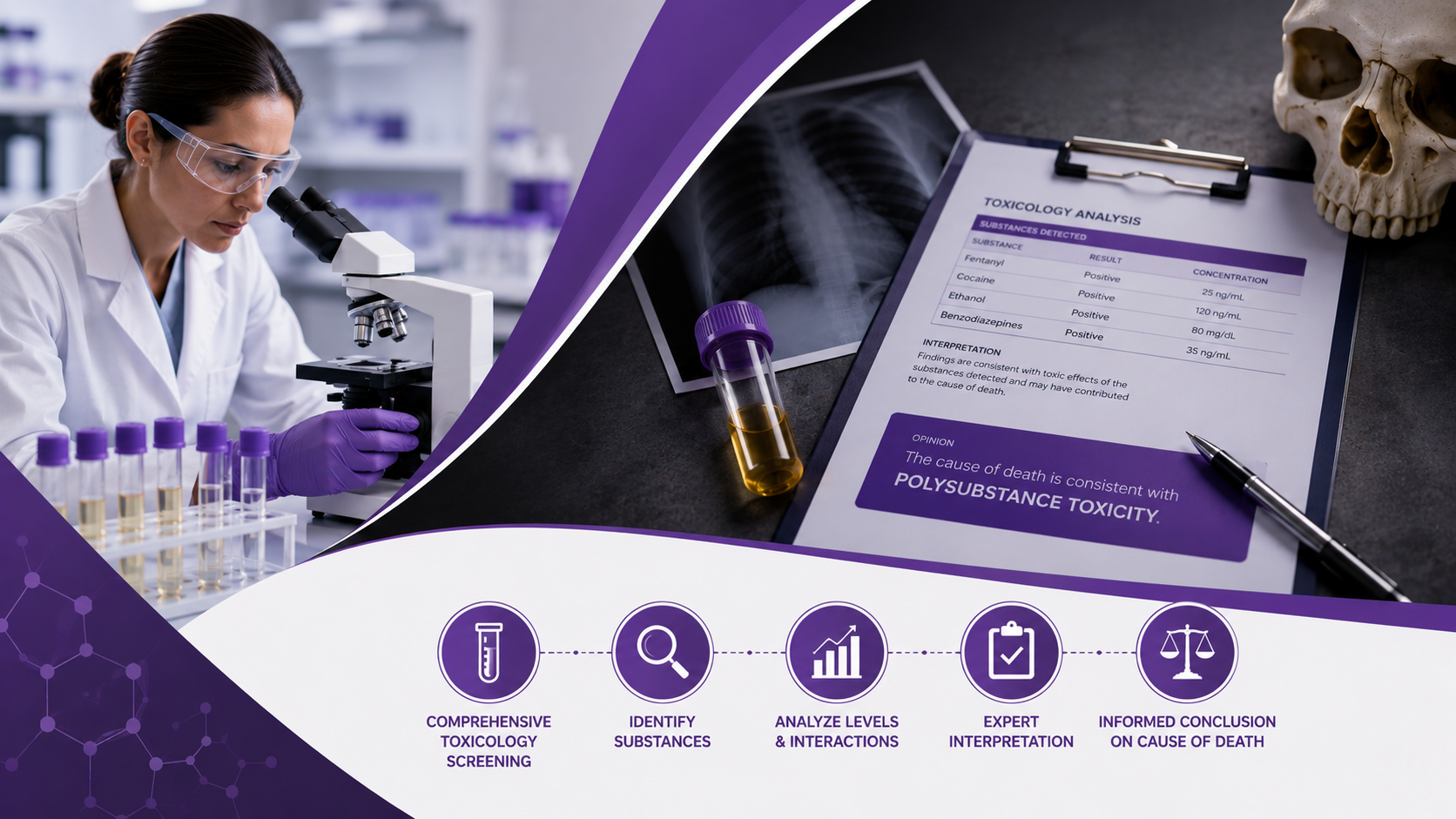
The final toxicology report may show the presence of drugs or alcohol in the blood. It may also show the exact concentration of a substance. If levels are in the lethal range, this may support a finding of drug overdose or poisoning.
Still, experts must look at the full picture before making a final report or death certificate.
How Forensic Toxicology Works
Forensic toxicology is the science of testing the body for drugs, alcohol, and poisons after death occurs. It combines medical science, laboratory testing, and criminal investigation.
The process often includes:
Sample collection
Drug analysis
Confirmatory testing
Specialized tests
Reviewing toxicology results
Writing the postmortem toxicology report
Testing methods may include gc ms and mass spectrometry. These tools help laboratories identify substances with high accuracy.
Forensic toxicology experts also use confirmatory methods to reduce the risk of false positives. This helps legal professionals and families trust the findings.
What Samples Are Used in Postmortem Toxicology?
Postmortem toxicology uses several biological samples from the body. Each sample may provide different information.
Blood Samples
Blood is one of the most important samples in toxicology testing. Experts often collect blood from the femoral vein because it may provide more reliable results after death.
Blood testing can help determine:
Drug concentration
Alcohol levels
Presence of illegal drugs
Therapeutic range of prescription medications
Urine Samples
Urine may show whether a person used a drug before death. However, urine testing may not always show current impairment.
Tissue Samples
Tissue samples from organs can help identify drugs stored in the body. These samples may be useful when blood is not available.
Vitreous Humor
Vitreous humor is the clear fluid inside the eye. It changes more slowly after death and may help confirm alcohol levels or certain substances.
What Drugs Can Be Found During Toxicology Testing?
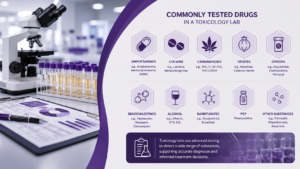
A toxicology report can test for a wide spectrum of substances.
Common findings include:
Prescription drugs
Illegal drugs
Illicit drugs
Alcohol
Synthetic drugs
Synthetic cannabinoids
Opioids
Benzodiazepines
Cocaine
Methamphetamine
Marijuana
Heavy metals
Carbon monoxide
Some testing methods can also detect drug interactions between multiple substances. This matters because combining drugs may increase the risk of sudden death.
Can a Toxicology Report Prove a Drug Overdose?
In many cases, yes. A postmortem toxicology report may show a deadly amount of a drug in the body.
For example, if testing shows:
High opioid levels
Dangerous alcohol concentration
Multiple sedatives
Drugs outside the therapeutic range
then experts may rule the death as a drug related overdose.
Still, the toxicology report alone may not fully prove the cause of death. The forensic pathologist must compare toxicology results with autopsy findings and physical findings.
Why Drug Concentration Matters
The amount of a drug found in the body is very important.
A small amount of a prescription medication may fall within expected ranges and not cause harm. A much higher amount may enter the lethal range.
Experts study:
Exact concentration
Drug interactions
Medical history
Postmortem changes
Postmortem redistribution
Postmortem redistribution happens when drugs move through the body after death. This can affect blood concentration levels. Because of this, toxicology experts use careful pace and advanced testing methods during analysis.
What Is Included in a Final Toxicology Report?
A final toxicology report often includes:
Substances found
Drug concentration levels
Testing methods used
Confirmatory testing results
Interpretation of findings
Specialized tests performed
The report may also explain whether the substances could have caused impairment, overdose, or death.
A final report is usually reviewed by the medical examiner before the death certificate is completed.
How Long Does Toxicology Testing Take?
Toxicology testing can take days or weeks depending on the case.
Several things affect timing:
Number of substances tested
Specialized tests needed
Laboratory workload
Confirmatory methods required
Complexity of the investigation
In some cases, the autopsy report is released before the final toxicology report is complete.
Can Toxicology Results Be Wrong?
Modern laboratory testing is very accurate, but no test is perfect.
Possible issues include:
False positives
Sample contamination
Postmortem changes
Testing errors
Delays in sample collection
This is why laboratories use confirmatory testing and advanced systems like mass spectrometry and gc ms.
At Lynk Diagnostics, accurate drug testing and proper laboratory standards are important parts of reliable toxicology testing.
Why Toxicology Reports Matter
A toxicology report may help:
Families understand what happened
Legal professionals review evidence
Medical examiners complete investigations
Insurance companies review claims
Public health experts track substance use trends
These reports also help improve community well being by identifying dangerous drugs and overdose patterns.
The Role of the Medical Examiner and Forensic Pathologist
A medical examiner leads the death investigation. A forensic pathologist studies the body during the autopsy.
These professionals may hold training through organizations connected to the american board system for pathology and forensic medicine.
Their job is to:
Review medical history
Study autopsy findings
Examine toxicology results
Determine the cause of death
Complete the death certificate
The honest answer is that toxicology alone does not always explain why death happens. Experts must study all evidence together before reaching a conclusion.
Drug Testing and Toxicology Services
Drug testing and toxicology services play a major role in healthcare, rehabilitation, and investigations.
Lynk Diagnostics provides professional drug testing support for rehab facility programs and treatment providers. Accurate testing helps monitor substance use, identify drugs, and support recovery efforts.
Reliable testing also helps reduce risks connected to:
Drug interactions
Prescription medications
Illegal drugs
Alcohol misuse
Synthetic drugs
Quality laboratory testing supports safer treatment and better patient care.
FAQs
Can a toxicology report show cause of death by itself?
Not always. A toxicology report helps determine the cause of death, but experts also review the autopsy report, medical history, and physical findings.
What substances can toxicology testing find?
Toxicology testing can identify prescription drugs, illegal drugs, illicit drugs, alcohol, synthetic cannabinoids, heavy metals, carbon monoxide, and many other substances.
How accurate are toxicology results?
Modern toxicology testing is very accurate because laboratories use confirmatory testing, gc ms, and mass spectrometry to confirm findings.
Why do experts use blood from the femoral vein?
Blood from the femoral vein may provide more reliable toxicology results because it is less affected by postmortem redistribution after death.
How long does a final toxicology report take?
A final toxicology report may take several days or weeks depending on the testing methods, specialized tests, and complexity of the investigation.