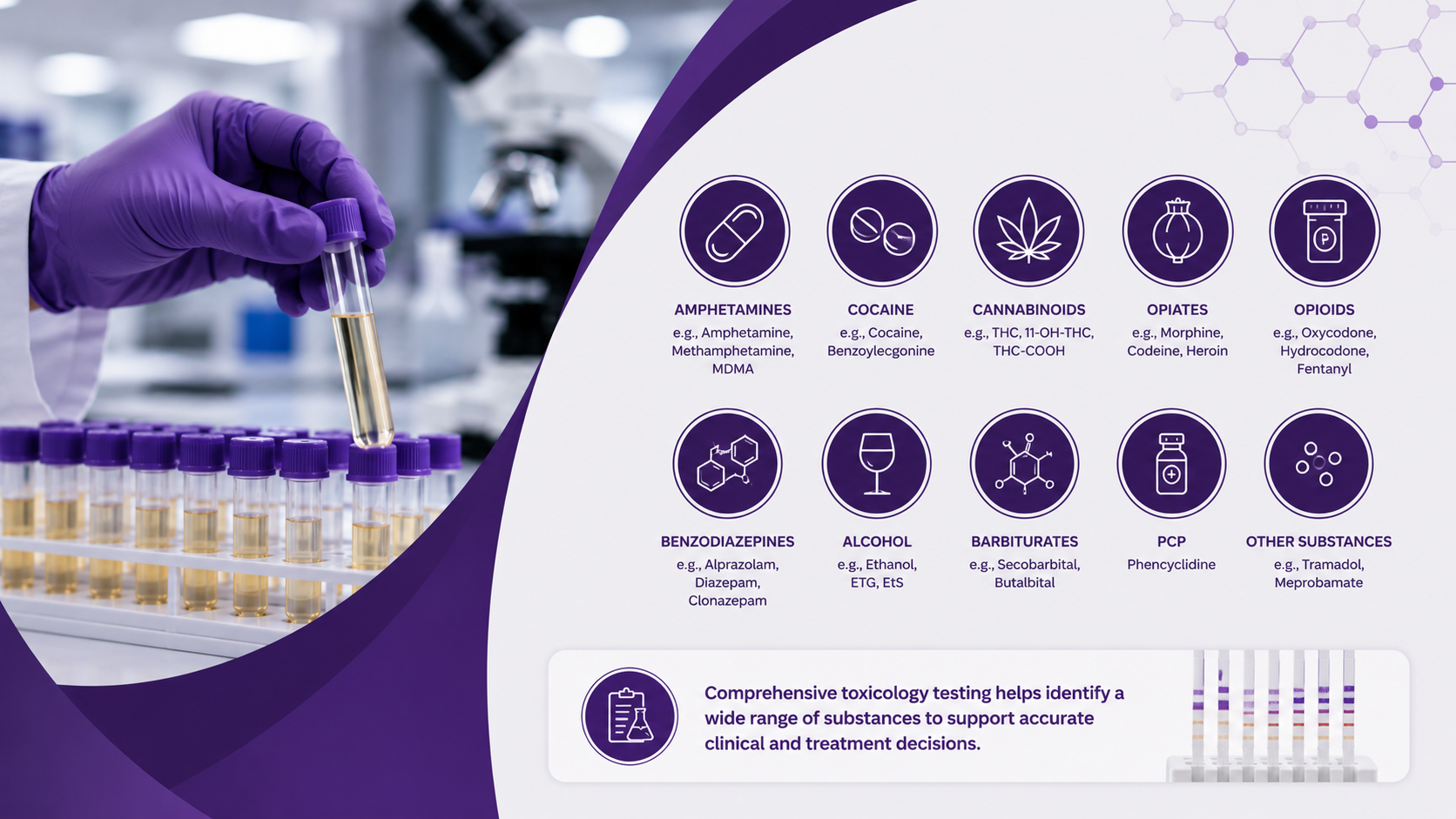
A toxicology report helps detect drugs, alcohol, and other substances in the body. Many people ask, “what drugs are tested in a toxicology report?” The answer depends on the type of drug testing, the reason for the test, and the biological samples used.
At Lynk Diagnostics, toxicology testing supports rehab facilities, treatment centers, and public safety programs. A toxicology screen may help identify prescription drugs, illegal drugs, alcohol, and many substances linked to substance abuse or acute poisoning.
Drug testing can use a blood or urine sample, saliva, hair, or stomach contents. These tests help medical teams, clinical chemistry experts, and forensic toxicology professionals understand drug use and support treatment plans.
What Is a Toxicology Report?
A toxicology report is a laboratory analysis that checks for the presence of drugs, alcohol, or poison in the body. The report may show a positive or negative result for certain drugs or substances.
Toxicology testing is often used for:
Drug abuse testing
Substance abuse treatment
Suspected overdoses
Intentional overdose cases
Accidental poisoning
Clinical practice
Public safety concerns
Drug facilitated crimes
Drug facilitated sexual assault investigations
The report helps with clinical interpretation and may support evidence collection during investigations or medical emergencies.
What Drugs Are Tested in a Toxicology Report?
Many people searching for “what drugs are tested in a toxicology report” want to know which drugs appear in a standard drug screen.
A toxicology screen may test for:
Cocaine
Crack cocaine
Morphine
Codeine
Methadone
Benzodiazepines
Antidepressants
Alcohol
Bath salts
Prescription medications
Prescription medicines
Over the counter medicines
Illicit drugs
Other drugs linked to substance use
Some tests also detect carbon monoxide exposure, alcohol concentration, or alcohol content in the blood.
Drug testing panels can vary. Some tests only check for a few drugs, while others look for many substances at the same time.
Common Types of Drug Testing
Urine Testing
Urine testing is one of the most common forms of drug abuse testing. A urine sample is easy to collect and can detect many drugs.
A urine drug test may identify:
Cocaine
Methadone
Benzodiazepines
Morphine
Codeine
Prescription drugs
Illicit drug use
During sample collection, the laboratory checks specific gravity, temperature, and sample quality. This helps reduce false positives and protects test accuracy.
Urine testing is often used in rehab facilities, workplace tests, and treatment programs.
Blood Test
A blood test measures the presence of drugs or alcohol in blood or urine samples. Blood testing may show recent drug use more clearly than urine testing.
A blood or urine sample can help medical professionals detect:
Alcohol concentration
Certain drugs
Acute poisoning
Intentional overdose
Suspected overdoses
Blood tests are commonly used in emergency rooms and forensic toxicology cases.
Other Biological Samples
Some toxicology testing may use:
Hair
Saliva
Stomach contents
Blood urine samples
These biological samples help laboratories perform deeper analysis when needed.
Why Toxicology Testing Is Important
Toxicology testing supports health, safety, and treatment. It helps medical teams understand what substances may be affecting a person’s body or behavior.
Drug testing may help:
Detect substance abuse
Support treatment plans
Identify illicit drug use
Improve well being
Guide clinical practice
Protect public safety
In some cases, toxicology testing also helps during sexual assault investigations or drug facilitated crimes.
Prescription Drugs and Toxicology Reports
Prescription drugs are commonly included in a toxicology report. Some prescription medications may affect a person’s thinking, reaction time, or health.
Tests may detect:
Benzodiazepines
Antidepressants
Methadone
Codeine
Morphine
Over the counter medicines can also appear during testing. Some medicines may create false positives because of cross reactivity.
Cross reactivity happens when a test reacts to a substance that is similar to another drug. This is why laboratory confirmation and proper clinical interpretation are important.
Illegal Drugs and Illicit Substances
Illegal drugs are another major focus of toxicology testing. A toxicology screen may detect:
Cocaine
Crack cocaine
Bath salts
Other illicit drugs
These tests may help identify drug abuse, substance use, or overdose risks.
The National Institute on Drug Abuse explains that toxicology testing plays an important role in treatment and recovery programs. Detecting illicit drug use early may help a person receive the right treatment and support.
Alcohol Testing in Toxicology Reports
Alcohol is one of the most common substances found in toxicology reports. Tests may measure:
Alcohol concentration
Alcohol content in blood
Alcohol use during an incident
Blood or urine testing may detect alcohol after accidents, overdoses, or suspected impairment.
Alcohol testing is often used in:
Emergency care
Forensic toxicology
Rehab treatment
Public safety programs
How Sample Collection Works
Sample collection is an important part of toxicology testing. The process must follow strict laboratory rules to protect test accuracy.
A sample may include:
Blood
Urine
Blood or urine
Other biological samples
The laboratory carefully labels and tracks samples during analysis. This helps protect evidence and reduce mistakes.
Specific gravity and other quality checks help make sure the urine sample has not been changed or diluted.
Understanding Test Results
Test results may show:
Positive
Negative
Presence of a substance
No drugs detected
A positive result means the test found a drug or substance in the body. A negative result means the laboratory did not detect the drug.
Some results need more analysis before final decisions are made. Medical conditions, prescription medicines, and over the counter products can affect tests.
Clinical interpretation helps explain what the results may mean for the person.
Toxicology Testing and Overdose Cases
Toxicology testing is very important during overdose investigations. Medical teams may use tests during:
Suspected overdoses
Intentional overdose cases
Accidental poisoning
Acute poisoning emergencies
A toxicology report may help detect drugs, alcohol, or other substances affecting the body.
Fast and accurate analysis can help guide treatment and improve patient safety.
Forensic Toxicology and Public Safety
Forensic toxicology combines science and investigation. Experts use laboratory testing to help law enforcement, hospitals, and treatment centers.
Forensic toxicology may help with:
Drug facilitated sexual assault
Drug facilitated crimes
Public safety concerns
Evidence collection
Testing helps investigators understand whether drugs or alcohol played a role in an event.
Why Rehab Facilities Use Drug Testing
Rehab facilities often use drug testing to support recovery and treatment programs.
Drug abuse testing may help:
Monitor treatment progress
Detect relapse
Improve accountability
Support recovery goals
Lynk Diagnostics works with rehab facilities to provide accurate toxicology testing and dependable laboratory support.
How Long Drugs Stay in the Body
Different drugs stay in the body for different amounts of time. Factors include:
Type of drug
Amount used
Body size
Health
Frequency of drug use
Some substances may stay in urine longer than blood. Other drugs may remain in hair samples for weeks or months.
A toxicology report helps detect the presence of substances during these testing windows.
Choosing Reliable Toxicology Testing
Reliable drug testing requires:
Accurate sample collection
Trusted laboratory analysis
Clinical chemistry standards
Clear reporting
Lynk Diagnostics supports rehab facilities with professional toxicology testing services focused on accuracy, safety, and treatment support.
Our team understands the importance of dependable results for treatment decisions and patient care.
FAQs
What drugs are tested in a toxicology report?
A toxicology report may test for cocaine, crack cocaine, methadone, benzodiazepines, morphine, codeine, antidepressants, alcohol, prescription drugs, and other illicit drugs.
What sample is used for toxicology testing?
Testing may use blood, urine, saliva, hair, stomach contents, or other biological samples. A urine sample and blood test are the most common methods.
Can over the counter medicines affect drug tests?
Yes. Some over the counter medicines may cause false positives because of cross reactivity. Laboratories often perform additional analysis to confirm results.
What does a positive result mean?
A positive result means the laboratory detected the presence of a drug or substance in the body during testing.
Why do rehab facilities use drug testing?
Rehab facilities use drug testing to monitor treatment progress, detect substance use, support recovery, and improve patient well being.