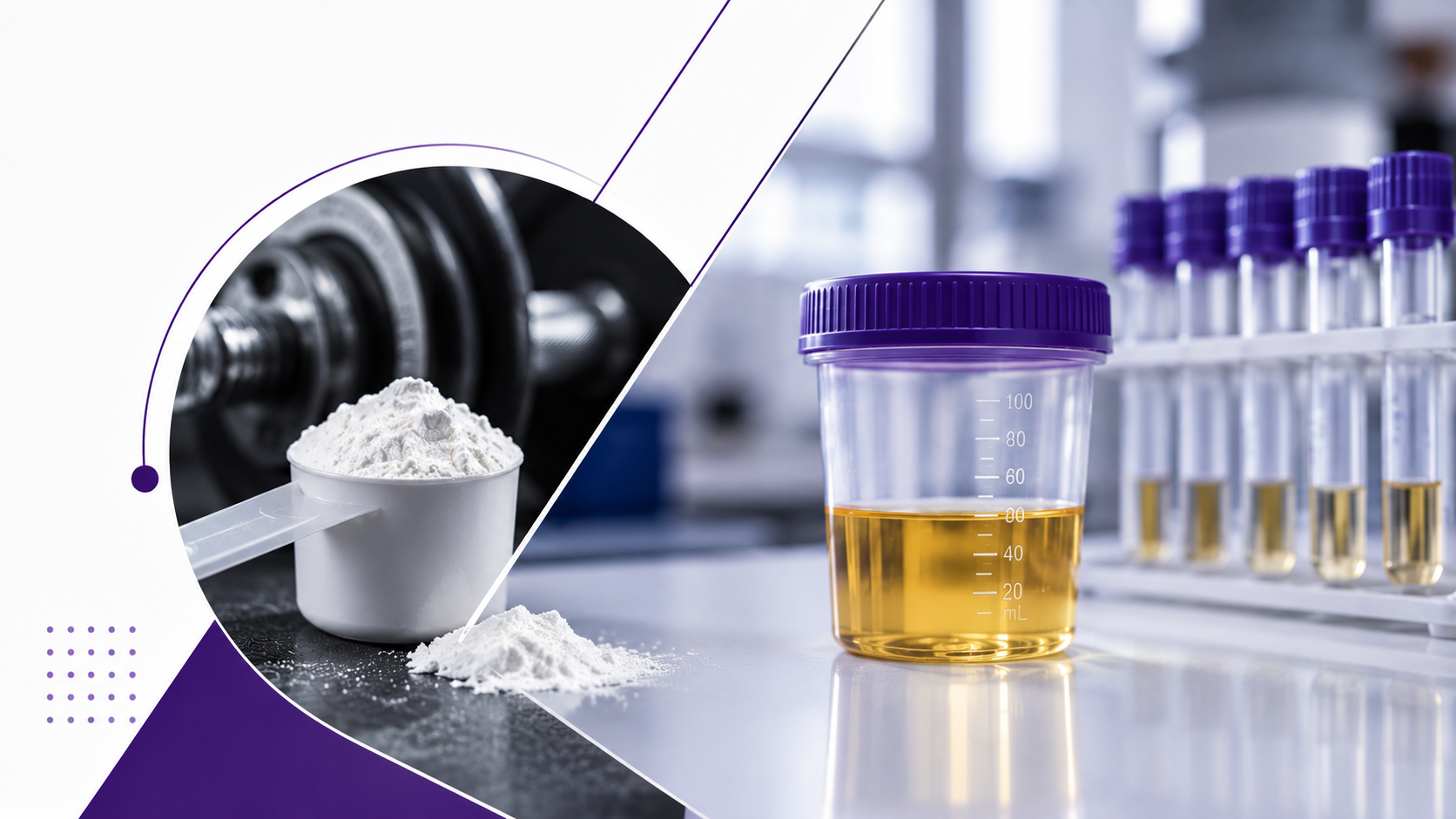
The short answer is that creatine itself is not usually one of the substances that standard drug tests are designed to detect. However, creatine can affect certain measurements in a urine sample, especially creatinine levels, which are often used to help verify sample integrity.
At Lynk Diagnostics, we help rehab facilities and treatment programs obtain accurate testing information. Understanding how supplements affect testing can help prevent confusion when reviewing drug test results.
What Is Creatine?
Creatine is a naturally occurring compound found in the body. It is made from amino acids and stored mainly in muscle cells and muscle tissue. The body also gets creatine from foods like red meat and fish.
Your body uses creatine to help make adenosine triphosphate (ATP), which is the main source of energy for short bursts of activity. This process supports energy production during high intensity effort and exercise.
Many people take creatine monohydrate, one of the most popular nutritional supplements, to improve muscle strength, increase muscle mass, and support athletic performance.
Will Creatine Show Up on a Drug Test?
The answer is generally no. When people ask, will creatine show up on a drug test, they are usually worried that taking supplements could cause them to fail a drug test.
Most drug tests are designed to identify illegal substances, certain prescription medications, or evidence of drug use. Creatine is not considered a controlled substance or a banned substance in most workplace testing programs.
Because creatine is a normal part of human biology, laboratories do not typically screen for it during a standard drug panel. Therefore, taking creatine alone should not produce a positive result.
How Creatine Affects Creatinine Levels
Although creatine itself is not commonly tested, laboratories often measure creatinine in a urine specimen.
Creatinine is a metabolic byproduct and waste product created when the body uses creatine. As the body converts creatine into energy, it naturally produces creatinine.
When a person uses creatine supplementation, their creatine levels and resulting creatinine levels may increase slightly. This does not mean the person is using drugs.
A testing lab may review creatinine concentrations because they help determine whether a urine specimen has been diluted. This is an important part of maintaining sample integrity.
Why Labs Measure Creatinine
Many people are surprised to learn that drug testing laboratories regularly evaluate more than just drugs.
During a urine test, laboratories may check:
Drug metabolites
Creatinine concentration
Specific gravity
Sample temperature
Other markers related to validity
These measurements help ensure the sample has not been tampered with using water or other liquids.
When labs measure creatinine, they compare results against typical ranges. Higher or lower values do not automatically indicate drug use. Instead, they help provide context when interpreting the specimen.
Can Creatine Cause False Positives?
One of the biggest concerns people have is whether creatine can lead to false positives.
Current evidence suggests that standard creatine supplements do not typically cause false positives for drugs. Since creatine is naturally present in the body, it is not confused with most drug metabolites that laboratories are looking for.
However, not all supplements are created equally. Some products may contain hidden ingredients or contaminants. This is why choosing products that undergo third party testing is important.
Third-party verification helps ensure supplements meet high standards for purity and ingredient accuracy.
Can You Fail a Drug Test Because of Creatine?
In most situations, taking creatine alone will not cause someone to fail a drug test.
A failed test generally occurs when laboratories detect prohibited substances or their specific metabolites.
Creatine itself is not one of those substances. Therefore, most people using creatine for fitness or exercise purposes should not worry about testing positive solely because of supplementation.
Problems are more likely to occur when supplements contain undisclosed ingredients, stimulants, or other prohibited compounds.
Creatine and Athletic Performance
Many athletes use creatine because it can improve athletic performance and recovery.
Creatine helps increase energy availability during high intensity activities such as:
Sprinting
Weightlifting
Football
Wrestling
High-intensity interval training
The body stores creatine within muscle cells. Over time, supplementation can increase muscle saturation, allowing muscles to access energy more efficiently.
Many users report improved muscle strength, better recovery, and increased exercise performance.
Understanding the Loading Phase
Many creatine users begin with a loading phase.
During a loading phase, individuals take larger doses of creatine for several days to reach full muscle saturation more quickly.
This process can increase stored creatine levels within the muscles. Afterward, users typically switch to a maintenance dose.
Research shows it may take several weeks to achieve similar saturation levels without a loading phase.
While the loading phase affects creatine storage, it does not typically change the outcome of drug screening panels.
How Long Does Creatine Stay in the Body?
The amount of time creatine remains in the body depends on several factors, including:
Body size
Activity level
Hydration
Diet
Overall metabolism
Supplement dosage
After consumption, creatine begins entering tissues within about two hours. Some effects may remain slightly longer depending on individual physiology.
The body continuously uses and replaces creatine as part of normal biological processes.
Creatine, Kidney Function, and Health
Some people worry that creatine may harm the kidneys or affect kidney function.
For most healthy adults, research has found that recommended creatine supplementation is generally safe.
However, individuals with kidney disease or other underlying health conditions should speak with a healthcare provider before beginning supplementation.
Because creatinine levels are associated with kidney function, elevated readings may prompt additional evaluation. This does not necessarily mean creatine is causing harm.
Monitoring overall health remains important whenever taking dietary supplements.
Creatine and High Protein Diets
Many athletes combine creatine with a high protein diet.
Foods such as beef, chicken, fish, eggs, and dairy products help support muscle growth and recovery. Since red meat naturally contains creatine, people who eat large amounts may already have higher baseline levels.
A high-protein eating plan combined with supplementation can contribute to increased muscle stores, but it generally does not affect drug screening outcomes.
What Drug Tests Are Actually Looking For
Most drug tests focus on identifying:
Marijuana metabolites
Cocaine metabolites
Opioids
Amphetamines
Benzodiazepines
Other prohibited drugs
The purpose is to identify evidence of drug use, not legal fitness supplements.
Since creatine is not classified as an illegal drug, controlled substance, or prohibited medication in most testing programs, it is generally not part of standard screening panels.
Why Supplement Quality Matters
Not all supplements are manufactured with the same quality controls.
Some products may contain:
Undisclosed stimulants
Performance enhancers
Contaminants
Misleading labels
These issues can create unexpected test results.
Choosing reputable manufacturers that utilize third party testing can reduce risks and help ensure products meet high standards for safety and quality.
Lynk Diagnostics and Accurate Drug Testing
At Lynk Diagnostics, we understand how confusing drug testing can be for treatment providers and patients.
Our team works with rehab facilities to provide reliable testing services and accurate interpretation of results. We help organizations understand factors that may affect testing outcomes while maintaining strict quality standards.
Whether questions involve supplements, medications, or specimen validity, accurate information helps support better decision-making.
Final Thoughts
So, will creatine show up on a drug test? In most cases, no. Creatine is a naturally occurring compound that helps support energy production, muscle mass, and athletic performance.
While creatine can influence creatinine levels, it is not usually something that standard drug tests are looking for. Taking creatine alone should not cause a person to fail a drug test or receive a positive result.
However, supplement quality matters. Products containing hidden ingredients may create complications. Choosing reputable products and understanding how testing works can help reduce confusion and support accurate results.
FAQs
Will creatine show up on a drug test?
No. Creatine is generally not included in standard drug screening panels and should not appear as a drug finding.
Can creatine cause false positives?
Creatine itself is not known to cause false positives. However, contaminated supplements may create unexpected results.
Why do labs measure creatinine?
Labs measure creatinine to help verify specimen validity and maintain sample integrity during testing.
Can taking creatine make me fail a drug test?
In most cases, no. Creatine alone should not cause someone to fail a drug test because it is not an illegal drug.
Does creatine affect kidney function?
For most healthy people, recommended creatine use is considered safe. People with kidney disease or other health concerns should consult a healthcare professional before using it.