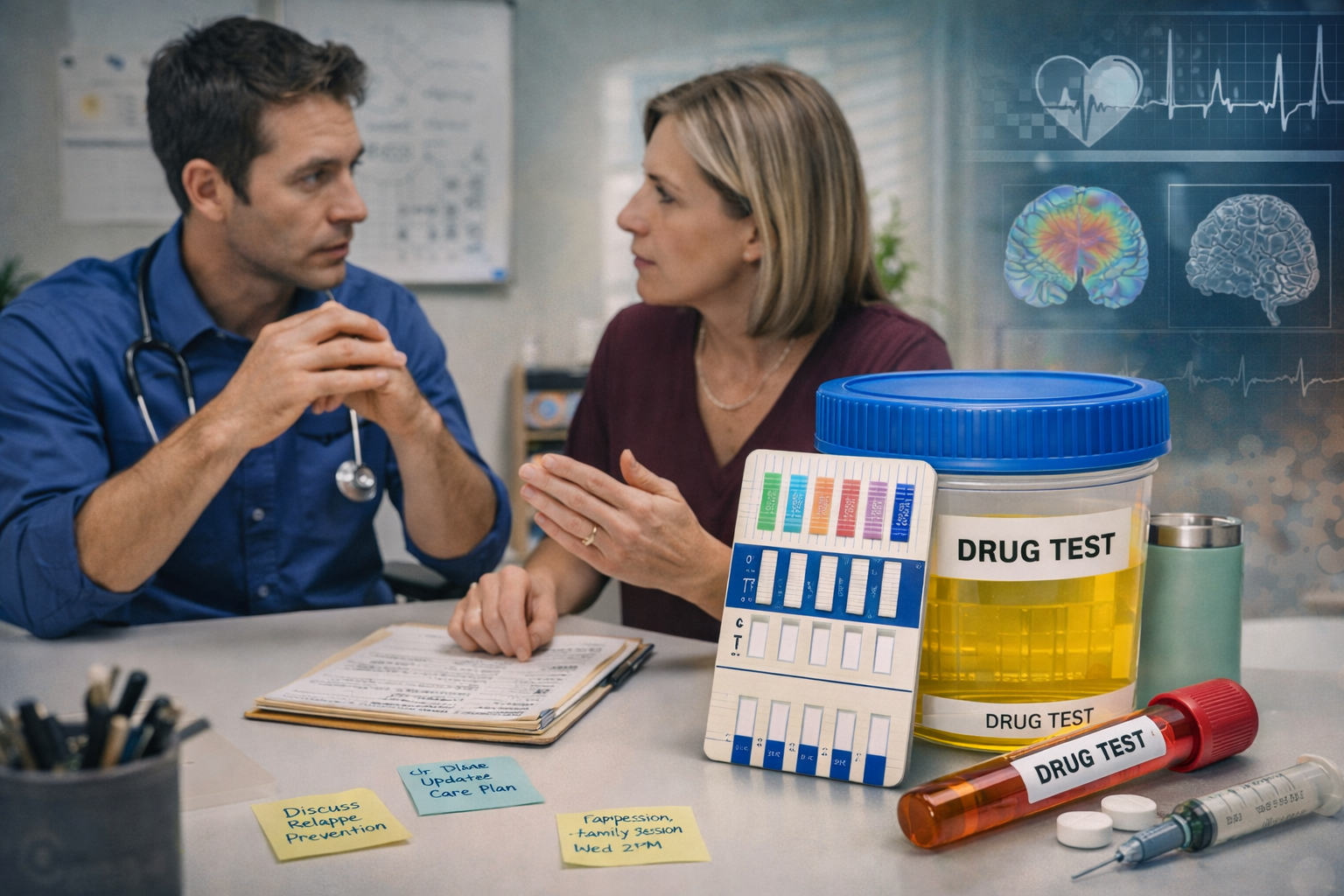
Understanding why drug testing is an important tool in behavioral health treatment helps patients, families, and treatment providers work together for better outcomes. In behavioral health, people often face both mental health disorders and substance use disorder at the same time. Because of this, drug testing plays a crucial role in care.
Drug testing is more than just checking for drugs. It is an essential tool that helps guide treatment, support recovery, and protect public health. At Lynk Diagnostics, drug testing services are designed to give accurate and timely results so treatment teams can make informed decisions.
What Is Drug Testing in Behavioral Health?
Understanding Drug Testing Basics
Drug testing is the process used to detect drug or alcohol use in a person’s body. This can include testing for illicit drugs, alcohol, and even prescription drug misuse.
Common drug testing methods include:
Urine drug tests
Blood tests
Saliva tests
Hair testing
The most common method in treatment programs is urine testing, where a urine sample is collected as a biological sample.
Why It Is Used in Treatment
In substance abuse treatment, patients may need to undergo drug testing regularly. This helps:
Track progress
Monitor abstinence
Support accountability
Drug testing is a valuable tool that helps identify individuals who may need more support.
How Drug Testing Supports Treatment Plans
Helping Build Better Treatment Decisions
Drug testing provides an objective measure of a person’s drug and alcohol use. This helps treatment providers make better treatment decisions.
For example:
A positive drug test may show relapse
A negative test may show progress
This allows the treatment team to adjust treatment plans and add new treatment interventions if needed.
Supporting Individual Care
Each person has a unique substance abuse problem. Drug testing helps:
Track different drugs
Monitor multiple drugs
Check for other substances
This makes care more personal and effective.
Drug Testing and Monitoring Progress
Tracking Recovery Over Time
Regular drug testing helps monitor recovery over time. It helps patients stay focused on long term recovery.
If someone tests positive, the care team can act quickly. If someone has a negative test, it shows they are staying on track.
Encouraging Positive Behavior
Drug testing also supports positive reinforcement. When patients see good test results, they feel proud. This helps build positive behavior.
Programs may also use contingency management, where patients earn rewards for clean tests.
The Role of Drug Testing in Identifying Issues
Detecting Substance Use Early
Drug testing helps in identifying drug use early. This is very important in substance abuse issues and alcohol abuse.
Early detection can:
Prevent relapse
Reduce negative consequences
Improve overall well being
Addressing Co-Occurring Disorders
Many people have co occurring disorders, meaning they face both mental health and substance use challenges.
Drug testing helps:
Identify individual’s substance use
Support proper mental health care
Improve outcomes for opioid use disorders
Drug Testing Methods and Accuracy
Types of Testing Methods
Different testing methods are used depending on the situation. These include:
Urine tests
Blood tests
Saliva tests
Each method can detect specific drugs and levels of use.
Confirmatory Testing
Sometimes, a positive result may need more testing. A confirmatory test is used to confirm results and avoid mistakes.
This is important because:
There can be false positive results
Laboratory errors may happen
Confirmatory testing ensures accuracy and fairness.
Addressing False Positives and Errors
Understanding False Positives
A false positive happens when a test shows drug use when there is none. This can be caused by:
Certain foods
Prescribed medications
Testing mistakes
Ensuring Fair Results
At Lynk Diagnostics, careful processes are used to reduce false positives and laboratory errors. This ensures patients are treated fairly.
Drug Testing and Legal Considerations
Meeting Legal Requirements
Drug testing is often required by the criminal justice system and legal requirements. This can include:
Court-ordered testing
Probation monitoring
Employment screening
Supporting the Criminal Justice System
Drug testing plays a role in the criminal justice system by:
Monitoring compliance
Reducing repeat offenses
Supporting recovery instead of punishment
It helps people avoid serious legal consequences.
Drug Testing in Different Settings
In Treatment Programs
In treatment programs, drug testing is used daily or weekly. It helps guide behavioral therapies and other care.
In a Doctor’s Office
A doctor’s office may use drug testing during check-ups. This helps track health and medication use.
At-Home Drug Tests
Some people use at home drug tests. These can help monitor progress between visits, but professional testing is more accurate.
The Importance of Drug Testing Services
Reliable Testing from Lynk Diagnostics
Lynk Diagnostics offers trusted drug testing services for rehab centers. These services help:
Deliver accurate drug test results
Support treatment providers
Improve patient care
Why Accuracy Matters
Accurate test results are of the utmost importance. They affect:
Treatment plans
Patient trust
Recovery outcomes
Drug Testing and Public Health
Protecting Communities
Drug testing supports public health by reducing drug and alcohol misuse. It helps:
Identify problems early
Prevent harm
Support safer communities
Reducing Substance Abuse Problems
By helping people get treatment, drug testing reduces substance abuse problems and improves lives.
Drug Testing as an Essential Tool for Recovery
Supporting Long-Term Success
Drug testing plays a crucial role in helping people stay sober. It helps:
Keep patients accountable
Support recovery goals
Encourage healthy habits
A Tool for Better Outcomes
Overall, drug testing is an essential tool and valuable tool in behavioral health. It helps patients achieve long term recovery and better well being.
FAQs
What is the purpose of drug testing in behavioral health treatment?
Drug testing helps track drug use, monitor recovery, and guide treatment decisions. It is an important part of care for people with substance use disorder.
Can drug tests be wrong?
Yes, false positive results can happen. That is why confirmatory tests are used to make sure results are correct.
How often do patients undergo drug testing?
Patients may undergo drug testing regularly, depending on their treatment program and needs.
What happens if someone tests positive?
If someone tests positive, the treatment team may adjust the care plan and add more support or treatment interventions.
Are at-home drug tests reliable?
At home drug tests can be helpful, but professional testing is more accurate and reduces errors.
Resources
Substance Abuse and Mental Health Services Administration (SAMHSA): https://www.samhsa.gov
National Institute on Drug Abuse (National Institute): https://nida.nih.gov
U.S. Department of Health & Human Services: https://www.hhs.gov
Centers for Disease Control and Prevention (CDC): https://www.cdc.gov