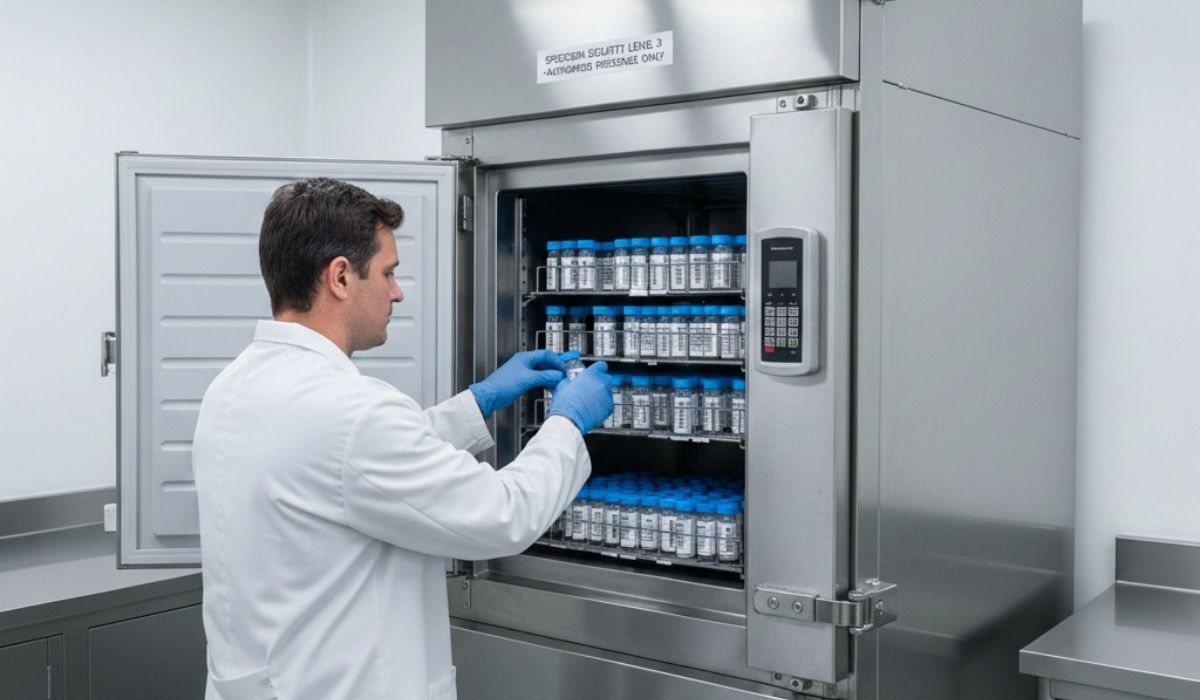
When a drug testing sample is collected, the work is not finished. The sample must be stored safely and moved to the lab the right way. If the sample is handled poorly, results can be delayed, questioned, or rejected.
This guide explains practices for secure storage and transport of drug testing samples in a clear way. It is written for rehab programs and staff who want reliable results, strong chain of custody, and good specimen integrity. Lynk Diagnostics supports rehab facilities by helping teams build simple, repeatable sample handling steps.
What “secure storage and transport” means
Secure storage and transport means the sample stays:
- Correctly labeled
- Sealed and protected
- Stored at the right temperature
- Tracked from person to person
- Safe from leaks, damage, or mix-ups
Why secure handling matters in rehab settings
In rehab programs, drug testing may support:
- Treatment planning and safety
- Relapse monitoring and recovery support
- Medication monitoring (when used in care plans)
- Clear communication between staff and clinical teams
- Accountability with fair and consistent steps
If storage or transport is not secure, you may see:
- Rejected samples
- Longer turnaround time
- Confusing results
- Arguments about who handled the sample
- Problems during audits or reviews
Strong handling protects the client, the staff, and the program.
Chain of custody is the backbone
Chain of custody is a written record that shows who had the sample at every step. It is one of the most important parts of secure transport.
What chain of custody should include
A good chain of custody record usually includes:
- Client or donor identification steps (based on your policy)
- Date and time of collection
- Collector name or ID
- Specimen ID number (barcode is best)
- Type of test (urine, oral fluid, etc.)
- Seal numbers (if used)
- Storage location and time placed into storage
- Courier pickup time and courier identity
- Time the lab receives the sample
If even one step is missing, the sample can be questioned.
Keep the process consistent
The best chain of custody is boring and predictable. That is a good thing. Every staff member should follow the same steps every time.
Secure storage practices that work
Secure storage means samples are protected from tampering, loss, and temperature problems.
Use restricted access storage
Store specimens in a place that is:
- Locked (cabinet, fridge, or room)
- Accessible only to trained staff
- Clean and organized
Avoid storing specimens near food, staff drinks, or personal items. Keep the storage area “specimen only.”
Keep a specimen storage log
A storage log helps you track every movement. It can be paper or digital. Each entry should include:
- Specimen ID
- Date/time placed into storage
- Staff member who stored it
- Storage location (like “Fridge A” or “Locker 2”)
- Date/time removed from storage
- Staff member who removed it
- Reason removed (courier pickup, lab drop-off, retest, etc.)
This log supports chain of custody and helps during audits.
Protect the sample from temperature extremes
Temperature control helps protect specimen integrity. Common tips include:
- Follow the lab’s kit instructions
- Keep specimens away from direct sunlight
- Never leave specimens in a hot car or freezing conditions
- Use cold packs or temperature tools when required by the lab or courier method
Organize samples to prevent mix-ups
Small mistakes cause big problems. Reduce risk by:
- Using one bin per pickup day
- Keeping specimens in order by ID
- Avoiding “pile-ups” at the front desk
- Using labels that are clear and smudge-proof
Secure collection-to-storage steps
Many errors happen right after collection. These steps help prevent them.
Label the specimen right away
Right after collection:
- Label the container immediately
- Double-check the specimen ID matches the form
- Make sure writing is readable
- Confirm the correct specimen type was collected (urine vs. oral fluid)
Never “label later.” That is a top cause of mistakes.
Use tamper-evident seals every time
Tamper-evident seals help show if the sample was opened. Good sealing means:
- Seal is placed exactly as the kit shows
- Seal is smooth and fully stuck down
- Seal is checked before storage and before shipping
If a seal is broken later, document it and follow your program policy.
Use a leak-resistant bag
Place the specimen into a secure bag that includes:
- A sealed specimen pocket
- Absorbent material (if your kit uses it)
- A separate pocket for paperwork (so papers stay dry)
Keeping paperwork separate prevents damaged forms and unreadable records.
Transport practices that protect samples
Transport is where samples can get lost, crushed, overheated, or mixed up. A strong shipping routine protects them.
Use strong packaging
Good packaging should:
- Prevent leaks
- Protect against crushing
- Keep the specimen separate from paperwork
- Stay sealed until it reaches the lab
If you ship multiple samples together, keep them organized. Use dividers or separate bags so one leaking sample does not affect others.
Keep paperwork clean and complete
Before pickup or shipment:
- Check every form for missing info
- Make sure specimen ID matches the container
- Confirm signatures and dates are present
- Use clear handwriting if paper forms are used
Incomplete paperwork can delay testing.
Reduce delays in transit
Delays can affect stability and turnaround time. Helpful habits include:
- Scheduling pickups at set times
- Avoiding weekend shipping when possible
- Using the lab’s recommended transport method
- Having a backup plan for missed pickups
Courier pickup and handoff
Courier pickup is a common weak spot. You need a clean handoff every time.
Verify courier identity
Your policy may require:
- Checking a badge or ID
- Logging the courier name
- Confirming the courier service
Then record the pickup time and number of specimens.
Seal and sign before the handoff
Before the courier leaves:
- Confirm the outer container is sealed
- Confirm the specimen count
- Record the transfer in the chain of custody log
- Have staff sign, and have courier sign if your process requires it
Never leave samples unattended
Avoid leaving specimens:
- On a counter
- At a front desk
- In an unlocked office
- In an unlocked fridge
- In a vehicle
Unattended samples can break chain of custody and raise safety concerns.
Training and quality checks
Even great staff can make mistakes when they are rushed. Training makes the process easy and repeatable.
Train the “why” and the “how”
Good training covers:
- Why chain of custody matters
- How to label correctly
- How to seal and bag specimens
- Where to store samples
- How to document every step
- What to do when something goes wrong
Use simple checklists
A one-page checklist can prevent most errors. Examples:
- Collection checklist (ID, label, seal, bag, paperwork)
- Storage checklist (lock, log, organize)
- Transport checklist (seal shipper, count samples, handoff log)
Do quick audits
A quick weekly check can catch problems early:
- Are logs filled out?
- Are seals used correctly?
- Is storage locked and organized?
- Are specimens shipped on time?
This supports strong quality assurance and risk management.
What to do when something goes wrong
Problems happen. A strong program has a clear plan.
Common incidents to plan for
- Broken or missing tamper seal
- Missing label or mismatched ID
- Leaking container
- Temperature exposure (heat or freezing)
- Missing paperwork signatures
- Missed courier pickup
How to respond
When an incident happens:
- Stop and secure the specimen
- Document what happened (who, what, when, where)
- Notify the correct supervisor
- Follow policy for recollection or special review
- Keep records for compliance and learning
Clear incident reporting protects everyone.
How Lynk Diagnostics supports rehab facilities
Lynk Diagnostics focuses on drug testing services built for rehab programs. That means we care about more than results. We care about the steps that protect those results.
Rehab facilities can strengthen secure storage and transport by focusing on:
- Clear chain of custody routines
- Secure, locked specimen storage
- Correct labeling and tamper-evident sealing
- Safe packaging and reliable courier handoffs
- Simple training tools that keep staff consistent
When systems are simple, teams follow them. When teams follow them, results are easier to trust.
FAQs
How do I keep chain of custody strong?
Use the same steps every time: label right away, seal correctly, log storage, and document every transfer with times and names. Never leave gaps.
What is the best way to store urine drug test samples?
Store them in a clean, restricted access area (locked fridge or locked cabinet) and follow the lab’s instructions for temperature and timing.
Why is a tamper-evident seal important?
It helps show if the container was opened after collection. This protects specimen integrity and builds trust in the test result.
What should we do if a sample leaks during transport?
Treat it as an incident. Document it, secure the shipment, and follow policy. In many cases, the lab may reject the sample and a recollection may be needed.
How can rehab programs reduce sample handling mistakes?
Use training, checklists, and simple audits. Most mistakes come from rushed labeling, missing paperwork, or weak handoffs—so tighten those steps.
Resources
- SAMHSA (Workplace Drug Testing and related guidance): https://www.samhsa.gov/workplace
- U.S. DOT (49 CFR Part 40 drug and alcohol testing procedures): https://www.ecfr.gov/current/title-49/subtitle-A/part-40
- CDC (Specimen packing and shipping guidance): https://www.cdc.gov/
- CLIA (Clinical Laboratory Improvement Amendments information): https://www.cms.gov/regulations-and-guidance/legislation/clia