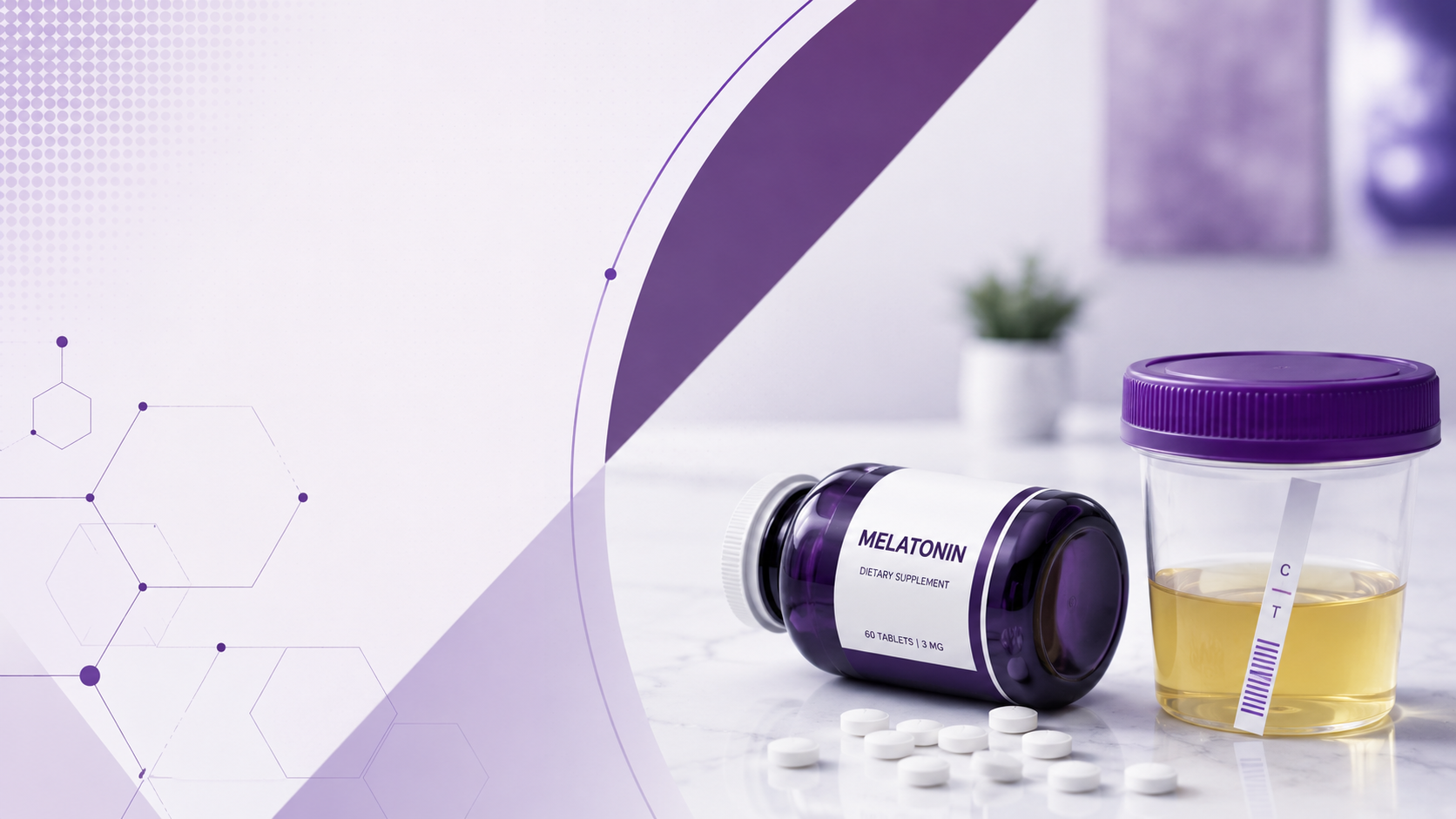
Many adults and children use melatonin supplements to help fall asleep, improve sleep quality, or manage sleep disorders like jet lag and insomnia. Since melatonin is sold as one of many dietary supplements, it is not commonly included in urine drug testing or workplace drug test panels.
At Lynk Diagnostics, we help rehab facilities and treatment programs understand how medications, supplements, and other substances may affect drug test results. Knowing what can and cannot appear on a drug test helps reduce confusion and false concerns.
What Is Melatonin?
Melatonin is a hormone the body makes naturally. The pineal gland in the brain releases melatonin when it gets dark outside. This hormone helps regulate sleep and supports healthy circadian rhythm patterns.
People often take melatonin supplements when they have trouble falling asleep, staying asleep, or adjusting to different sleep schedules. Melatonin works by signaling to the body that it is time for bed.
Some common reasons people take melatonin include:
Jet lag
Insomnia
Circadian rhythm sleep disorders
Sleeping problems in older adults
Daytime sleepiness caused by poor sleep
Shift work sleep issues
Melatonin comes in several forms, including:
Tablets
Gummies
Liquids
Extended release melatonin products
Some people also use extended release formulas to help stay asleep longer during the night.
Does Melatonin Show Up on a Drug Test?
In most cases, melatonin does not show up on a drug test. Standard drug tests are designed to detect drugs like:
Opioids
Cocaine
THC
Amphetamines
Benzodiazepines like Valium or diazepam
Melatonin is not part of standard testing panels because it is not considered an illegal substance. Most urine drug testing programs do not look for melatonin levels in the body.
However, there are rare cases where supplements may contain hidden ingredients. Some low-quality dietary supplements may include other medications or substances that could affect a test result. This is why it is important to use trusted products and tell your doctor about all supplements and medicines you take.
At Lynk Diagnostics, confirmatory testing helps rehab facilities identify substances accurately when unexpected results happen.
How Long Does Melatonin Stay in Your System?
People also ask how long melatonin stay in the body after taking it. The answer depends on several factors, including:
Dosage
Age
Health status
Other medications
Body weight
Liver function
Melatonin has a short half life. The eliminate half time for melatonin is usually about 20 to 50 minutes in healthy adults. That means the body removes half of the melatonin fairly quickly.
Most people clear melatonin within five hours, though extended release melatonin may stay in the body longer. Extended release products slowly release melatonin through the night to help people stay asleep.
Even though melatonin may still be in blood levels for a short time, it usually will not affect a standard drug test.
Can Melatonin Cause a False Positive?
Melatonin itself is not known to cause false positives on most drug tests. Still, drug interactions and contaminated supplements may sometimes create confusion during testing.
Some supplements may contain hidden ingredients that are not listed on the label. Research has found that certain sleep aid products may include prescription medicines or other substances.
This is why rehab facilities often use advanced toxicology testing when there are questions about a result. Confirmatory lab testing can separate melatonin from other drugs and medications.
Lynk Diagnostics supports addiction treatment centers with reliable testing methods to improve accuracy and reduce errors.
How Melatonin Helps Sleep
Melatonin helps regulate the body’s sleep cycle. When light decreases at night, the brain releases more melatonin. This helps people feel sleepy and ready for bed.
People who have trouble falling asleep may take melatonin before bedtime to support better sleep quality. Melatonin works best when combined with healthy sleep habits, such as:
Turning off bright light before bed
Avoiding caffeine late in the day
Keeping a regular bedtime
Limiting screen time
Creating a calm sleep environment
Melatonin is commonly used for:
Insomnia
Jet lag
Circadian rhythm sleep disorders
Sleep problems in older adults
Some people notice improved alertness during the day after better sleep at night.
How Much Melatonin Should You Take?
Many people wonder how much melatonin is safe. The right dosage depends on the person, their health, and their sleeping problems.
Doctors often recommend starting with a low dose. Some adults may only need 1 to 3 milligrams before bed. Others may need higher amounts for certain sleep disorders.
Children should only take melatonin under a doctor’s guidance. The dosage for children may differ based on age and symptoms.
Taking too much melatonin may lead to adverse effects such as:
Drowsiness
Sleepiness during the day
Headaches
Dizziness
Vivid dreams
Nausea
Higher doses do not always improve sleep quality. In some cases, too much melatonin can disrupt the circadian rhythm instead.
Melatonin and Other Medications
Melatonin may interact with other medications and medicines. Drug interactions are important to understand before using supplements regularly.
People should talk to a doctor before taking melatonin if they use:
Prescription sleeping pills
Antidepressants for depression
Blood pressure medications
Diazepam or Valium
Blood thinners
Seizure medications
Combining melatonin with prescription medicines that cause drowsiness may increase sleepiness and reduce alertness.
A person should also avoid driving or operate machinery after taking melatonin. Some people may feel sleepy for several hours after use. Avoid driving heavy machinery until you know how melatonin affects your body.
Does Melatonin Affect Rehab Drug Testing?
Most rehab drug testing programs do not test for melatonin. Treatment centers are usually focused on detecting:
Illegal drugs
Alcohol
Prescription drug misuse
Substance abuse concerns
Still, people in treatment should report all supplements and medications before a drug test. This includes:
Sleep aid products
Vitamins
Herbal supplements
Prescription medicines
Providing accurate information helps the testing process stay clear and safe.
Lynk Diagnostics works with rehab facilities to provide professional toxicology testing and drug monitoring services. Clear communication helps prevent confusion during treatment.
Who Uses Melatonin?
Many adults use melatonin to improve sleep. Older adults may use it more often because natural melatonin levels may decrease with age.
People commonly use melatonin for:
Jet lag after travel
Shift work sleep problems
Trouble falling asleep
Staying asleep through the night
Circadian rhythm issues
Some children with sleep disorders may also use melatonin under medical supervision.
Melatonin supplements are easy to find, but they should still be treated carefully like other health products.
Are There Risks With Melatonin?
Melatonin is generally considered safe for short-term use, but there are still risks to understand. Like all supplements and medications, melatonin may cause side effects in some people.
Possible adverse effects include:
Drowsiness
Headaches
Mood changes
Daytime sleepiness
Upset stomach
People with autoimmune disease should talk with a doctor before using melatonin because it may affect the immune system.
People who smoke tobacco may also process melatonin differently. Tobacco use can change how the body handles certain drugs and supplements.
Clinical pharmacokinetics research continues to study how melatonin affects the body, blood levels, and sleep health.
Why Accurate Drug Testing Matters
At Lynk Diagnostics, we support addiction treatment programs with:
Urine drug testing
Toxicology testing
Confirmatory testing
Medication monitoring
Reliable lab reporting
Understanding how supplements like melatonin affect testing helps reduce stress for patients and providers.
Conclusion
So, does melatonin show up on a drug test? In most situations, no. Melatonin is a natural hormone and sleep aid that is not usually included in standard drug test panels. Most urine drug testing programs are designed to detect illegal drugs and controlled substances, not melatonin supplements.
Still, it is important to tell your doctor or treatment provider about all supplements, medications, and health products you take. This helps prevent confusion and supports accurate testing results.
Lynk Diagnostics provides trusted toxicology and drug testing services for rehab facilities and addiction treatment programs. Our goal is to help providers make informed decisions with accurate and reliable testing.
FAQs
Does melatonin show up on a drug test?
No, melatonin usually does not show up on a standard drug test because it is not considered an illegal drug or controlled substance.
Can melatonin cause a false positive drug test?
Melatonin itself rarely causes a false positive. However, contaminated supplements with hidden ingredients may sometimes affect test results.
How long does melatonin stay in your body?
Melatonin has a short half life and is often cleared from the body within five hours, though extended release products may last longer.
Is melatonin safe to take every night?
Some adults use melatonin nightly, but it is best to talk with a doctor about long-term use, especially if you take other medications.
Can you drive after taking melatonin?
Melatonin may cause drowsiness and reduced alertness. Avoid driving or operating heavy machinery if you feel sleepy after taking it.