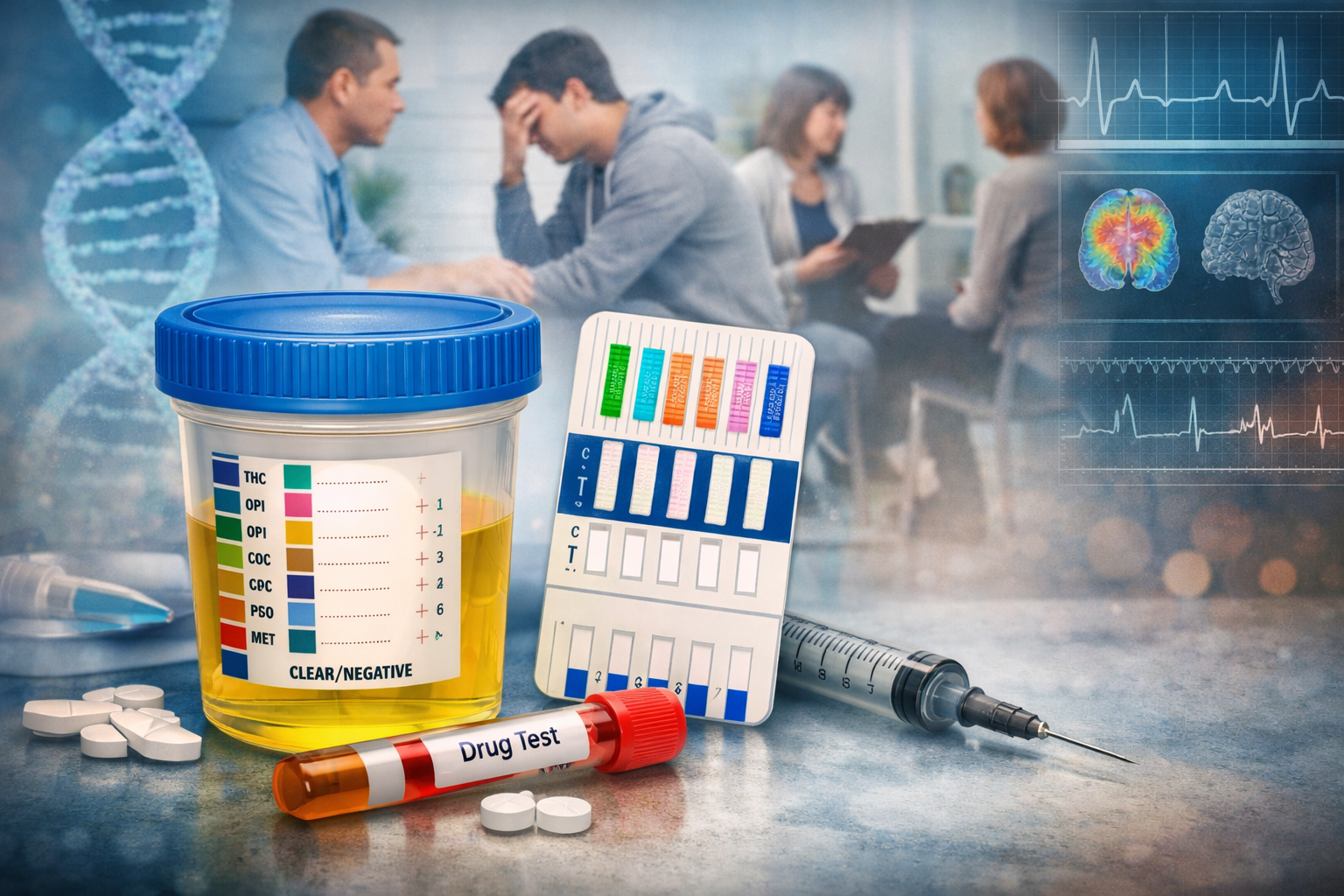
Understanding how drug testing supports evidence based addiction treatment is important for both patients and providers. In clinical addiction medicine, drug testing is a critical tool used to assess substance use, monitor recovery, and improve treatment outcomes.
Drug testing gives clear, objective data. This helps clinicians and a licensed physician make better decisions. It also supports evidence based practices that improve safety and long-term recovery.
What Is Drug Testing in Addiction Medicine
Drug testing is a process used to detect the presence or absence of drugs, alcohol, and other substances in the body. It is often used in substance use treatment programs to help manage patients and guide care.
Testing can involve different biological sample types, such as:
Urine testing
Blood testing
Oral fluid testing
Other types of laboratory testing
Each testing method helps identify drug metabolites. These are chemicals left behind after the body processes a drug.
Why Drug Testing Is Critical in Treatment Programs
Drug testing is critical in addiction medicine because it provides real facts. These facts help clinicians determine if a person is using substances or staying in recovery.
Without testing, providers would have to rely only on self-reporting. This can lead to missed risks or delayed care.
Drug testing programs help:
This is why drug testing is commonly used in evidence based addiction treatment.
Types of Drug Testing Methods Used
Different testing methods are used depending on the situation. Each method has a role in clinical addiction medicine.
Presumptive Drug Tests
Presumptive drug tests are quick screening tools. They give fast results but may not always be exact.
These tests help:
Identify possible drug use
Provide early warnings
Guide next steps
Definitive Testing
Definitive testing is more detailed and accurate. It is done in a laboratory using advanced analysis.
This type of testing can:
Confirm a positive drug test
Identify specific drugs
Detect drug metabolites at low levels
Definitive testing is important for making clinical decisions and ensuring accuracy.
How Drug Test Results Guide Treatment
Drug test results provide valuable information for clinicians. This data helps guide treatment plans and improve care.
When a positive result is found, providers can:
Adjust medications
Increase counseling
Address relapse risks
When results show absence of substances, it supports progress and recovery.
This process helps clinicians assess each person’s needs and provide the right level of care.
Supporting Evidence Based Practices
Evidence based practices rely on data and proven methods. Drug testing is a key part of this approach.
By using laboratory testing, providers can:
Track patient progress
Monitor treatment effectiveness
Make informed decisions
This supports better outcomes for patients with substance use disorders and alcohol use disorder.
Monitoring Substance Use and Relapse
Relapse is a common concern in addiction recovery. Drug testing helps detect early signs of substance use.
Testing helps clinicians:
Monitor drug use patterns
Identify risks quickly
Provide timely support
For example, testing can detect opioids, marijuana, and other illicit drugs. This allows providers to respond before the situation worsens.
Improving Patient Safety and Care
Patient safety is a top priority in addiction treatment. Drug testing helps ensure safe care in many ways.
It helps:
Prevent harmful drug interactions
Monitor controlled substances
Ensure appropriate use of medications
This is especially important when patients are taking medications as part of treatment programs.
Role of Drug Testing in Alcohol Use Disorder
Drug testing is not only for drugs. It also helps monitor alcohol use.
In alcohol use disorder, testing can detect alcohol in blood or other biological samples. This helps clinicians assess alcohol use and support recovery goals.
Helping Clinicians Manage Patients
Drug testing gives clinicians the tools they need to manage patients effectively.
With clear data, providers can:
Develop better treatment plans
Adjust therapy and counseling
Provide personalized care
This helps improve both short-term and long-term outcomes.
Building Trust in the Treatment Process
Drug testing also plays a role in building trust. When used correctly, it supports open communication between patients and providers.
It shows that care is based on facts, not assumptions. This helps patients feel supported and understood.
The Importance of Laboratory Testing and Analysis
Laboratory testing is the backbone of accurate drug testing. Labs use advanced tools to analyze samples and provide reliable results.
These labs follow strict standards to ensure:
Accuracy
Security
Quality
This makes drug testing a trusted part of addiction medicine.
Supporting Recovery Through Data
Recovery is a journey. Drug testing helps track that journey with real data.
By monitoring substance use over time, providers can see patterns and progress. This helps them adjust treatment and support long-term recovery.
Addressing Concerns About Drug Testing
Some patients may have concerns about drug testing. These concerns can include privacy, fairness, and fear of results.
It is important for providers to explain:
Why testing is used
How results are handled
How it helps patient care
When patients understand the rationale, they are more likely to engage in the process.
Drug Testing and Prevention Strategies
Drug testing also supports prevention. By detecting early signs of substance use, providers can take action before problems grow.
This helps reduce risks and supports healthier outcomes for patients.
The Role of Lynk Diagnostics in Drug Testing
Lynk Diagnostics plays an important role in supporting rehab facilities. As a trusted provider of laboratory testing services, Lynk Diagnostics helps ensure accurate and timely results.
Their services support clinicians in delivering high-quality care and following evidence based practices.
How Drug Testing Improves Treatment Outcomes
Drug testing helps improve treatment outcomes by providing clear, objective data.
This data allows providers to:
Monitor progress
Adjust treatment plans
Support patient success
It also helps identify challenges early, making it easier to address them.
Integrating Drug Testing Into Therapy and Counseling
Drug testing works best when combined with therapy and counseling.
Together, these services help:
Address the root causes of addiction
Support behavior change
Build healthy habits
This combined approach is key to successful recovery.
FAQs
What is the purpose of drug testing in addiction treatment?
Drug testing helps detect substance use, monitor recovery, and guide treatment decisions. It provides objective data for clinicians.
How do urine tests work in drug testing programs?
Urine tests detect drug metabolites in a urine sample. They are commonly used because they are simple and effective.
What is the difference between presumptive and definitive testing?
Presumptive drug tests are quick screenings, while definitive testing is more accurate and confirms results through laboratory analysis.
Can drug testing detect alcohol use?
Yes, drug testing can detect alcohol use through blood or other biological samples, helping manage alcohol use disorder.
How does drug testing help prevent relapse?
Drug testing helps detect early signs of substance use. This allows clinicians to act quickly and provide support to prevent relapse.
Resources