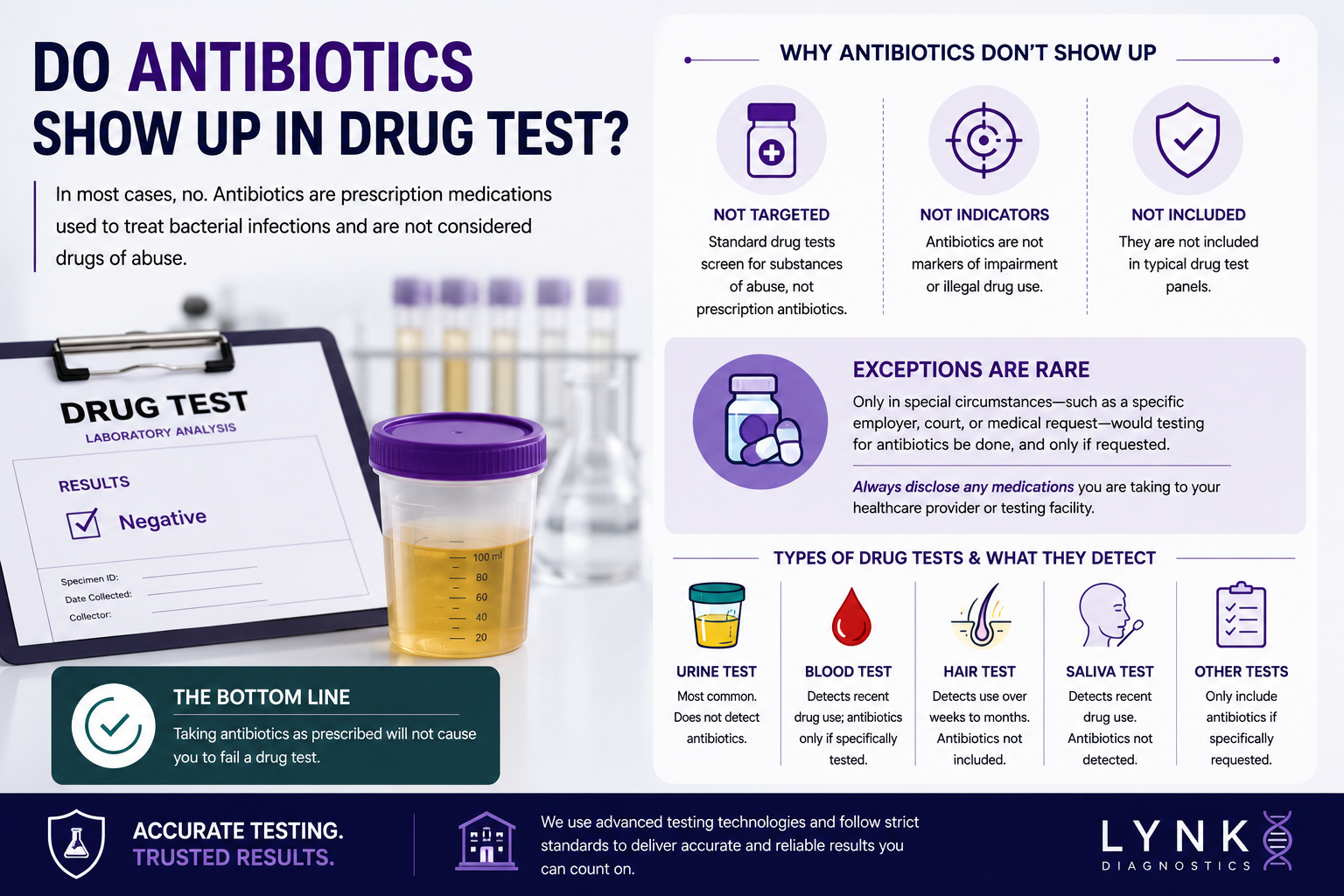
This is a common concern for people in rehab programs, workplaces, health care settings, and court-ordered testing. In most cases, antibiotics do not show up as illegal drugs during drug tests. However, some antibiotics and prescription medications may cause a false positive drug test in rare cases.
At Lynk Diagnostics, we help rehab facilities and treatment programs use generally reliable urine drug tests and confirmatory testing to lower the risk of inaccurate test results. Understanding how urine drug screens work can help people avoid stress and confusion after a positive result.
How Drug Tests Work
Drug tests look for substances or drug metabolites inside the body. Most urine drug tests use an initial screening process called immunoassay screening. These rapid urine screens help labs detect possible drug use quickly.
The most common types of drug tests include:
Urine tests
Blood tests
Saliva tests
Hair testing
A urine sample is the most common sample used in rehab and substance abuse treatment programs. Urine drug screens are affordable, fast, and effective for many substances.
The first drug screen checks for signs of:
Cocaine
Heroin
Morphine
Marijuana
Methamphetamine
Prescription drugs
Illegal drugs
Other illicit substances
If the initial screening shows a positive result, the lab usually performs confirmatory testing using gc ms testing. Gas chromatography-mass spectrometry, often called gc ms, is considered the gold standard in analytical toxicology.
Can Antibiotics Cause a False Positive Drug Test?
Some antibiotics may cause a false positive drug test in rare cases. This happens because certain antibiotics may be chemically similar to other substances tested during urine drug screens.
A false positive occurs when a drug test says a person used drugs even when they did not. Cross reactivity inside opiate immunoassays can sometimes trigger inaccurate test results.
A few antibiotics linked to false positive tests include:
Rifampin, which treats tuberculosis
Certain antibiotics used for urinary tract or kidney infection treatment
Some liquid medications that contain alcohol or other ingredients
In some case reports, antibiotics caused people to test positive for opiates during urine drug testing. However, these cases are uncommon.
Most antibiotics will not make someone test positive for cocaine, heroin, or other illegal drugs.
Why False Positive Tests Happen
False positive tests can happen for several reasons. The molecular structure of some medications may confuse the screening process during urine drug screens.
Some products linked to false positive results include:
Over the counter cold medicine
Certain antidepressants
Prescription medications
Breath cleaning products
Tonic water
Coca tea
Poppy seed bagel products
Foods made from the same plant as drug compounds
For example, eating a poppy seed bagel may lead to trace amounts of morphine in urine. Because poppy seed products come from the same plant used to make heroin and morphine, a false positive may happen if lower thresholds are used during screening.
Coca tea made from coca leaves in South America may also cause someone to test positive for cocaine.
Do Antibiotics Show Up in Urine Drug Tests?
Most antibiotics do not appear directly in urine drug tests. Drug tests are usually designed to look for illegal drugs, prescription drug misuse, and illicit substances.
However, certain antibiotics may interfere with urine drug screens and cause false positive results. This does not mean the antibiotics are illegal drugs. It simply means the test reacted to something chemically similar.
Many rapid urine screens are highly effective, but no screening test is perfect. That is why confirmation test procedures are important.
At Lynk Diagnostics, confirmatory testing helps rehab facilities and treatment providers avoid false positive tests that could affect patient care.
The Role of Confirmatory Testing
If a person gets a positive result during initial screening, the next step is confirmatory testing. A confirmation test uses advanced analytical toxicology methods like gc ms.
Gc ms testing can tell the difference between:
Antibiotics
Prescription medications
Cocaine
Heroin
Morphine
Other substances
This process greatly lowers the chance of inaccurate test results.
Confirmatory testing is important because false positive drug test results can affect:
Employment
Rehab treatment plans
Federal government programs
Mental health services administration guidelines
Court cases
Substance abuse recovery progress
The gold standard process gives more accurate information than simple screening alone.
Antibiotics and Kidney Disease
People with kidney disease or a kidney infection may process medications differently. This can sometimes affect urine drug testing results.
When the kidneys do not filter substances normally, medications may stay in the body longer. In rare cases, this may increase the chance of false positive occurs situations during urine tests.
People with urinary tract problems should always tell their healthcare provider and testing facility about:
Antibiotics
Prescription
Over the counter medications
Supplements
Other substances they recently used
Providing full information helps labs better understand test result findings.
Can Antibiotics Cause False Negative Results?
While most people worry about false positive drug test results, false negative results can also happen.
A false negative means drug use happened, but the test did not detect it. Reasons may include:
Diluted urine
Testing too early
Testing too late
Low drug levels
Problems with screening
Antibiotics themselves usually do not create false negative results. Still, every urine drug testing program should use reliable laboratory standards and confirmatory testing procedures.
How Rehab Facilities Use Drug Testing
Drug testing helps rehab centers monitor recovery and support patient safety. Urine drug screens are often used in:
Substance abuse treatment
Addiction recovery
Medication management
Mental health programs
Bipolar disorder treatment support
Drug testing can help providers identify drug use early and improve treatment planning.
At Lynk Diagnostics, we work with rehab programs that need dependable urine drug testing services. Our testing process focuses on accuracy, fast reporting, and confirmation test support.
How to Avoid False Positive Tests
There are ways to help avoid false positive tests during urine drug testing.
Provide Documentation
Always provide documentation for:
Antibiotics
Prescription medications
Liquid medications
Over the counter products
This helps labs review possible cross reactivity concerns.
Tell the Lab About Your Medications
Before giving a urine sample, tell staff about:
Antibiotics
Prescription drugs
Certain antidepressants
Supplements
Other medications
This information may help explain a positive result.
Request Confirmatory Testing
If someone receives a false positive result, confirmatory testing should be requested. Gc ms testing can help separate legal medications from illegal drugs.
Avoid Risky Products Before Testing
Some products may increase the chance of inaccurate test results, including:
Coca tea
Poppy seed foods
Breath cleaning products
Certain tonic water products
While these items do not always affect testing, avoiding them before screening may help reduce confusion.
Are Urine Drug Screens Reliable?
Urine drug screens are generally reliable when used correctly. They are widely used by:
Rehab centers
Health care providers
Federal government programs
Mental health services administration facilities
Employers
Still, screening tests are not perfect. Cross reactivity and chemically similar compounds can sometimes create false positive occurs situations.
That is why confirmatory testing remains an important part of professional drug testing programs.
Why Accurate Drug Testing Matters
Accurate drug testing protects both patients and treatment providers. False positive tests can create stress, confusion, and treatment problems.
Professional laboratories use:
Modern analytical toxicology methods
Confirmation test procedures
Gc ms testing
Careful screening standards
These steps help reduce inaccurate test results and improve patient trust.
At Lynk Diagnostics, we support rehab facilities with professional urine drug testing solutions focused on quality, speed, and reliable reporting.
FAQs
Do antibiotics show up in drug test results?
Most antibiotics do not show up as illegal drugs during drug tests. However, certain antibiotics may cause a false positive drug test in rare cases because of cross reactivity.
Can antibiotics cause a false positive for cocaine?
Most antibiotics do not cause a false positive for cocaine. Still, some medications or other substances may interfere with urine drug screens during initial screening.
What is confirmatory testing?
Confirmatory testing is a second test used after a positive result. Labs often use gc ms testing, which is considered the gold standard for accurate drug testing.
Can a poppy seed bagel affect a drug test?
Yes. In some rare cases, eating a poppy seed bagel may create trace amounts of morphine in urine and lead to false positive tests during opiate immunoassays.
What should I do if I receive a false positive result?
Tell the healthcare provider or testing lab about all medications, antibiotics, and supplements you take. You should also request confirmatory testing to verify the test result.