At Lynk Diagnostics, we help rehab facilities and treatment programs get accurate results through professional alcohol screening and drug testing services. Knowing how alcohol detection works can help people better understand their test results and detection times.
Can a Drug Test Detect Alcohol?
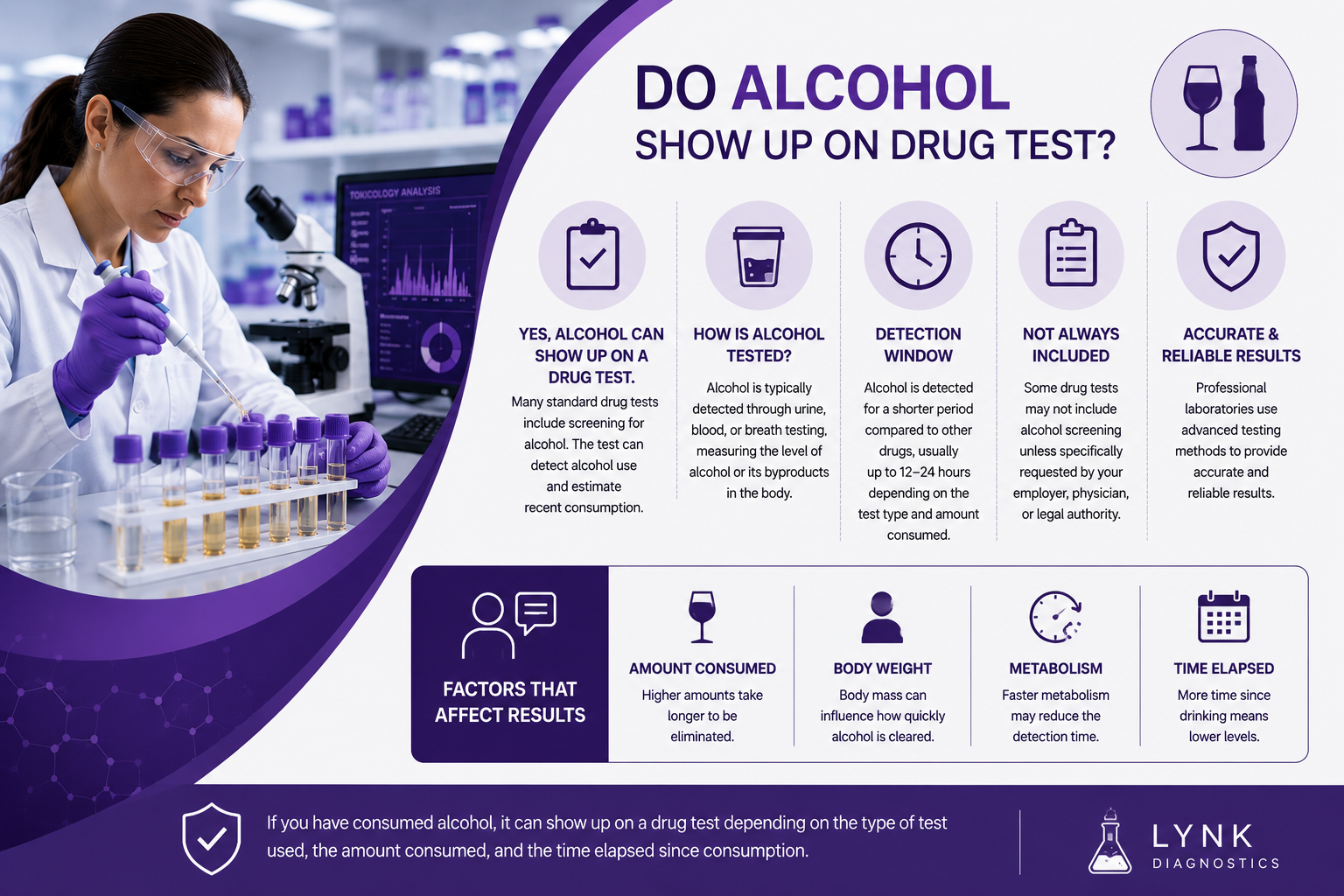
A standard drug test may not always identify alcohol usage unless alcohol is specifically tested. Many standard tests focus on drugs like marijuana, cocaine, opioids, and amphetamines. However, advanced urine tests and special alcohol testing methods can detect alcohol consumption.
Some urine drug tests check for ethyl glucuronide (EtG) and ethyl sulfate (EtS). These are alcohol metabolites left behind after the body processes alcohol. Even after alcohol is no longer felt in the body, these metabolites may still be alcohol detectable.
The type of test matters. Different tests can detect alcohol in different ways and for different lengths of time.
Types of Alcohol Testing
Urine Alcohol Tests
Urine alcohol tests are one of the most common ways to detect alcohol consumption. These urine tests look for alcohol metabolites like ethyl glucuronide and ethyl sulfate in a urine sample.
EtG tests are very sensitive. They can sometimes identify alcohol usage up to 80 hours after the last drink. This does not mean every person will test positive for 80 hours. Detection times depend on several factors like body composition, hydration levels, liver function, overall health, and the amount of alcohol consumed.
A single drink may only be detectable for a short time. Heavy drinking or long alcohol use can stay in the urine longer.
Urine concentration also matters. Drinking large amounts of water may dilute a urine sample, but labs can still often detect signs of dilution.
Blood Tests
Blood tests can detect alcohol for a shorter period of time. These tests measure ethanol directly in the blood. Alcohol detection in blood is often used after accidents, during emergency care, or for legal cases.
Blood tests are good for detecting recent alcohol consumption. In most cases, alcohol may only stay detectable in blood for about 12 hours after drinking alcohol.
Hair Tests
Hair tests may identify alcohol usage over a longer period. Hair testing can sometimes show alcohol use for up to 90 days.
These tests do not usually show recent drinking. Instead, they help show patterns of repeated or heavy drinking over time.
Ethanol Tests
Ethanol tests look for active alcohol in the body. These tests are often used when someone may currently be impaired. Breath and blood alcohol testing are common ethanol tests.
How Long Does Alcohol Stay in the Body?
The body processes alcohol at different speeds. Many people think drinking coffee, exercising, or taking cold showers will help. In reality, the body simply needs time to remove alcohol.
Several factors affect alcohol detection times, including:
Amount of alcohol consumed
Body weight and body composition
Liver function
Hydration levels
Overall health
Type of test used
Frequency of drinking
Last drink consumed
For example, someone who had a standard drink may clear alcohol faster than someone involved in heavy drinking.
The Cleveland Clinic and National Institute on Alcohol Abuse and Alcoholism both explain that alcohol moves through the body based on metabolism and liver function. The Mental Health Services Administration also supports testing programs that help identify substance abuse and alcohol use disorders.
What Are Alcohol Metabolites?
Alcohol metabolites are chemicals the body creates after consuming alcohol. The two most common are:
Ethyl glucuronide (EtG)
Ethyl sulfate (EtS)
These direct metabolite markers help labs detect alcohol consumption even after ethanol leaves the body.
Metabolite testing is commonly used in rehab programs, probation programs, and monitoring services. Since alcohol metabolites stay in urine longer than alcohol itself, they help provide more accurate results.
Can You Test Positive Without Drinking?
Some people worry about false positives during alcohol screening. While rare, certain products may affect test results.
Products that may contain alcohol include:
Hand sanitizer
Mouthwash
Some medicines
Cleaning products
Still, advanced urine tests are designed to reduce false positives. Labs often review etg levels carefully before reporting a positive result.
Poppy seeds are known for causing confusion on opioid tests, but they do not cause alcohol positives. Marijuana also does not create alcohol metabolites.
If there is concern about a false positive, additional testing understanding and confirmation testing may help.
Do Standard Drug Tests Include Alcohol?
A standard drug test usually does not include alcohol unless requested. Many standard drug test panels only look for common drugs.
However, some rehab facilities, employers, and courts order alcohol screening separately. Panel drug tests may include alcohol testing when needed.
At Lynk Diagnostics, we work with rehab programs that need reliable testing requirements and professional support. We help facilities choose the right test type based on their needs.
Why Rehab Facilities Test for Alcohol
Alcohol is one of the most commonly abused substances in the United States. Even though it is legal for adults, alcohol use can still lead to addiction, health problems, and dangerous behavior.
Rehab facilities may use urine drug tests and alcohol testing to:
Substance abuse programs often use EtG tests because they can detect recent alcohol consumption longer than ethanol tests.
What Happens During a Urine Drug Test?
During a urine drug test, the person provides a urine sample at a testing location. The sample is checked for temperature, condition, and signs of tampering.
The urine sample is then sent to a laboratory for analysis. Labs look for drugs, alcohol metabolites, or other substances based on the ordered panel drug test.
The final drug test results are shared with the treatment provider or approved organization.
Professional testing helps provide accurate results while protecting patient privacy.
Can Drinking Water Help Pass a Test?
Many people search online for ways to beat a test. Drinking large amounts of water may lower urine concentration, but it does not fully remove alcohol metabolites.
Labs often check for diluted samples. If the sample is too diluted, the person may need to retest.
The safest approach is honesty and following program guidelines.
Understanding Detection Times
Alcohol detectable windows depend on the type of test used.
Common detection times include:
Blood tests: up to 12 hours
Urine alcohol tests: up to 80 hours
Hair tests: up to 90 days
These times can change based on several factors. Someone with heavy drinking habits may test positive longer than someone who had a single drink.
No test can predict impairment perfectly. Tests simply help identify alcohol or alcohol metabolites within a certain time frame.
Why Choose Lynk Diagnostics?
Lynk Diagnostics provides professional drug test and alcohol testing services for rehab facilities. Our team understands the importance of fast reporting, accurate results, and reliable support.
We help treatment centers with:
Urine drug testing
Alcohol screening
EtG and EtS testing
Drug test panels
Advanced urine tests
Monitoring programs
Professional laboratory support
Our goal is to support recovery programs with trusted testing services and clear testing understanding.
FAQs
Do alcohol show up on drug test?
Yes. Alcohol can show up on a drug test if the test is designed to detect alcohol or alcohol metabolites like ethyl glucuronide and ethyl sulfate.
How long can alcohol be detected in urine?
Urine alcohol tests may detect alcohol consumption for up to 80 hours after the last drink, depending on the amount of alcohol and other body factors.
Can hand sanitizer cause a positive alcohol test?
Heavy use of hand sanitizer may sometimes affect sensitive EtG tests, but labs use confirmation testing to reduce false positives.
Are alcohol tests included in standard drug tests?
A standard drug test does not always include alcohol. Alcohol testing is usually added separately when specifically tested.
What affects alcohol detection times?
Detection times depend on body composition, hydration levels, liver function, overall health, amount of alcohol consumed, and the type of test used.