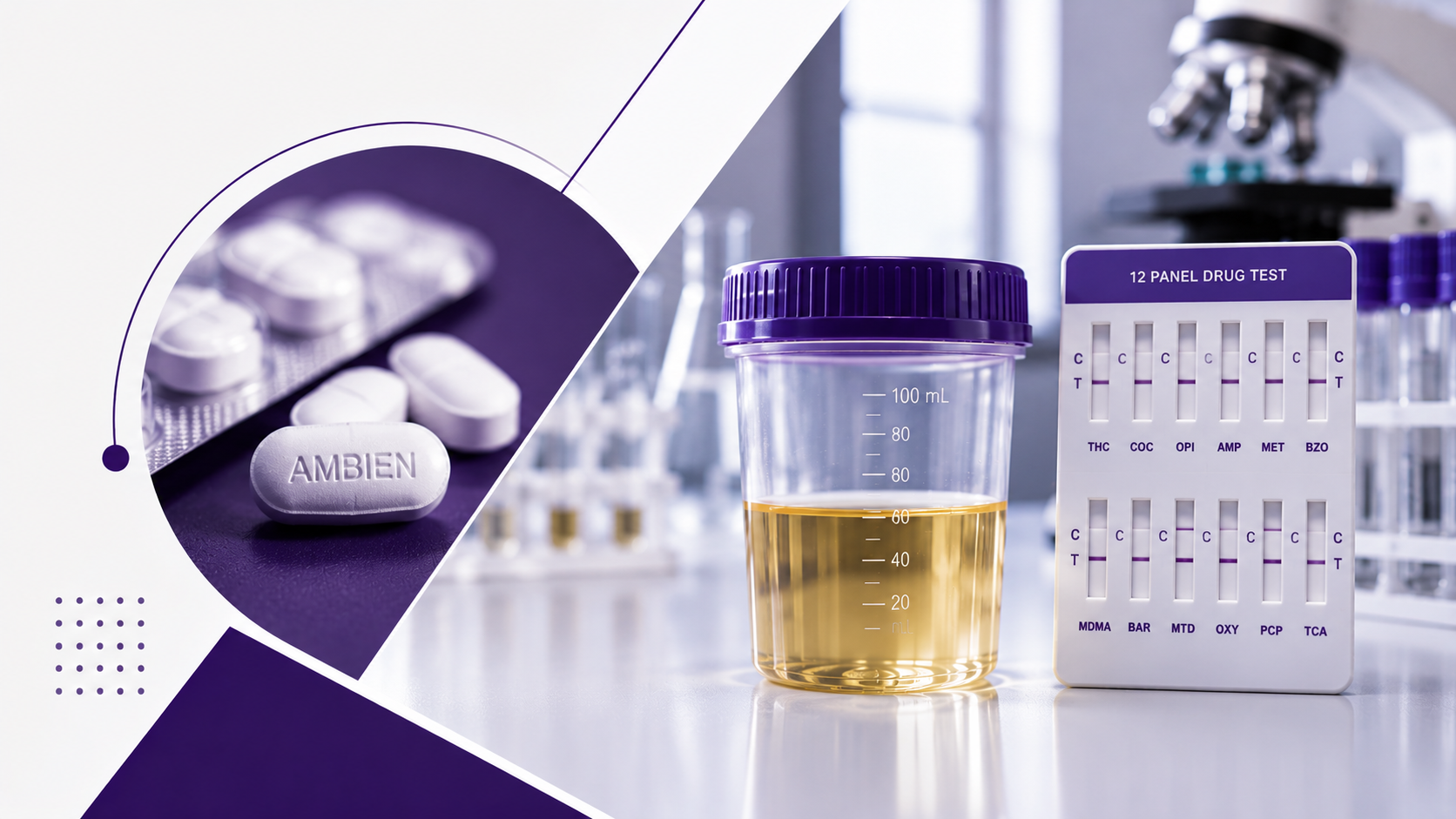
Ambien is a widely used prescription medication that helps people with chronic insomnia and other sleep disorders. While it is effective for helping people fall asleep, many users are concerned about whether an Ambien drug test can identify the medication.
At Lynk Diagnostics, we provide accurate drug testing and toxicology services for rehab facilities and healthcare organizations. Understanding how Ambien works and how testing detects it can help you prepare for a drug test and better understand your results.
What Is Ambien?
Ambien is the brand name for zolpidem tartrate, a medication approved by the FDA to treat insomnia. It belongs to a group of medications called z drugs, which are non-benzodiazepine sedative hypnotic medications.
The medication works by affecting brain activity and slowing activity in the central nervous system. This creates the sleep inducing effects that help people with sleep onset difficulties and other sleep problems.
Ambien is classified by the Drug Enforcement Administration as a Schedule IV controlled substance because it carries a risk of misuse, drug dependence, and Ambien addiction.
Some common forms include:
Immediate-release Ambien
Ambien CR
Generic zolpidem tartrate
Healthcare providers may prescribe Ambien when other sleep aids and healthy sleep habits have not been effective.
Does Ambien Show Up on a 12 Panel Drug Test?
The answer is: usually not.
A standard 12-panel drug test is designed to identify commonly abused substances such as:
Marijuana
Cocaine
Amphetamines
Opiates
PCP
Benzodiazepines
Although Ambien is a controlled substance, it is not normally included in most standard drug tests. Therefore, if you are asking does Ambien show up on a 12 panel drug test, the answer is generally no unless the test specifically includes zolpidem screening.
However, specialized testing can detect Ambien and identify zolpidem when requested.
Can Drug Tests Detect Ambien?
Yes. Certain drug tests can specifically detect zolpidem.
If a laboratory is instructed to look for zolpidem, the test can often detect Ambien and confirm its presence.
Specialized testing may be used in:
Addiction treatment programs
Medical evaluations
Legal cases
Compliance monitoring
Substance abuse treatment programs
An Ambien drug test is different from a routine screening because it is designed specifically to identify zolpidem and its metabolites.
How Long Does Ambien Stay in Your System?
One of the most common questions after “does Ambien show up on a 12 panel drug test” is long does Ambien stay in the body.
Several factors affect how long Ambien stay and zolpidem stay in the body, including:
Age
Weight
Overall health
Kidney function
Liver function
Dosage
Frequency of use
Slower metabolism
Use of other medications
For most people, Ambien begins leaving the body relatively quickly. However, traces may remain long after the medication’s effects wear off.
The exact time Ambien may stay in your system varies from person to person.
Understanding the Ambien Half Life
The Ambien half life is relatively short compared to many other sleep medications.
The half life of zolpidem is generally around 2 to 3 hours in healthy adults. This means half of the medication leaves the body within that time period.
Even though the drug’s sedative effects may wear off quickly, metabolites can remain in the body longer.
Factors that may affect Ambien elimination include:
Older age
Higher doses
Poor health
Reduced kidney function
Slower metabolism
These factors can slow drug clearance and extend detection times.
Detection Windows for Ambien
The detection windows for Ambien vary depending on the testing method used.
Urine Test
A urine test is the most common method used to detect zolpidem.
Most urine screenings can identify zolpidem for approximately 1 to 3 days after the last dose.
Because of this, urine testing is often used in addiction treatment and compliance monitoring programs.
Blood Test
A blood test generally has a shorter detection period.
Blood testing may identify zolpidem within hours to about 24 hours after use.
Blood testing is often used when medical professionals need recent-use information.
Hair Tests
Hair tests offer the longest detection period.
Hair testing can sometimes identify drug exposure for up to 90 days.
Although less common, hair testing may be used in legal or specialized treatment settings.
What Factors Affect Ambien Detection?
Several factors influence whether Ambien is detectable.
Dose Taken
People taking therapeutic doses may clear the medication faster than individuals using higher doses.
Frequency of Use
Regular Ambien use may increase how long metabolites remain detectable.
Age and Health
Older adults often experience slower processing of medications.
Metabolism
People with a slower metabolism may experience longer detection periods.
Last Dose Timing
The closer the last dose is to testing, the greater the chance that Ambien will be detected.
Why Is Ambien Prescribed?
Healthcare providers prescribe Ambien to help people who struggle to fall asleep because of chronic insomnia and other sleep disorders.
The medication is considered effective for short-term treatment of:
Sleep onset problems
Temporary insomnia
Certain sleep disturbances
Many people receive prescribed Ambien after discussing symptoms with a healthcare provider.
However, providers also encourage patients to address underlying sleep issues and improve healthy sleep habits whenever possible.
Risks Associated With Taking Ambien
While Ambien can be effective, it also carries risks.
Common side effects include:
Drowsiness
Dizziness
Headache
Fatigue
More serious adverse reactions may occur in some people.
Complex Sleep Behaviors
One of the most discussed safety concerns involves complex sleep behaviors.
These behaviors can occur while a person is not fully awake.
Examples include:
Sleep driving
Sleep related eating disorder
Walking while asleep
Making phone calls while asleep
Some reports have also documented zolpidem induced sleepwalking and other unexpected clinical effects.
These unexpected clinical effects can create significant health risks.
Can Ambien Lead to Dependence?
Yes. Long-term use can contribute to drug dependence and Ambien dependence.
Because Ambien is a Schedule IV controlled substance, there is potential for misuse.
Repeated use may increase the risk of:
Tolerance
Dependence
Misuse
Substance abuse
When dependence develops, stopping suddenly may trigger withdrawal symptoms.
Ambien Withdrawal Symptoms
People who stop taking Ambien abruptly may experience:
Anxiety
Restlessness
Irritability
Sleep disturbances
Rebound insomnia
In severe situations, professional support and medical supervision may be necessary.
Individuals experiencing withdrawal should consult a healthcare provider before stopping the medication.
Ambien Addiction and Addiction Treatment
Although many people use Ambien safely, some develop Ambien addiction.
Warning signs may include:
Taking more than prescribed
Using Ambien for non-medical reasons
Cravings
Continued use despite problems
Difficulty stopping
Professional addiction treatment may help individuals regain control and address both medication misuse and underlying mental health concerns.
Treatment options may include:
Counseling
Behavioral therapy
Medical monitoring
Recovery support
Ongoing medical treatment
Ambien and Other Medications
Combining Ambien with other medications can increase risks.
Special caution is needed when combining Ambien with:
Alcohol
Opioids
Benzodiazepines
Other central nervous system depressants
These combinations may intensify sedation and increase safety concerns.
Always discuss all medications with your healthcare provider before taking Ambien.
The Importance of Accurate Drug Screening
Accurate drug screening is important in healthcare, treatment programs, and workplace settings.
At Lynk Diagnostics, advanced testing methods help identify substances accurately and reduce confusion about medication use.
Whether testing involves a routine panel or a specialized screening to identify zolpidem, proper laboratory analysis helps ensure reliable results.
Our commitment to quality testing supports healthcare organizations, addiction treatment providers, and recovery programs.
Conclusion
So, does Ambien show up on a 12 panel drug test?
In most cases, no. Standard 12-panel tests generally do not screen for zolpidem tartrate. However, specialized testing can detect Ambien, detect zolpidem, and confirm recent use.
How long Ambien remains detectable depends on factors such as dosage, metabolism, health, and testing method. Understanding detection windows, drug clearance, and testing options can help you better understand your results.
If you need accurate toxicology and drug testing services, Lynk Diagnostics provides trusted solutions that support treatment programs, healthcare organizations, and recovery professionals.
FAQs
Does Ambien show up on a 12 panel drug test?
Usually no. Most standard 12-panel drug tests do not include zolpidem. Specialized testing is typically required to detect Ambien.
How long does Ambien stay in your system?
The answer varies by person. Factors such as dosage, age, metabolism, and health affect how long Ambien remains detectable.
Can a urine test detect Ambien?
Yes. A specialized urine test can often detect zolpidem for 1 to 3 days after use.
Are hair tests able to identify zolpidem?
Yes. Hair tests may identify zolpidem exposure for up to 90 days in some cases.
Can Ambien cause addiction?
Yes. Although many people use Ambien safely, prolonged use can contribute to drug dependence, Ambien dependence, and Ambien addiction.