
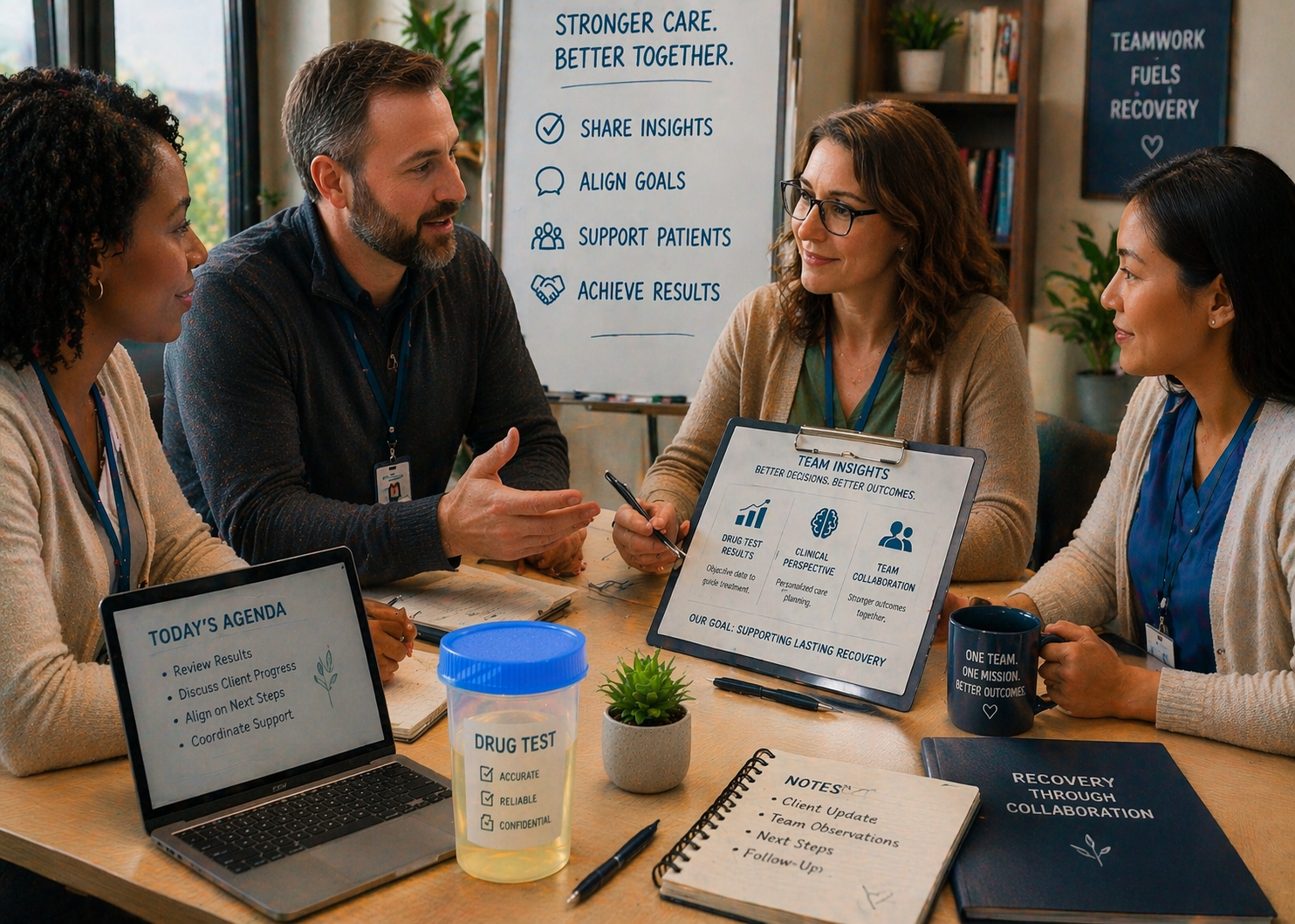
How Drug Testing Enhances Collaboration Among Rehab Professionals
Drug testing plays a big role in addiction treatment and recovery. It is not just about finding substances in the body. It is also about helping rehab professionals work together as a team. When everyone has clear and reliable drug testing data, they can make better choices for patient care.
At facilities like Lynk Diagnostics, drug testing services are designed to support rehab teams. These services give fast, accurate results that help therapists, doctors, case managers, and nurses stay on the same page.
In this article, we will explain how drug testing improves teamwork, communication, and treatment success in rehab programs.
Why Collaboration Matters in Rehab
Recovery is not a one-person job. Many professionals work together to help patients heal.
Who Is Part of the Rehab Team?
A rehab team may include:
- Therapists
- Counselors
- Medical doctors
- Nurses
- Case managers
- Behavioral health specialists
Each person has a different role. But they all share the same goal—helping the patient recover.
The Need for Shared Information
For a team to work well, everyone needs the same information. Without it, mistakes can happen. A therapist may not know about a relapse. A doctor may not adjust treatment plans correctly.
This is where drug testing becomes very important.
What Is Drug Testing in Rehab?
Drug testing is a process used to detect substances in the body. It helps track patient progress during addiction treatment.
Types of Drug Testing
Common types include:
- Urine drug testing
- Saliva testing
- Hair testing
- Blood testing
Each type gives different information. Many rehab centers use urine drug testing because it is fast and reliable.
What Drug Testing Shows
Drug testing can:
- Detect substance use
- Confirm sobriety
- Track relapse
- Support treatment planning
This information is shared with the treatment team to improve care.
How Drug Testing Supports Team Communication
Good communication is key in rehab settings. Drug testing helps teams share clear and accurate information.
Real-Time Data Sharing
With services like Lynk Diagnostics, results are often available quickly. This allows:
- Faster decision-making
- Immediate response to relapse
- Better care coordination
When everyone sees the same data, there is less confusion.
Reducing Miscommunication
Without drug testing, teams may rely on self-reports. Patients may not always share accurate information.
Drug testing provides objective data. This means the team can trust the results and avoid misunderstandings.
Improving Treatment Planning With Drug Testing
Treatment plans need to change as patients progress. Drug testing helps guide these changes.
Personalized Care
Each patient is different. Drug testing helps professionals:
- Adjust therapy sessions
- Change medications if needed
- Increase or decrease support levels
This leads to more personalized care.
Early Intervention
If a test shows substance use, the team can act quickly. Early intervention can:
- Prevent relapse from getting worse
- Provide extra counseling
- Adjust the recovery plan
This teamwork improves outcomes.
Strengthening Accountability Among Professionals
Drug testing also helps keep the entire team accountable.
Clear Documentation
Drug testing results create a record. This record can be shared across the team.
This helps:
- Track patient progress
- Ensure everyone follows the care plan
- Support clinical decisions
Building Trust Within the Team
When everyone uses the same data, trust grows among professionals. No one is guessing. Everyone is working with facts.
Supporting Therapists With Reliable Data
Therapists play a key role in recovery. Drug testing gives them helpful insights.
Better Therapy Sessions
When therapists know the results, they can:
- Address relapse triggers
- Talk about challenges honestly
- Build stronger treatment plans
Reducing Guesswork
Without drug testing, therapists may rely on patient stories alone. With testing, they have real data to guide conversations.
Helping Case Managers Coordinate Care
Case managers help organize treatment and support services.
Keeping Everyone Aligned
Drug testing helps case managers:
- Share updates with the team
- Coordinate appointments
- Ensure treatment goals are met
Managing Patient Progress
Case managers use testing results to track:
- Improvement over time
- Setbacks or relapses
- Overall recovery progress
This helps them adjust care plans when needed.
Enhancing Medical Decisions
Doctors and nurses also rely on drug testing data.
Safe Medication Management
Some medications can interact with substances. Drug testing helps medical staff:
- Prescribe safely
- Avoid harmful interactions
- Adjust dosages
Monitoring Physical Health
Substance use can affect the body. Testing helps doctors understand what is happening and respond quickly.
Encouraging Patient Transparency
Drug testing is not meant to punish patients. It is meant to support them.
Creating Honest Conversations
When patients know testing is part of treatment, they may feel more open. This can lead to:
- Honest discussions
- Better understanding of triggers
- Stronger relationships with staff
Building Trust
When used correctly, drug testing builds trust between patients and professionals. It shows that the team cares about recovery.
Reducing Conflict Among Team Members
Sometimes, team members may disagree about a patient’s progress.
Using Data to Solve Disagreements
Drug testing provides clear facts. This helps:
- Reduce arguments
- Support clinical decisions
- Keep the focus on patient care
Keeping Everyone Focused
With shared data, the team can focus on solutions instead of opinions.
Supporting Compliance and Regulations
Rehab centers must follow rules and guidelines.
Meeting Industry Standards
Drug testing helps facilities:
- Follow clinical guidelines
- Meet legal requirements
- Maintain high-quality care
Proper Documentation
Accurate records are important for audits and reviews. Drug testing helps keep clear documentation.
The Role of Lynk Diagnostics in Team Collaboration
Lynk Diagnostics supports rehab professionals with reliable drug testing services.
Fast and Accurate Results
Quick turnaround times help teams act fast. Accurate results build trust.
Easy Data Access
Results can be shared across the treatment team. This improves communication and coordination.
Supporting Better Outcomes
By providing reliable drug testing data, Lynk Diagnostics helps rehab teams:
- Work together more effectively
- Improve patient care
- Support long-term recovery
Best Practices for Using Drug Testing in Teams
To get the most benefit, rehab teams should follow best practices.
Use Testing as a Support Tool
Drug testing should help patients, not punish them. It should be part of a caring approach.
Share Results With the Team
Make sure all team members have access to results. This keeps everyone informed.
Combine Testing With Therapy
Drug testing works best when combined with:
- Counseling
- Behavioral therapy
- Medical care
Respect Patient Privacy
Always protect patient information. Follow privacy laws and guidelines.
Challenges and How to Overcome Them
Drug testing is helpful, but there can be challenges.
Patient Anxiety
Some patients may feel nervous about testing. Teams can help by:
- Explaining the purpose
- Offering support
- Creating a safe environment
Misuse of Results
Results should be used to help, not judge. Teams must focus on care and support.
The Future of Drug Testing in Rehab
Drug testing continues to improve.
New Technology
Advances in testing make results faster and more accurate.
Better Integration
Systems are improving to allow easier sharing of data among teams.
Stronger Collaboration
As tools improve, teamwork will continue to grow stronger in rehab settings.
FAQs About Drug Testing and Team Collaboration
How does drug testing improve teamwork in rehab?
Drug testing gives all team members the same information. This helps them make better decisions and work together.
Is drug testing only used to catch relapse?
No. It is also used to support treatment, track progress, and guide care planning.
How often should drug testing be done?
It depends on the patient and program. Some programs use regular testing, while others use random testing.
Does drug testing help therapists?
Yes. It gives therapists real data to guide sessions and support patients more effectively.
Is drug testing safe and private?
Yes. When done properly, it follows privacy rules and keeps patient information secure.
Resources
- Substance Abuse and Mental Health Services Administration (SAMHSA): https://www.samhsa.gov
- National Institute on Drug Abuse (NIDA): https://nida.nih.gov
- Centers for Disease Control and Prevention (CDC): https://www.cdc.gov
- American Society of Addiction Medicine (ASAM): https://www.asam.org
By using reliable drug testing services like those from Lynk Diagnostics, rehab professionals can work better together. This teamwork leads to stronger treatment plans, better communication, and improved recovery outcomes for patients.