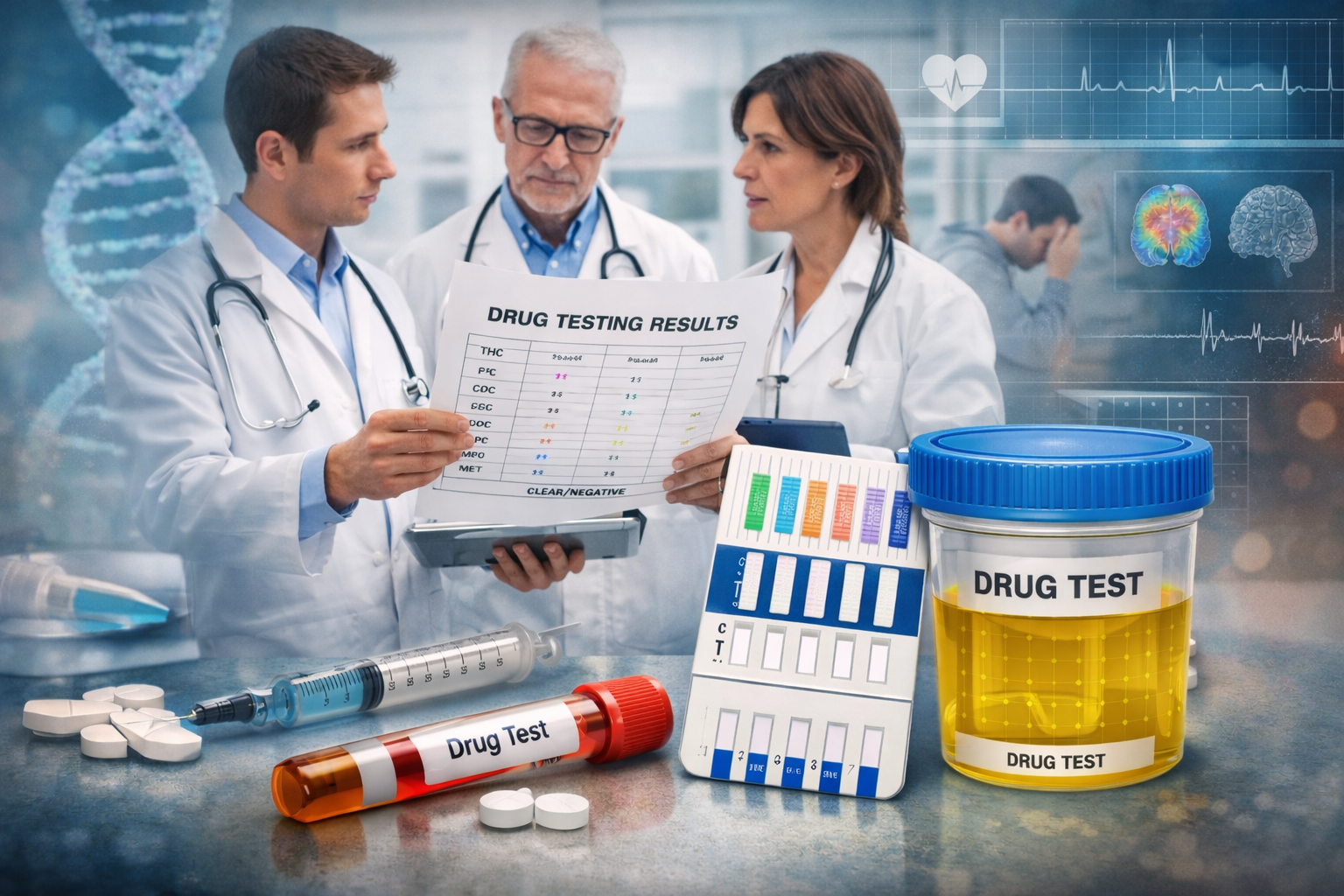
Understanding how medical teams interpret drug testing results in recovery care is an important part of helping people heal from addiction. Drug testing is not about punishment. It is an important tool that helps healthcare providers support patients, track progress, and improve treatment plans.
In addiction treatment, medical teams use clinical drug testing to understand a patient’s substance use, identify risks, and guide the healing process. When done the right way, it plays a crucial role in helping patients stay on track toward lasting recovery.
Why Drug Testing Is an Essential Part of Recovery
Drug testing is an essential part of substance abuse treatment and addiction medicine. It gives real information that helps medical teams make safe decisions.
Supporting Patient Care and Safety
Drug testing helps protect the well being and safety of patients. It can detect the presence or absence of certain substances in the body. This helps providers understand if there is a risk of relapse or harmful drug use.
Helping Patients Stay Sober
Testing helps patients stay accountable. It can encourage them to stay sober and stay focused on their recovery goals. It also gives peace of mind to a loved one who may be worried.
Providing Early Detection
Drug testing allows for early detection of recent drug use. This helps medical teams step in quickly and provide additional support before things get worse.
Types of Drug Testing Used in Recovery Care
Medical teams use different types of laboratory testing to check for drug use. Each type looks at a different biological sample.
Urine Drug Testing
Urine drug testing is the most common method. It uses a urine sample to detect drug metabolites, which are chemicals left behind after the body processes drugs.
Urine tests are helpful because they can detect drug use over a longer detection window, often showing use in the recent past.
Oral Fluid Testing
Oral fluid testing uses saliva. It is easy to collect and can detect recent drug use quickly. This method is often used for routine check ups.
Blood Testing
Testing blood can show what substances are in the body at that exact time. It is very accurate but used less often because it is more invasive.
Understanding the Drug Testing Process
The process of drug testing includes several steps. Each step helps medical teams get accurate lab results.
Initial Screen with Presumptive Tests
The first step is usually an initial screen using a presumptive test. These are also called presumptive drug tests.
These tests are quick and can show if a person may have used specific drugs. However, they are not always perfect.
Confirmatory Testing for Accuracy
If a test comes back positive, a confirmatory test is done. This is also known as definitive testing.
Confirmatory testing uses advanced laboratory methods to make sure the results are correct. It helps rule out false positives, which can happen during a presumptive test.
Reviewing Laboratory Results
After testing, medical teams review the laboratory results carefully. They look at the presence of substances, levels of drugs, and patterns over time.
How Medical Teams Interpret Drug Test Results
Interpreting drug test results is not simple. Medical teams look at many factors to understand what the results mean.
Looking at the Detection Window
Each drug has a different detection window. Some drugs stay in the body longer than others. This helps providers know if drug use happened recently or earlier.
Understanding Drug Metabolites
Medical teams check for drug metabolites. These show that the body has processed a substance. This helps confirm drug use, even if the original drug is no longer present.
Considering False Positives
Sometimes, a test may show a test positive result when no drug was used. This is called a false positive. That is why confirmatory testing is so important.
Comparing with Self Report
Patients may share their own story, called a self report. Medical teams compare this with the test results. This helps build trust and improve care.
The Role of Drug Testing in Treatment Plans
Drug testing helps guide treatment plans in a clear and safe way.
Adjusting Treatment Based on Results
If a patient tests positive, the treatment team may adjust their plan. This could include more therapy, support groups, or medication changes.
Medication Monitoring
Drug testing is also used for medication monitoring. It ensures patients are taking the right medications and not mixing them with harmful substances.
Supporting Recovery Progress
Testing helps track recovery progress over time. It shows if a patient is improving, staying stable, or facing challenges.
The Importance of Medically Necessary Testing
Not all testing is the same. Medical teams follow clear guidelines to ensure testing is fair and helpful.
What Is Medically Necessary Testing?
Medically necessary testing means tests are done for real health reasons. They are not random or unfair. They are based on patient needs and risks.
Following Clear Guidelines
Healthcare providers follow rules from organizations like the Mental Health Services Administration and other health agencies. These rules help ensure testing is ethical and useful.
How Drug Testing Supports Addiction Identification
Drug testing helps with addiction identification. It can show patterns of substance use disorders and help providers understand the severity of the problem.
Identifying Substance Use Disorders
Testing can confirm if a patient has a substance use disorder. It helps providers see how often drugs are used and what types.
Understanding the Negative Impact
Drug testing can also show the negative impact of substance use on health. This helps motivate patients to stay in treatment.
The Role of the Treatment Team
A strong treatment team is key to recovery. Drug testing helps the team work together.
Healthcare Providers Working Together
Doctors, nurses, therapists, and case managers all review lab testing results. This teamwork improves patient care.
Supporting the Patient’s Progress
The team uses results to support the patient’s progress. They celebrate success and address challenges quickly.
Drug Testing and the Healing Process
Recovery is a long healing process. Drug testing helps guide each step.
Encouraging Honest Conversations
Testing opens the door for honest talks about drug use, struggles, and goals.
Reducing Risk and Concerns
It helps reduce concerns about relapse and keeps patients safe during treatment.
Building Lasting Recovery
With the right support, testing helps patients build lasting recovery and a healthier life.
Why Drug Testing Is an Important Tool in Addiction Treatment
Drug testing is more than just a test. It is an important tool in addiction treatment.
Improving Patient Outcomes
It leads to better patient outcomes by guiding decisions and improving care.
Providing Objective Data
Drug testing gives real facts, not guesses. This helps medical teams make smart choices.
Supporting Long-Term Success
With regular testing, patients can stay on track and reach long-term recovery goals.
FAQs About Drug Testing in Recovery Care
What does a positive drug test mean?
A positive result means that a substance was found in the body. A confirmatory test is needed to make sure the result is correct.
Can drug tests be wrong?
Yes, false positives can happen. That is why confirmatory testing is used to ensure accurate results.
How often are patients tested?
Testing may happen during routine check ups or when needed. It depends on the patient’s treatment plan.
Why do medical teams use urine tests?
Urine tests are easy to use and can detect drug use over a longer time. They are a common choice in treatment programs.
How does drug testing help recovery?
Drug testing helps track recovery progress, improve treatment, and provide support when needed.
Conclusion
Learning how medical teams interpret drug testing results in recovery care helps us understand how important this process is. Drug testing is not about punishment. It is about care, safety, and support.
By using tools like urine drug testing, laboratory testing, and confirmatory tests, healthcare providers can guide patients toward better health. With the help of trusted partners like Lynk Diagnostics, treatment programs can provide accurate results that support recovery.
In the end, drug testing helps patients stay safe, stay accountable, and move forward in their journey to a healthier, substance-free life.
Resources
Substance Abuse and Mental Health Services Administration (SAMHSA): https://www.samhsa.gov
National Institute on Drug Abuse (NIDA): https://nida.nih.gov
Centers for Disease Control and Prevention (CDC) – Drug Overdose Prevention: https://www.cdc.gov/overdose
American Society of Addiction Medicine (ASAM): https://www.asam.org