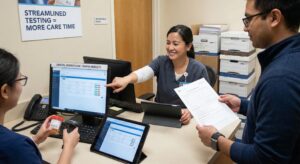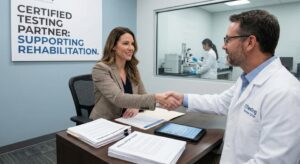
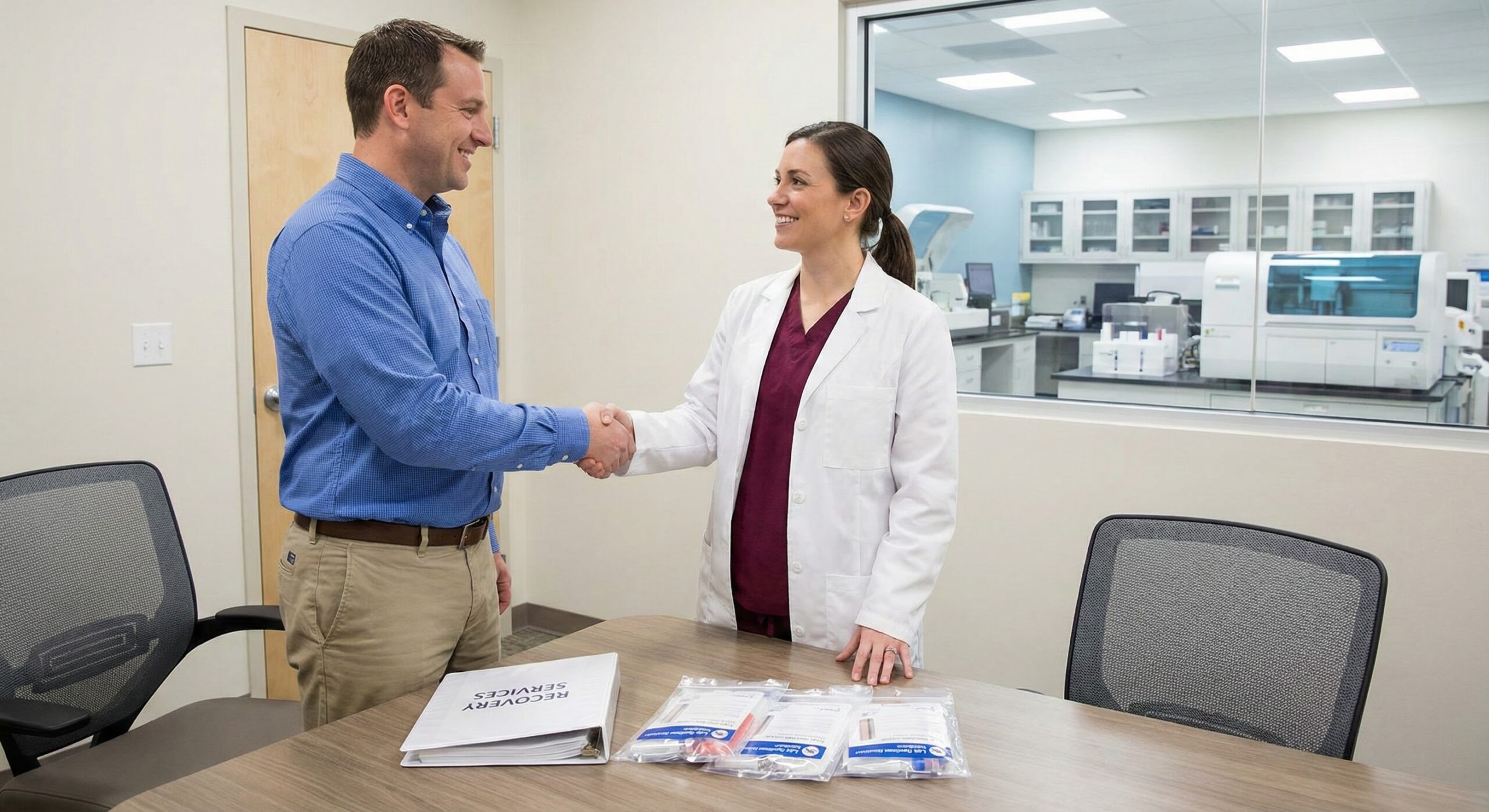
When a person comes to rehab, the first day matters a lot. It is the time to listen, learn the full story, and make a safe plan. Rehab intake coordinators help lead this process. One of the best ways to support intake is by partnering with a trusted drug testing lab.
At Lynk Diagnostics, we work with rehab facilities to make intake smoother, safer, and more accurate. We focus on clear communication, strong quality standards, and reliable drug testing results—so your team can make confident clinical decisions.
What a Rehab Intake Coordinator Does
Rehab intake coordinators are often the first point of contact. They help welcome new patients and guide them through the admission process. Their job is both caring and detail-focused.
Common intake tasks include:
- Gathering health history and substance use history
- Asking about medications, mental health, and past treatment
- Explaining rules, consent forms, and what happens next
- Helping the clinical team choose the right level of care (like detox, residential, PHP, or IOP)
- Supporting patient safety during early recovery
Intake can move fast. And during intake, details can be missed—especially when a patient is scared, sick, or not sure what they used. That is why objective drug testing is so helpful.
Why Partnering With a Lab Helps Intake Go Better
When intake teams and labs work together, everyone benefits—especially the patient.
Faster, Clearer Decisions
Drug testing helps confirm what substances may be in the body. This can support decisions like:
- Is detox needed right away?
- Is the patient at risk for dangerous withdrawal?
- Are there substances involved that change the treatment plan?
Fast, accurate results can reduce guessing and improve care.
Better Safety During Detox and Early Care
Some substances can cause serious withdrawal symptoms. For example, alcohol and benzodiazepines can lead to seizures during withdrawal. Opioids can bring intense symptoms and a high relapse risk.
Lab-supported drug testing helps the care team act quickly and safely. It can also help the team avoid medication problems, like mixing unsafe drugs with withdrawal support meds.
Stronger Trust With Patients and Families
Many people entering rehab feel judged. Clear processes help reduce fear. When intake coordinators can explain testing in a calm, respectful way, it builds trust.
Partnering with a lab also supports:
- Transparent reporting
- Better documentation
- Fewer misunderstandings
- Clear next steps
That trust matters for long-term recovery.
How Lynk Diagnostics Supports Rehab Intake Teams
A good lab partnership is more than sending samples out. It is an ongoing working relationship built on accuracy, support, and communication.
Easy Ordering and Clear Test Panels
Intake needs speed and clarity. Lynk Diagnostics helps rehab facilities choose drug testing panels that match their patient needs. Common options may include:
- Standard drug screen panels
- Expanded panels (including synthetic opioids like fentanyl)
- Medication monitoring panels
- Alcohol testing support
We also help teams set up testing policies that match clinical goals and facility rules.
Strong Chain of Custody and Sample Integrity
During intake, proper collection matters. A lab partner should support best practices like:
- Correct sample labeling
- Secure transport
- Clear documentation
- Reduced risk of mix-ups
This helps protect data integrity and patient safety. It also supports compliance and audits.
Screening Plus Confirmation When Needed
Some tests are quick screens. Others are confirmatory tests used to verify results and reduce false positives.
A strong lab partner can help explain:
- When a screening result is enough
- When confirmatory testing (like LC-MS/MS) is needed
- How cutoffs and detection windows work
This supports good clinical judgment and fair patient care.
Secure Reporting and Reliable Communication
Intake teams need results they can understand and use. Lynk Diagnostics focuses on:
- Clear lab reports
- Secure communication practices
- Timely updates
- Consistent processes that support rehab workflows
Good communication between the rehab and the lab helps reduce delays and confusion.
Drug Testing Options Commonly Used at Intake
Different tests serve different needs. The right choice depends on safety concerns, time, and the patient’s story.
Urine Drug Testing
Urine testing is one of the most common options in rehab intake. It can detect many substances and is often cost-effective.
Urine drug tests can help identify:
- Opioids
- Benzodiazepines
- Stimulants
- Cannabis (THC)
- Some prescription medications
Oral Fluid Drug Testing
Oral fluid (saliva) testing can be useful when recent use is the main concern. It is also easier to observe in many settings.
It may support intake when a team needs quick answers about recent use patterns.
Breath Alcohol Testing
Alcohol can change detox needs fast. Breath testing can help confirm current alcohol use and support safe placement decisions.
Blood Testing
Blood testing can be helpful in certain medical situations, especially when a patient is in medical detox or emergency care. It may show what is active in the bloodstream right now.
Hair Testing
Hair testing can show longer-term patterns. It is not always used at intake for urgent decisions, but it can be useful in some treatment planning cases.
Common Substances Intake Testing May Look For
Intake coordinators often hear, “I’m not sure what was in it.” That is common, especially with pills from the street or mixed substances.
Drug testing can help identify:
- Opioids (including heroin and prescription opioids)
- Fentanyl and related substances
- Benzodiazepines (like Xanax-type drugs)
- Stimulants (like methamphetamine or cocaine)
- Cannabis/THC
- Alcohol
- Prescription medications used in ways not prescribed
Results can help the clinical team plan therapy, medication support, and risk monitoring.
How Intake Coordinators Can Build a Smooth Lab Partnership
A lab partnership works best when it is planned, consistent, and easy to follow.
Set Clear Goals and Testing Policies
Before testing begins, define:
- When testing happens (intake, random, weekly, etc.)
- Which panels are used for which patient types
- What happens when results are positive, negative, or unexpected
- How the team handles patient questions
Clear policy supports fairness and reduces staff stress.
Train Staff on Collection Best Practices
Collection errors can cause big problems. Training helps reduce:
- Wrong labels
- Contamination
- Missing paperwork
- Delays in shipping
Good training supports quality assurance and accurate outcomes.
Document Medications and Disclosures
Many patients take prescribed medications. Intake should include:
- A medication list (prescribed and over-the-counter)
- Recent hospital care or surgery meds
- MAT medications, when appropriate (like buprenorphine)
This helps the team interpret results with context.
Review Trends and Improve Over Time
A strong lab partnership supports continuous improvement. Rehab teams can review:
- Turnaround time
- Result patterns in certain patient groups
- Collection challenges
- Communication gaps
This helps refine workflows and improve patient safety.
Privacy, Consent, and Compliance During Intake Testing
Drug testing must be handled with respect and care. A rehab intake coordinator should always focus on privacy and patient rights.
Strong processes support:
- HIPAA-aligned privacy practices
- Secure storage of results
- Limited access to sensitive information
- Clear consent and patient education
Labs and rehabs also need to follow proper regulatory standards for laboratory testing. Good documentation and consistent procedures support audits and compliance expectations.
Questions Intake Coordinators Should Ask a Lab Partner
Not all labs support rehab settings the same way. Here are smart questions to ask:
- How fast are results reported?
- Do you offer confirmatory testing when needed?
- How do you reduce false positives and errors?
- How do you protect patient data and reporting security?
- Can you help train staff on sample collection and chain of custody?
A reliable lab partner should be ready to answer clearly, without confusing language.
Why This Partnership Matters for Recovery
Drug testing is not about punishment. In rehab, testing is about safety, support, and good treatment planning.
When rehab intake coordinators partner with a lab, they gain:
- Better clinical clarity
- Stronger documentation
- Safer detox decisions
- Improved communication across the care team
- More trust with patients and families
At Lynk Diagnostics, we’re proud to support rehab facilities with accurate testing, clear reporting, and dependable lab collaboration—especially during intake, when every decision matters.
FAQs
What is the main benefit of partnering with a lab during rehab intake?
The biggest benefit is safety. Drug testing gives clear information that helps the team choose the right level of care and reduce medical risk during early recovery.
How do intake coordinators explain drug testing to patients?
Use simple, respectful language. Explain that testing supports safe care, protects the recovery community, and helps the clinical team make the best plan.
Can drug tests be wrong?
Screening tests can sometimes show false positives. That’s why confirmatory testing may be used to verify results when something looks unexpected.
What substances should intake testing include?
Many rehabs include opioids, fentanyl, benzodiazepines, stimulants, cannabis/THC, and alcohol. Some also include medication monitoring based on patient needs.
How does Lynk Diagnostics support rehab facilities long-term?
Lynk Diagnostics supports rehab teams with consistent testing protocols, strong chain of custody processes, secure reporting, and clear communication—so care teams can act with confidence.