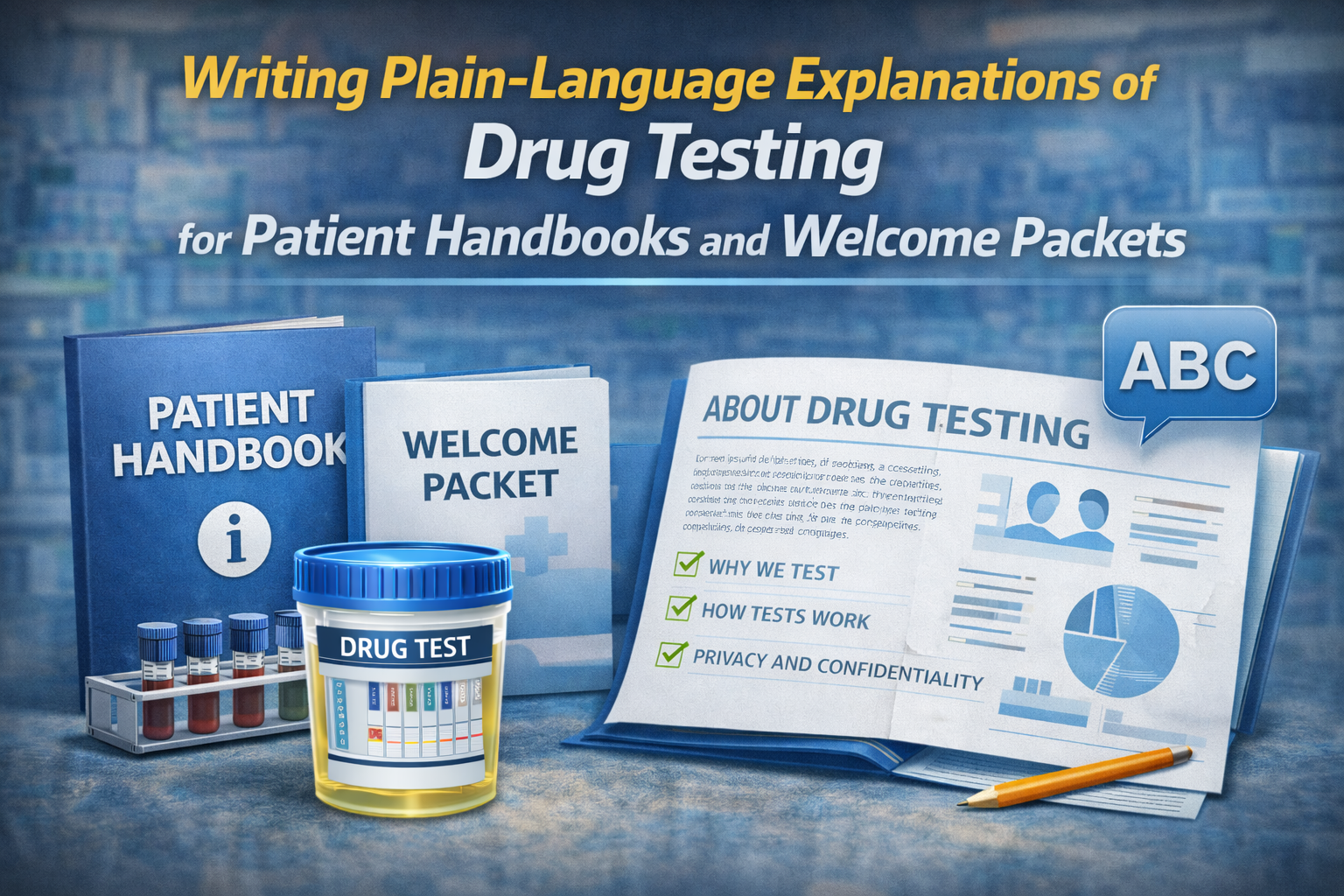
Writing Plain-Language Explanations of Drug Testing for Patient Handbooks and Welcome Packets
Creating clear and accessible explanations of drug testing is essential for patient handbooks and welcome packets, especially in the context of addiction recovery. This article aims to provide guidance on how to write these explanations in plain language, ensuring that patients and their families can easily understand the processes and implications of drug testing. By focusing on the importance of drug testing in addiction recovery, we will explore its role in relapse prevention, the types of tests used, and how to communicate results effectively. Additionally, we will address patient rights and consent considerations, as well as how these explanations can support families and clinicians in the recovery process.
What is Drug Testing and Why is it Important in Addiction Recovery?
Drug testing is a process used to detect the presence of drugs or their metabolites in a person’s system. It plays a crucial role in addiction recovery by providing objective data that can inform treatment decisions and monitor patient progress. The importance of drug testing lies in its ability to support clinical decision-making, ensuring that patients receive appropriate care based on their substance use patterns.
How Does Drug Testing Support Relapse Prevention?
Drug testing supports relapse prevention by enabling early detection of substance use, which can trigger timely interventions. For instance, if a patient tests positive for a substance, clinicians can adjust treatment plans to address potential relapses, thereby enhancing the chances of successful recovery. This proactive approach helps maintain accountability and encourages patients to stay committed to their recovery goals.
Who Are the Key People Involved in Drug Testing?
Several key stakeholders are involved in the drug testing process, including clinicians, patients, and their families. Clinicians are responsible for administering tests and interpreting results, while patients must understand their rights and responsibilities regarding testing. Families play a supportive role, helping to reinforce the importance of drug testing in the recovery journey and providing emotional support to the patient.
What Types of Drug Tests Are Used in Addiction Recovery?
Various types of drug tests are utilized in addiction recovery, each with its own advantages and limitations. Common methods include urine, blood, saliva, and hair testing, which differ in their detection capabilities and the substances they can identify.
How Do Different Specimen Types Affect Testing?
The type of specimen used for drug testing significantly impacts the accuracy and detection window of the results. For example, urine drug testing is the most common method due to its ease of collection and ability to detect recent drug use. Blood tests, while more invasive, can provide immediate results and are often used in emergency situations. Hair testing offers a longer detection window, making it useful for identifying long-term substance use patterns. Saliva testing is less invasive and can detect recent use, typically within hours to a few days.
What Substances Do Common Drug Tests Detect?
Common drug tests are designed to detect a range of substances, including:
| Substance | Detection Method | Typical Detection Window |
|---|---|---|
| THC | Urine, Blood, Saliva | Urine: up to 30 days (chronic use), Blood: up to 1-2 days, Saliva: up to 24 hours |
| Cocaine | Urine, Blood, Saliva | Urine: 2-4 days, Blood: up to 24 hours, Saliva: 1-2 days |
| Opiates | Urine, Blood, Saliva | Urine: 1-3 days, Blood: up to 12 hours, Saliva: 1-4 days |
| Amphetamines | Urine, Blood, Saliva | Urine: 1-3 days, Blood: up to 12 hours, Saliva: 1-2 days |
| Benzodiazepines | Urine, Blood | Urine: 3-7 days (can be longer for some types), Blood: 1-2 days |
These tests are essential for monitoring compliance with treatment protocols and ensuring that patients remain on track in their recovery journey.
How Should Drug Test Results Be Explained in Patient Handbooks?
Effectively communicating drug test results in patient handbooks is vital for fostering understanding and trust. Clear explanations help patients grasp the implications of their results and the next steps in their treatment.
What Are Clear and Empathetic Ways to Interpret Test Outcomes?
When interpreting test outcomes, it is important to use language that is free of medical jargon and conveys empathy. For example, instead of saying “the test is positive,” one might say, “the test shows that a substance was detected, which means we need to discuss your recent use and how it affects your recovery.” This approach helps patients feel supported rather than judged.
How Can Visual Aids Enhance Understanding of Results?
Visual aids, such as charts or infographics, can significantly enhance patient understanding of drug test results. These tools can illustrate the testing process, explain what different results mean, and outline the next steps in a visually engaging manner. By incorporating visual elements, handbooks can cater to various learning styles and improve overall comprehension.
What Are Patient Rights and Consent Considerations in Drug Testing?
Understanding patient rights and consent is crucial in the context of drug testing. Patients should be informed about their rights regarding testing, including the right to refuse a test and the right to confidentiality.
How Should Consent and Privacy Be Communicated Simply?
Consent forms should be written in straightforward language, clearly outlining what the patient is agreeing to and how their information will be used. For instance, a consent form might state, “By signing this form, you agree to have a drug test conducted, and you understand that your results will be kept confidential.” This clarity helps patients feel more comfortable and informed about the process.
What Policies Should Patients Know About Drug Testing?
Patients should be aware of key policies related to drug testing, including:
- Testing Frequency: Understanding how often tests will be conducted can help patients prepare mentally and emotionally.
- Consequences of Positive Tests: Patients should know the potential implications of a positive test result, such as adjustments to their treatment plan or the need for additional support.
- Rights to Appeal: Informing patients about their rights to appeal test results or decisions made based on those results can empower them in their recovery journey.
How Can Drug Testing Explanations Help Families and Clinicians Support Recovery?
Explanations of drug testing can serve as valuable resources for families and clinicians, enhancing their ability to support patients effectively.
What Information Should Be Included for Families in Handbooks?
Family members should be provided with information that helps them understand the drug testing process and its significance in recovery. This includes details about how tests are conducted, what results mean, and how they can support their loved ones through the process.
How Do Clinicians Use Testing Information to Guide Care?
Clinicians utilize drug testing information to make informed decisions about patient care. For example, test results can indicate whether a patient is adhering to their treatment plan or if adjustments are needed. This data-driven approach ensures that patients receive the most appropriate and effective care tailored to their individual needs.
What Frequently Asked Questions Should Be Included in Drug Testing Handbooks?
Including a FAQ section in drug testing handbooks can address common concerns and improve patient understanding.
Which Common Patient Questions Improve Compliance and Understanding?
Some common questions that can enhance patient compliance and understanding include:
- What happens if I refuse a drug test?
- How long do results take?
- Will my test results be shared with anyone?
Providing clear answers to these questions can alleviate fears and encourage patients to engage more fully in their recovery process.
How Can FAQ Sections Be Structured for Featured Snippet Optimization?
To optimize FAQ sections for featured snippets, it is essential to format questions and answers clearly. Using bullet points or numbered lists can help present information in a digestible manner. For example:
- What happens if I refuse a drug test? Refusing a drug test may result in a reassessment of your treatment plan.
- How long do results take? Results typically take 24-72 hours to process, depending on the testing method and laboratory.
- Will my test results be shared with anyone? Your results will remain confidential and will only be shared with your treatment team.
Frequently Asked Questions
1) What should we explain first in a patient handbook?
The purpose: safety, treatment planning, and accountability—using simple, non-shaming language.
2) How do we explain what happens during collection?
Describe steps, privacy expectations, what staff will check, and how samples are labeled and secured.
3) How should we describe positive, negative, and unexpected results?
Explain that results guide next steps and that unexpected results may lead to follow-up questions or confirmation testing.
4) Should we address medications and supplements?
Yes—tell patients to report prescriptions, OTC meds, and supplements because they can affect interpretation.
5) How do we explain confidentiality?
Explain who can see results, how records are protected, and how information may be shared only with proper authorization.
Resources
- SAMHSA Confidentiality (Part 2) resources: https://www.samhsa.gov/about-us/who-we-are/laws-regulations/confidentiality-regulations-faqs
- 42 CFR Part 2 (eCFR): https://www.ecfr.gov/current/title-42/chapter-I/subchapter-A/part-2
- HHS HIPAA Privacy Rule: https://www.hhs.gov/hipaa/for-professionals/privacy/laws-regulations/index.html
- NIDA Drug testing overview resources: https://nida.nih.gov/