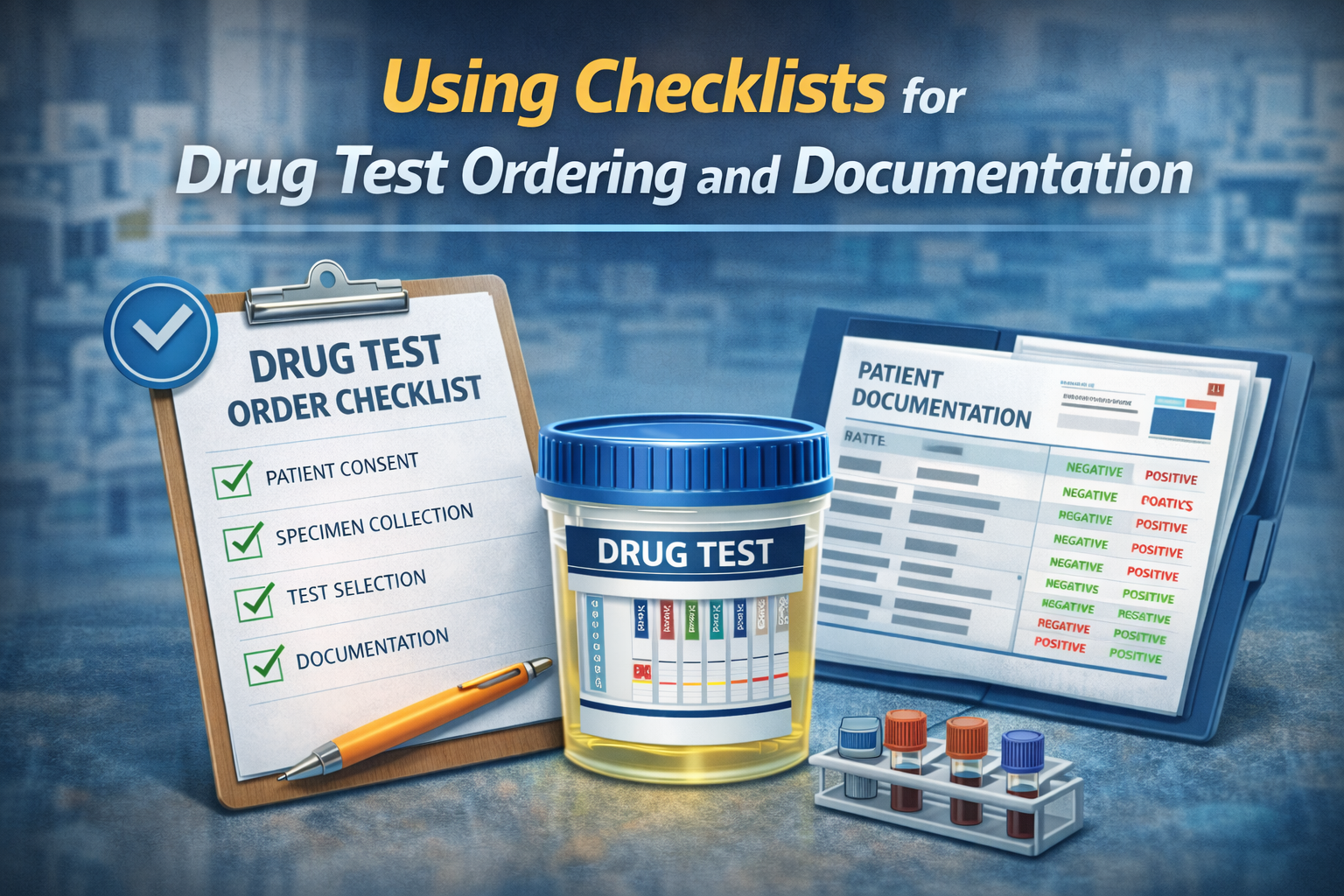
Using Checklists to Improve Accuracy in Drug Test Ordering and Documentation: Best Practices for Reliable Toxicology Testing
In the realm of toxicology testing, accuracy in drug test ordering and documentation is paramount. Checklists serve as essential tools that enhance the reliability of these processes, ensuring that all necessary steps are followed meticulously. This article will explore the significance of using checklists in drug test ordering, detailing best practices and common pitfalls to avoid. Readers will learn how checklists can streamline workflows, improve documentation accuracy, and ultimately support relapse prevention strategies. We will delve into step-by-step best practices, common errors, and case studies that highlight the effectiveness of checklists in clinical settings.
The effectiveness of checklists in ensuring accuracy extends beyond toxicology, as demonstrated by their successful application in medication order verification.
Improving Medication Order Accuracy with Checklists
The research pharmacist reviewed the accuracy of each medication order using a purpose-specific checklist (Appendix A). Errors identified by the research pharmacist were recorded
Comparing the accuracy of medication order verification between pharmacists and a tech check tech model: a prospective randomised observational study, RE Hopkins, 2018
Why Are Checklists Essential for Accurate Drug Test Ordering?
Checklists are vital for ensuring accuracy in drug test ordering as they provide a structured approach to the complex processes involved. By systematically outlining each step, checklists help reduce errors, enhance compliance with protocols, and improve communication among clinical staff. This structured method not only minimizes the risk of mistakes but also fosters a culture of accountability and thoroughness in clinical environments.
How Do Checklists Enhance Clinical Toxicology Workflows?
Checklists enhance clinical toxicology workflows by streamlining processes and reducing the time spent on ordering. They ensure that all necessary steps are completed in the correct order, which improves the accuracy of results. For instance, a well-designed checklist can guide staff through the sample collection process, ensuring that all protocols are followed, thereby minimizing the risk of contamination or mislabeling.
What Role Do Checklists Play in Relapse Prevention Strategies?
In the context of relapse prevention, checklists support consistent testing and help identify potential relapse indicators. By standardizing the testing process, checklists ensure that patients are monitored effectively, allowing clinicians to respond promptly to any signs of relapse. This proactive approach can significantly enhance patient outcomes and support long-term recovery efforts.
What Are the Step-by-Step Best Practices in Drug Test Ordering Checklists?
Implementing a comprehensive drug test ordering checklist involves several best practices that ensure accuracy and compliance. These practices include outlining each step in the ordering process, highlighting critical compliance points, and emphasizing the importance of documentation.
Which Checklist Steps Ensure Proper Sample Collection and Chain of Custody?
Proper sample collection and chain of custody are crucial for the integrity of drug testing. The following steps should be included in a checklist to ensure compliance:
- Proper Labeling of Samples: Each sample must be labeled accurately with patient information and test type.
- Documentation of Chain of Custody: A clear record must be maintained to track the sample from collection to analysis.
- Training Staff on Collection Protocols: All personnel involved in sample collection should be trained on the proper procedures to minimize errors.
| Step | Description | Importance |
|---|---|---|
| Sample Labeling | Ensure accurate patient identification | Prevents mix-ups and misidentification |
| Chain of Custody | Document every transfer of the sample | Maintains legal integrity and accountability |
| Staff Training | Educate on proper collection techniques | Reduces risk of contamination and errors |
These steps are essential for maintaining the integrity of the testing process and ensuring reliable results.
How to Implement a Comprehensive Drug Test Ordering Workflow?
To implement a comprehensive drug test ordering workflow, it is essential to involve all stakeholders, provide necessary training, and establish monitoring and evaluation processes. A step-by-step guide can facilitate this implementation:
- Engage Stakeholders: Involve all relevant parties, including clinicians, lab personnel, and administrative staff, in the development of the checklist.
- Provide Training and Resources: Ensure that all staff members are adequately trained on the checklist and the importance of each step.
- Monitor and Evaluate: Regularly review the checklist’s effectiveness and make adjustments as necessary to improve the workflow.
How Can Documentation Accuracy Be Improved in Toxicology Testing?
Improving documentation accuracy in toxicology testing is critical for compliance and effective patient care. Accurate documentation ensures that all necessary information is recorded and readily available for review.
What Are the Key Documentation Fields to Include for Compliance?
Key documentation fields that should be included for compliance are:
- Patient Identification Details: Full name, date of birth, and identification number.
- Test Type and Reason for Testing: Clearly specify the type of drug test and the rationale behind it.
- Results Reporting Requirements: Outline how and when results will be communicated to the relevant parties.
These fields are essential for maintaining compliance with regulatory standards and ensuring that all necessary information is captured.
How Do Checklists Support Accurate and Timely Result Reporting?
Checklists support accurate and timely result reporting by ensuring that all necessary steps are followed before results are communicated. This includes verifying that all documentation is complete and that results are interpreted correctly. By following a checklist, clinicians can reduce errors in reporting and facilitate timely follow-up actions, which are crucial for patient care.
What Common Errors Occur in Drug Test Ordering and How Do Checklists Prevent Them?
Common errors in drug test ordering can significantly impact patient care and treatment outcomes. Identifying these errors and understanding how checklists can mitigate them is essential for improving accuracy.
Which Errors Are Most Frequent in Clinical Drug Test Workflows?
Frequent errors in clinical drug test workflows include:
- Mislabeling of Samples: Incorrect labeling can lead to significant errors in test results.
- Incomplete Documentation: Missing information can result in compliance issues and delays in treatment.
- Failure to Follow Protocols: Not adhering to established protocols can compromise the integrity of the testing process.
How Does Using Checklists Reduce Ordering and Documentation Mistakes?
Using checklists reduces ordering and documentation mistakes by providing a clear framework for staff to follow. This structured approach ensures that all necessary steps are completed and that critical information is not overlooked. Studies have shown that implementing checklists can lead to a significant reduction in errors, enhancing overall patient safety and care quality.
Further research supports the utility of checklists in clinical settings, particularly in complex tasks like medication order review, where they help pharmacists systematically identify and prevent errors.
Pharmacist Checklists for Medication Order Review
To create a checklist of the tasks that a pharmacist must perform during medication order review in the hospital setting and to evaluate the utility of and pharmacists’ satisfaction with the checklist. An evidence-based checklist for medication order review was developed, with items related to order urgency, verification of patients’ identity, therapeutic review, and actionable items.
Development and evaluation of a checklist for medication order review by pharmacists, 2011
What Case Studies Demonstrate the Impact of Checklists on Drug Test Accuracy?
Case studies provide valuable insights into the effectiveness of checklists in improving drug test accuracy. These real-world examples illustrate how structured approaches can lead to better outcomes in clinical settings.
How Have Treatment Centers Improved Toxicology Testing with Checklists?
Several treatment centers have reported improvements in toxicology testing accuracy through the implementation of checklists. For example, one center noted a 30% reduction in documentation errors after adopting a standardized checklist for drug test ordering. Staff feedback indicated that the checklist made the process more efficient and less prone to mistakes.
What Do Recent Clinical Studies Reveal About Checklist Effectiveness?
Recent clinical studies have highlighted the effectiveness of checklists in enhancing accuracy and compliance in drug testing. Research indicates that facilities using checklists experience fewer errors and improved communication among staff. These findings underscore the importance of integrating checklists into clinical workflows to support better patient outcomes.
How to Optimize Clinical Drug Test Workflows Using Checklists and Documentation Protocols?
Optimizing clinical drug test workflows involves integrating checklists and documentation protocols into everyday practices. This approach can enhance efficiency and accuracy in drug testing.
What Are the Best Practices for Integrating Checklists into Clinical Procedures?
Best practices for integrating checklists into clinical procedures include:
- Engaging Staff in the Process: Involve staff in the development and refinement of checklists to ensure buy-in and usability.
- Providing Ongoing Training: Regular training sessions can help reinforce the importance of using checklists and ensure that staff are familiar with updates.
- Monitoring Effectiveness Post-Implementation: Continuously evaluate the checklist’s impact on workflow efficiency and accuracy, making adjustments as needed.
How Can Technology Support Checklist Implementation and Monitoring?
Technology can play a significant role in supporting checklist implementation and monitoring. Digital checklists can streamline the ordering process, allowing for real-time updates and easier access to information. Additionally, software solutions can track compliance and identify areas for improvement, further enhancing the accuracy of drug test ordering and documentation.
| Technology | Feature | Application |
|---|---|---|
| Digital Checklists | Real-time updates | Streamlines ordering process |
| Compliance Tracking Software | Monitors adherence | Identifies areas for improvement |
| Data Analytics Tools | Analyzes workflow efficiency | Enhances decision-making |
This table illustrates how technology can enhance the effectiveness of checklists in clinical settings, ultimately leading to improved patient care and safety.
Frequently Asked Questions
1) Why do checklists reduce drug testing errors?
They standardize steps, prevent missed fields, and reduce confusion during busy intake or discharge workflows.
2) What should an ordering checklist include?
Patient identifiers, test type/panel, specimen type, diagnosis/reason for testing, and required authorizations.
3) What should a collection checklist include?
Supplies, labeling steps, chain-of-custody steps, storage/transport instructions, and what to do if something goes wrong.
4) How do we prevent documentation mismatches?
Use double-checks for patient ID and order codes, and ensure the same terminology is used across systems.
5) How do we keep checklists from being ignored?
Make them short, role-based, and part of daily workflow—then audit usage and give feedback.
Resources
- AHRQ Patient Safety and checklists: https://www.ahrq.gov/patient-safety/index.html
- CDC Laboratory quality resources: https://www.cdc.gov/laboratory/quality/index.html
- CMS CLIA overview: https://www.cms.gov/medicare/quality/clinical-laboratory-improvement-amendments
- CAP Laboratory Accreditation resources: https://www.cap.org/laboratory-improvement/accreditation