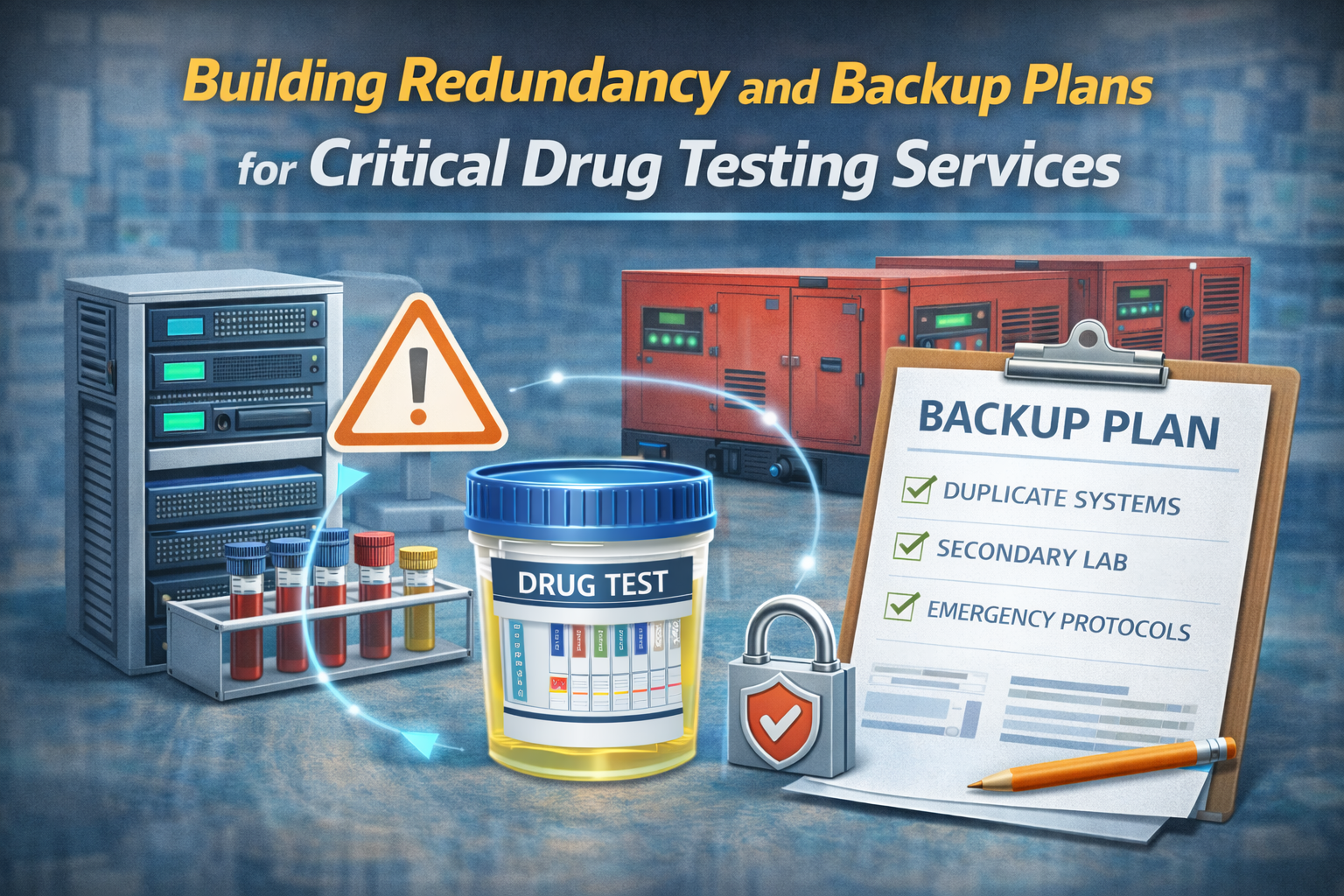
Building Redundancy and Backup Plans for Critical Drug Testing Services: Ensuring Reliable Addiction Testing and Service Continuity
In the realm of addiction treatment, the reliability of drug testing services is paramount. Building redundancy and backup plans for critical drug testing services ensures that treatment centers can maintain consistent and accurate testing, which is essential for effective patient care. This article will explore the importance of redundancy in toxicology testing, strategies for designing effective backup plans, the technology that supports these systems, and the regulatory compliance necessary for successful implementation. By understanding these elements, addiction treatment providers can safeguard against service disruptions that could jeopardize patient outcomes.
Why Is Redundancy Essential in Toxicology and Drug Testing Services?
Redundancy in toxicology and drug testing services refers to the implementation of backup systems and processes that ensure continuous operation even in the face of unexpected disruptions. This approach is crucial for maintaining the integrity of addiction treatment programs, as any lapse in testing can lead to significant consequences for patient care and recovery outcomes.
What Risks Do Service Disruptions Pose to Addiction Treatment and Relapse Prevention?
Service disruptions in drug testing can pose serious risks to addiction treatment and relapse prevention. For instance, delays in test results can hinder timely interventions, potentially leading to relapse or worsening of a patient’s condition. Additionally, inconsistent testing can undermine the trust between patients and providers, as patients may feel uncertain about the reliability of their treatment. Ensuring continuity in testing services is vital for maintaining effective treatment protocols and supporting patient recovery.
How Does Redundancy Improve Drug Test Service Reliability and Clinical Outcomes?
Implementing redundancy in drug testing services enhances reliability by providing alternative pathways for testing and result reporting. For example, utilizing multiple laboratories can ensure that if one lab experiences a failure, another can step in to provide timely results. This redundancy not only improves service reliability but also contributes to better clinical outcomes by ensuring that patients receive the necessary support without interruption.
How to Design Effective Backup Plans for Critical Drug Testing Services?
Designing effective backup plans for drug testing services involves several key strategies that enhance operational resilience. These strategies should be tailored to the specific needs of the treatment center and the populations it serves.
What Strategies Support Redundancy: Multiple Labs, Rapid Turnaround, and Specimen Handling?
To support redundancy, treatment centers can implement strategies such as partnering with multiple laboratories to diversify testing capabilities. This approach allows for rapid turnaround times, as different labs can process specimens if one lab is unavailable. Additionally, establishing robust specimen handling protocols ensures that samples are collected, stored, and transported in a manner that maintains their integrity, further supporting reliable testing outcomes.
Which Contingency Protocols Ensure Continuous Toxicology Testing Workflows?
Contingency protocols are essential for maintaining continuous workflows in toxicology testing. These protocols may include predefined steps for addressing equipment failures, staffing shortages, or unexpected laboratory closures. Regular training and drills can help staff become familiar with these protocols, ensuring that everyone is prepared to respond effectively to disruptions and maintain service continuity.
What Technology and Tools Support Redundancy in Toxicology Laboratories?
Technology plays a critical role in supporting redundancy in toxicology laboratories. By leveraging advanced systems, laboratories can enhance their operational efficiency and reliability.
How Do Laboratory Information Management Systems and Automated Alerts Enhance Backup Plans?
Laboratory Information Management Systems (LIMS) streamline the management of samples and data, allowing for better tracking and reporting of test results. Automated alerts can notify staff of potential issues, such as equipment malfunctions or delays in processing, enabling proactive measures to be taken before they escalate into significant problems. This technological integration is vital for maintaining the flow of information and ensuring that testing services remain uninterrupted.
Further emphasizing the importance of robust information systems, research highlights how regulatory information management systems are crucial for ensuring data continuity and effective risk management in critical services.
Data Continuity & Risk Management for Critical Testing Services
Possibilities of regulatory information management systems implementation together with other technological solutions to ensure data continuity and integrity as a prerequisite for the implementation of a risk management system in pharmaceutical data management are discussed in this article. The creation of an effective information generation process at the lifecycle stages of the pharmaceutical product is described.
Regulatory information management systems, as a means for ensuring the pharmaceutical data continuity and risk management, K Koshechkin, 2019
What Role Do Specimen Types and Test Methods Play in Service Continuity?
The choice of specimen types and test methods also impacts service continuity. Utilizing a variety of specimen types, such as urine, saliva, and blood, allows laboratories to adapt to different testing needs and circumstances. Additionally, employing multiple testing methods can provide flexibility in case one method becomes unavailable, ensuring that testing can continue without significant delays.
How Do Regulatory Compliance and Risk Management Influence Backup Planning?
Regulatory compliance and risk management are integral to the development of effective backup plans in drug testing services. Adhering to established standards ensures that testing processes remain reliable and trustworthy.
Which Compliance Standards Must Toxicology Services Meet for Reliable Backup?
Toxicology services must comply with various regulatory standards, including those set by the Substance Abuse and Mental Health Services Administration (SAMHSA) and the College of American Pathologists (CAP). These standards outline the necessary protocols for testing accuracy, laboratory accreditation, and quality assurance. Meeting these compliance requirements is essential for maintaining the integrity of testing services and ensuring that backup plans are effective.
How Are Risk Assessments Conducted to Prevent Drug Testing Service Failures?
Conducting regular risk assessments is crucial for identifying potential vulnerabilities in drug testing services. These assessments involve evaluating the likelihood of various risks, such as equipment failure or staffing shortages, and developing strategies to mitigate these risks. By proactively addressing potential issues, treatment centers can enhance their resilience and ensure that testing services remain reliable.
What Case Studies Demonstrate Successful Redundancy in Addiction Testing Services?
Examining real-world examples of successful redundancy in addiction testing services can provide valuable insights for treatment centers looking to enhance their own backup plans.
How Have Treatment Centers Implemented Backup Plans to Maintain Testing Continuity?
Several treatment centers have successfully implemented backup plans that include partnerships with multiple laboratories and the use of advanced technology. For instance, a center may establish relationships with local labs to ensure that if one lab experiences a disruption, another can quickly take over testing responsibilities. This approach has proven effective in maintaining service continuity and supporting patient care.
What Lessons Do Real-World Examples Offer for Designing Toxicology Service Redundancy?
Real-world examples highlight the importance of flexibility and adaptability in designing redundancy plans. Treatment centers that regularly review and update their backup plans based on changing circumstances and emerging technologies are better equipped to handle disruptions. Additionally, fostering a culture of preparedness among staff can enhance the overall effectiveness of redundancy strategies.
What Are Frequently Asked Questions About Drug Testing Backup Solutions and Service Continuity?
Understanding common questions about drug testing backup solutions can help treatment centers better prepare for potential disruptions.
How Do Drug Testing Services Ensure Continuity During Unexpected Disruptions?
Drug testing services ensure continuity during unexpected disruptions by implementing comprehensive backup plans that include multiple testing options and contingency protocols. Regular training and drills help staff remain prepared for various scenarios, ensuring that testing can continue without significant delays.
What Are Common Backup Plans for Critical Toxicology Testing Services?
Common backup plans for critical toxicology testing services include:
- Multiple Laboratory Partnerships: Collaborating with several labs to ensure testing availability.
- Robust Specimen Handling Protocols: Establishing procedures for the collection, storage, and transport of specimens.
- Regular Risk Assessments: Conducting assessments to identify potential vulnerabilities and develop mitigation strategies.
These strategies collectively enhance the reliability of drug testing services and support effective addiction treatment.
Frequently Asked Questions
1) Why do rehab facilities need redundancy for drug testing?
Because delayed or missed testing can affect clinical decisions, patient safety planning, and program credibility.
2) What should a backup plan include at minimum?
A secondary lab option, backup supplies, alternate shipping/courier steps, and a downtime process for orders and documentation.
3) How do we handle results reporting if systems go down?
Use a defined downtime workflow that preserves privacy, documents who received results, and reconciles records when systems return.
4) How often should we test our backup plan?
At least quarterly, or whenever you change vendors, EHR settings, or staffing workflows—then track failures and fix gaps.
5) What metrics tell us redundancy is working?
Pickup success rate, TAT during disruptions, rejected specimen rate, corrected reports, and staff adherence to downtime steps.
Resources
- HHS HIPAA Security Rule: https://www.hhs.gov/hipaa/for-professionals/security/laws-regulations/index.html
- NIST Cybersecurity Framework: https://www.nist.gov/cyberframework
- NIST SP 800-66 (HIPAA Security Rule guidance): https://csrc.nist.gov/publications/detail/sp/800-66/rev-2/final
- HHS OCR Security Risk Assessment guidance: https://www.hhs.gov/hipaa/for-professionals/security/risk-assessment/index.html