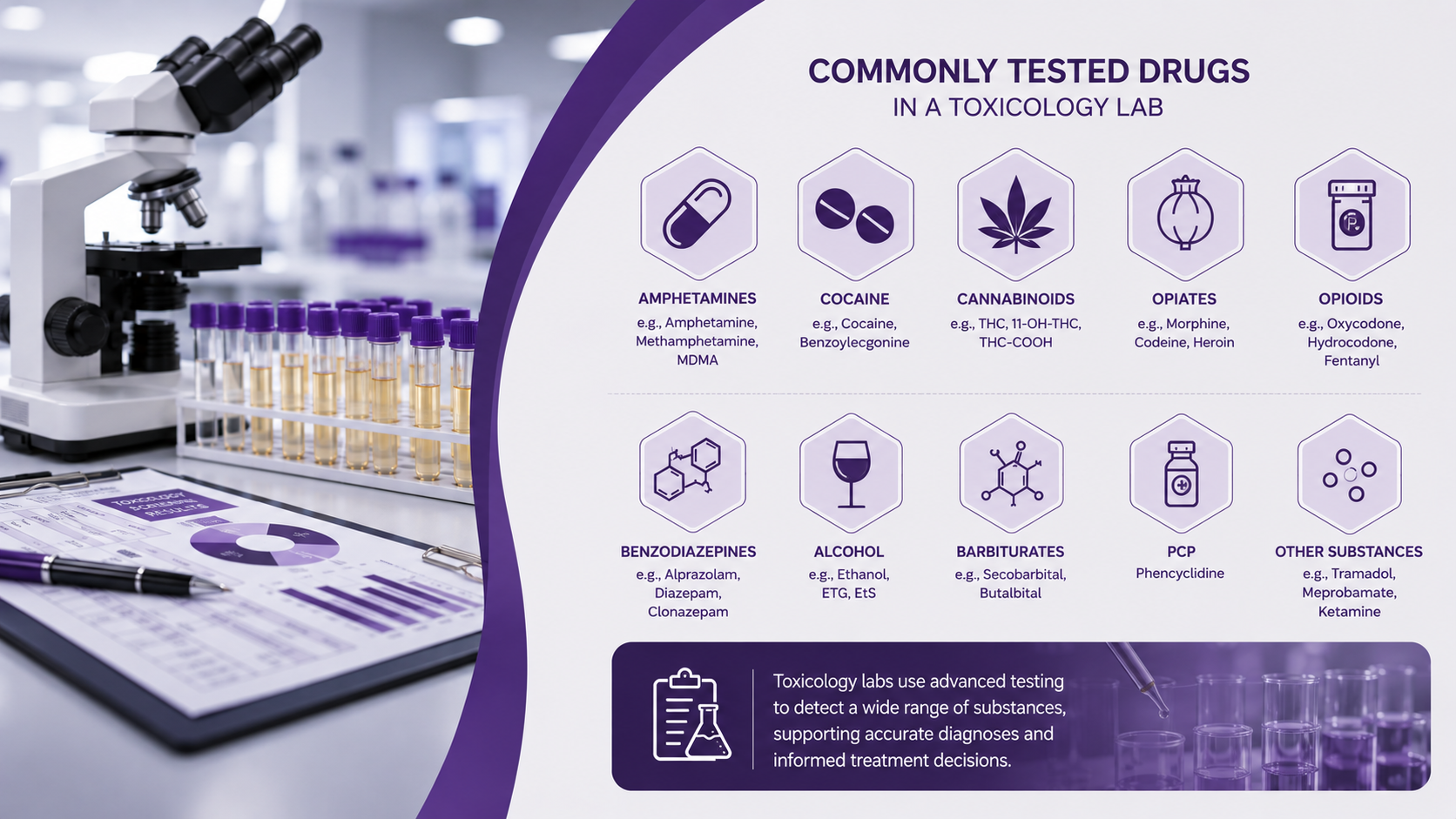
Many people ask, “what are the commonly tested drugs in a toxicology lab?” Toxicology testing helps medical providers, rehab facilities, and employers detect drugs and alcohol in the body. At Lynk Diagnostics, we help rehab facilities with fast and accurate drug testing and toxicology screening services.
A toxicology lab checks for illegal drugs, prescription drugs, prescription medications, alcohol, and other drugs that may affect a person’s health or behavior. The testing process can help determine recent drug use, substance abuse, intentional overdose, or acute poisoning.
Drug screening is often used in clinical practice, workplace safety programs, public safety settings, and addiction treatment centers. A blood or urine sample is commonly used during testing.
Why Drug Testing Matters
Drug testing helps protect patients, workers, families, and communities. Toxicology testing can detect controlled substances and other substances that may harm the body or mind.
Drug screening may be performed for:
Workplace Safety
Many employers use random drug testing to support workplace safety. This helps reduce accidents caused by drug use or alcohol use.
Rehab and Recovery Programs
Rehab centers use urine testing and toxicology screening to monitor recovery and prevent relapse from substance abuse or drug abuse.
Medical Emergencies
Hospitals may order testing after acute poisoning, infection, or intentional overdose. Doctors use clinical interpretation to understand the presence of drugs in the body.
Public Safety and Legal Cases
Law enforcement and healthcare teams may use toxicology testing during public safety investigations or cases involving drug facilitated sexual assault or sexual assault.
Commonly Tested Drugs in Toxicology Labs
A toxicology lab can test for many drugs and substances. Some drugs are illegal drugs, while others are prescription medications or over the counter products.
Cocaine
Cocaine is a powerful stimulant. Toxicology testing can detect cocaine use through urine, blood, or other specimens. Cocaine abuse may cause heart problems, anxiety, or overdose.
Opiates and Heroin
Opiates include heroin, morphine, codeine, hydrocodone, oxycodone, fentanyl, methadone, buprenorphine, and tramadol. These drugs are commonly tested because of the rise in heroin use and opioid abuse.
Heroin and other opiates can slow breathing and increase overdose risk. Toxicology screening helps determine if these substances are present in a person’s system.
Amphetamines and Methamphetamine
Amphetamines are stimulants that affect the brain and nervous system. Methamphetamine and l methamphetamine are commonly tested during drug screening.
Methamphetamine abuse can lead to dangerous health problems, including heart damage and mental health issues.
Benzodiazepines
Benzodiazepines are prescription drugs used to treat anxiety and sleep disorders. Common examples include diazepam, lorazepam, alprazolam, valium, and xanax.
These substances may be misused or combined with alcohol and other drugs, increasing the risk of overdose.
Barbiturates
Barbiturates are sedative drugs that slow brain activity. Even though they are less common today, many toxicology labs still test for barbiturates because of abuse risks.
PCP and Phencyclidine
Phencyclidine pcp, also called PCP, is a dangerous drug that can change behavior and thinking. PCP use may cause confusion, violence, or hallucinations.
Toxicology screening often checks for pcp and phencyclidine during emergency testing.
Ketamine
Ketamine is used in medical settings but may also be abused. Drug testing can detect ketamine in urine or blood samples.
Alcohol
Alcohol testing measures alcohol concentration in the body. Alcohol may be tested during workplace safety checks, car accidents, or rehab monitoring.
Bath Salts
Bath salts are synthetic stimulants that may cause severe mental and physical effects. Toxicology testing may detect bath salts during advanced analysis.
Antidepressants and Other Prescription Medications
Some toxicology labs also test for antidepressants and other prescription medications. These drugs may affect a person’s health when mixed with alcohol or controlled substances.
Types of Samples Used in Drug Testing
Drug testing can use different specimens depending on the goal of the testing process.
Urine Sample
A urine sample is the most common method for drug screening. Urine testing is fast, simple, and cost effective.
Many rehab facilities use urine testing because it can detect many drugs and substances.
Blood Testing
Blood testing may be performed in hospitals or emergency rooms. Blood can help determine current drug levels and alcohol concentration.
Other Specimens
Some toxicology labs may also test saliva, hair, or sweat samples. These specimens can help detect long-term drug use.
How the Testing Process Works
The testing process begins when a person provides blood or urine samples. The samples are labeled and sent to a toxicology lab for analysis.
Lab professionals use advanced equipment to detect drugs and substances in the samples. Results may show:
Positive findings
Negative findings
The presence of controlled substances
Alcohol levels
Prescription medications
A toxicology screening may also measure specific gravity in urine. Specific gravity helps confirm if a urine sample is diluted or altered.
Understanding False Positives
False positives can happen during drug screening. A false positive means a test shows positive even when the person did not use illegal drugs.
Cross reactivity is one reason false positives happen. Some over the counter medicines or prescription medications may react with testing equipment.
For example, certain cold medicines or antidepressants may affect results. That is why toxicology labs use confirmatory analysis to improve accuracy.
At Lynk Diagnostics, our testing process focuses on accurate clinical interpretation and reliable results for rehab facilities.
Toxicology Testing in Clinical Practice
Toxicology testing is an important part of clinical practice. Doctors and healthcare providers use testing to:
Detect drug abuse
Monitor prescription drugs
Treat acute poisoning
Support addiction recovery
Determine overdose risk
The national institute and healthcare experts continue to support safe and accurate toxicology screening practices.
Drug Facilitated Sexual Assault Testing
Toxicology labs may also help during cases involving drug facilitated sexual assault. Testing can help detect drugs that may have been used during sexual assault incidents.
Fast testing is important because some substances leave the body quickly. Blood and urine samples are often collected as soon as possible.
Why Rehab Facilities Trust Lynk Diagnostics
Lynk Diagnostics works closely with rehab facilities to provide dependable drug testing and toxicology screening services.
We understand the importance of:
Fast turnaround times
Accurate analysis
Reliable urine testing
Professional clinical interpretation
Clear reporting
Our team helps rehab facilities monitor recovery, detect relapse, and support patient care.
Common Signs of Drug Abuse
Drug abuse and substance abuse may affect a person’s health, behavior, and relationships.
Common warning signs include:
Mood changes
Sleep problems
Poor work performance
Memory issues
Weight changes
Secretive behavior
Changes in appearance
Drug testing may help determine if drugs or alcohol are present when symptoms appear.
The Importance of Accurate Drug Screening
Accurate drug screening protects patients and treatment programs. Toxicology testing helps healthcare providers make informed decisions about care and safety.
Modern toxicology labs use advanced analysis methods to detect drugs, prescription medications, alcohol, and controlled substances with greater accuracy.
Reliable testing also helps reduce false positives and improves confidence in results.
FAQs
What are the commonly tested drugs in a toxicology lab?
The most commonly tested drugs include cocaine, heroin, morphine, codeine, fentanyl, oxycodone, methamphetamine, amphetamines, benzodiazepines, barbiturates, ketamine, methadone, buprenorphine, PCP, alcohol, and prescription drugs.
What sample is most often used for drug testing?
A urine sample is the most common type used for drug screening because it is easy to collect and can detect many substances.
Can prescription medications cause false positives?
Yes. Some prescription medications and over the counter products may cause false positives because of cross reactivity during testing.
Why is toxicology testing important in rehab facilities?
Toxicology testing helps rehab facilities monitor recovery, detect relapse, and support safe treatment plans for patients dealing with substance abuse.
How long can drugs stay in urine?
Different drugs stay in urine for different amounts of time. Factors like drug type, frequency of use, metabolism, and overall health can affect detection times.