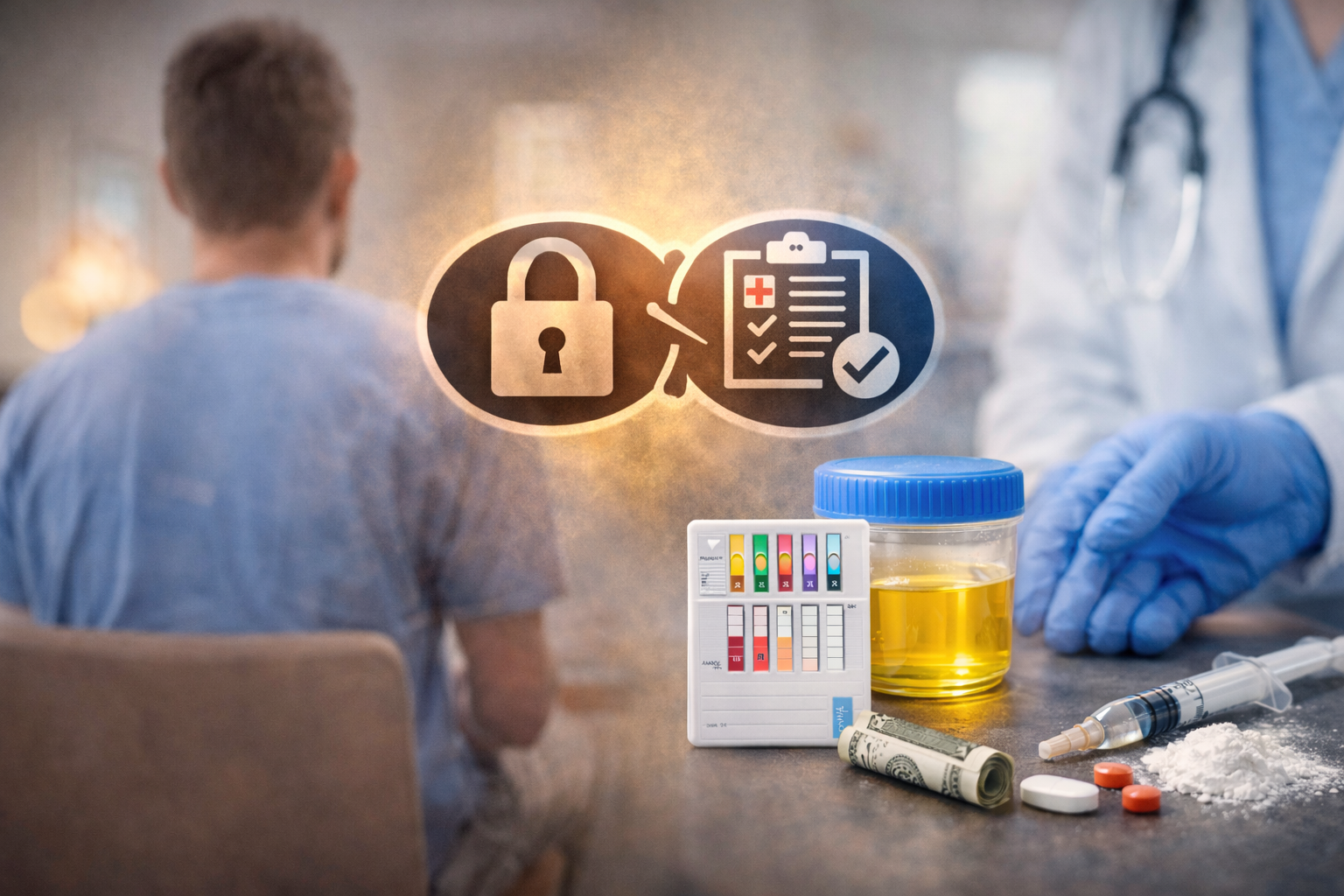
Balancing patient privacy and drug testing in rehab settings is very important. Rehab facilities help people heal from substance use disorders. At the same time, they must protect patient information.
Drug testing helps treatment providers know if someone is using drugs or alcohol. This helps guide a treatment plan. But patient confidentiality must always be protected.
In addiction treatment centers, both safety and privacy matter. Patients need to feel safe when they seek treatment. They also need to trust that their medical records and personal health information are protected.
Why Patient Privacy Matters in Addiction Treatment
Patient privacy is a big part of health care. When someone is receiving treatment for substance abuse or mental health, their information is very sensitive.
Protected health information includes:
Medical records
Treatment records
Electronic health records
Personal health information
If this information is shared without permission, it can cause harm. Patients may feel scared to continue treatment. That is why privacy laws are in place.
Health care providers must follow strict rules to protect disorder patient records. This helps people feel safe when attending rehab and receiving treatment.
The Role of Drug Testing in Rehab Facilities
Drug testing is a key part of addiction recovery. It helps treatment providers understand what is happening in a patient’s recovery journey.
Drug testing can:
Track progress in recovery
Help prevent relapse
Support clinical health decisions
Improve safety in treatment programs
Testing may include checking for controlled substances or alcohol. It can be part of sud treatment services and healthcare operations.
When used correctly, drug testing supports better outcomes. But it must be done in a way that respects patient privacy.
Federal Laws That Protect Patient Information
There are strong federal regulations that protect patient information in rehab settings. Two major laws are:
HIPAA Privacy Rule and Health Insurance Portability
The Health Insurance Portability and Accountability Act (HIPAA) protects health information. The HIPAA Privacy Rule sets rules for how healthcare providers handle patient data.
Covered entities must follow these rules. This includes:
Treatment centers
Health plans
Health organizations
They must protect electronic health information and follow security rules.
42 CFR Part 2 and Substance Use Disorders
42 CFR Part 2 is another important federal law. It protects disorder treatment information for people with substance use disorders.
This law applies to federally assisted programs and addiction treatment centers. It adds extra privacy protections beyond HIPAA.
It focuses on:
Patient consent
Written consent before sharing data
Strict limits on data sharing
This helps protect patients seeking sud treatment.
How Patient Consent Works in Rehab Settings
Patient consent is a key part of privacy practices. Before sharing patient information, treatment providers must get written consent.
This includes:
Sharing medical data
Sending treatment records
Using electronic health information exchange
Patients must know how their data will be used. They must also agree to it.
Consent helps protect patient confidentiality and builds trust.
Limited Exceptions to Privacy Rules
There are some limited exceptions where information can be shared. These are allowed under federal law.
Examples include:
Medical emergencies
Court order requirements
Public health needs like disease control
Even in these cases, healthcare providers must follow strict rules. They can only share what is needed.
Breaking these rules can lead to civil and criminal penalties.
The Role of Qualified Service Organizations
Qualified service organizations help treatment centers with services like billing or data systems.
They must follow privacy laws too. A qualified service organization agreement ensures they protect patient information.
These groups are also called business associates. They must follow the same rules as healthcare providers.
Balancing Drug Testing and Privacy in Daily Practice
Balancing patient privacy and drug testing in rehab settings means finding the right approach.
Treatment providers must:
Use drug testing only when needed
Protect patient records
Follow confidentiality laws
Respect patient rights
Drug testing results are part of treatment records. These results must be handled carefully.
Only authorized staff should see this information.
Protecting Electronic Health Records
Today, many rehab facilities use health information technology. This includes electronic health records and electronic health information exchange.
While this helps improve care, it also brings risks.
To protect data, facilities must:
Follow security rules
Use secure systems
Limit access to patient information
This helps keep personal health information safe.
How Privacy Builds Trust in Treatment Programs
When patients trust their treatment center, they are more likely to stay in recovery.
Privacy protections help build this trust. Patients feel safe sharing their struggles with addiction professionals.
This leads to:
Better treatment outcomes
Stronger relationships with providers
More honest communication
Trust is a key part of addiction recovery.
Risks of Not Protecting Patient Information
If privacy rules are not followed, serious problems can happen.
These include:
Loss of trust
Legal issues
Civil and criminal penalties
Harm to patients
Healthcare providers must take privacy seriously.
Best Practices for Rehab Facilities
Rehab facilities can follow simple steps to balance privacy and drug testing:
Train Staff on Privacy Laws
Staff should understand HIPAA, 42 CFR Part 2, and other federal regulations.
Use Clear Consent Forms
Patients should understand how their information is used.
Limit Data Sharing
Only share what is needed for treatment or healthcare operations.
Secure Medical Records
Keep all treatment records safe, both digital and paper.
Work with Trusted Partners
Use qualified service organizations that follow privacy rules.
The Role of Lynk Diagnostics in Supporting Compliance
Lynk Diagnostics supports rehab facilities with reliable drug testing.
They help treatment providers:
Maintain accurate testing
Protect patient confidentiality
Follow federal law
By working with trusted partners like Lynk Diagnostics, rehab facilities can improve both care and compliance.
Supporting Patients Through Privacy and Care
Patients seeking sud treatment need both care and protection.
Balancing patient privacy and drug testing in rehab settings ensures:
Safe treatment environments
Respect for personal data
Better recovery outcomes
When privacy and care work together, patients feel supported.
FAQs
Why is patient privacy important in rehab settings?
Patient privacy protects personal health information. It helps patients feel safe and trust their treatment providers.
What is 42 CFR Part 2?
It is a federal law that protects substance use disorder patient records. It adds extra privacy protections beyond HIPAA.
Can drug test results be shared with others?
Only with written consent or under limited exceptions like a court order or medical emergency.
What happens if privacy laws are broken?
There can be civil and criminal penalties. Healthcare providers may also lose trust from patients.
How do rehab centers protect electronic health records?
They use secure systems, follow security rules, and limit access to authorized staff.
Conclusion
Balancing patient privacy and drug testing in rehab settings is key to quality care. Rehab facilities must follow federal regulations while helping patients recover.
By protecting patient information and using drug testing responsibly, treatment centers can create a safe and supportive environment.
This balance helps patients feel confident as they seek treatment and work toward long-term addiction recovery.
Resources
Substance Abuse and Mental Health Services Administration (SAMHSA): https://www.samhsa.gov
U.S. Department of Health & Human Services (HIPAA): https://www.hhs.gov/hipaa
42 CFR Part 2 Overview: https://www.ecfr.gov/current/title-42/part-2
Centers for Disease Control and Prevention (CDC): https://www.cdc.gov