Setting Measurable Service-Level Agreements With Your Drug Testing Lab Partner for Reliable Performance
Establishing measurable service-level agreements (SLAs) with your drug testing lab partner is crucial for ensuring reliable performance and accountability. This article will guide you through the essential components of SLAs, the key performance indicators (KPIs) that measure lab quality, and best practices for negotiating and enforcing these agreements. By understanding how to set effective SLAs, you can enhance the quality of drug testing services, which is vital for addiction recovery and relapse prevention. We will explore the role of technology in monitoring SLAs, real-world examples of successful implementations, and compliance requirements that impact lab operations.
What Are Service-Level Agreements in Toxicology Testing?
Service-level agreements (SLAs) in toxicology testing are formal contracts that define the expected level of service between a drug testing lab and its clients. These agreements outline specific performance metrics, responsibilities, and expectations, ensuring that both parties are aligned on service delivery. SLAs are essential for maintaining accountability and transparency in the testing process, which is particularly important in the context of addiction recovery and relapse prevention.
Which SLA Components Define Drug Testing Lab Performance?
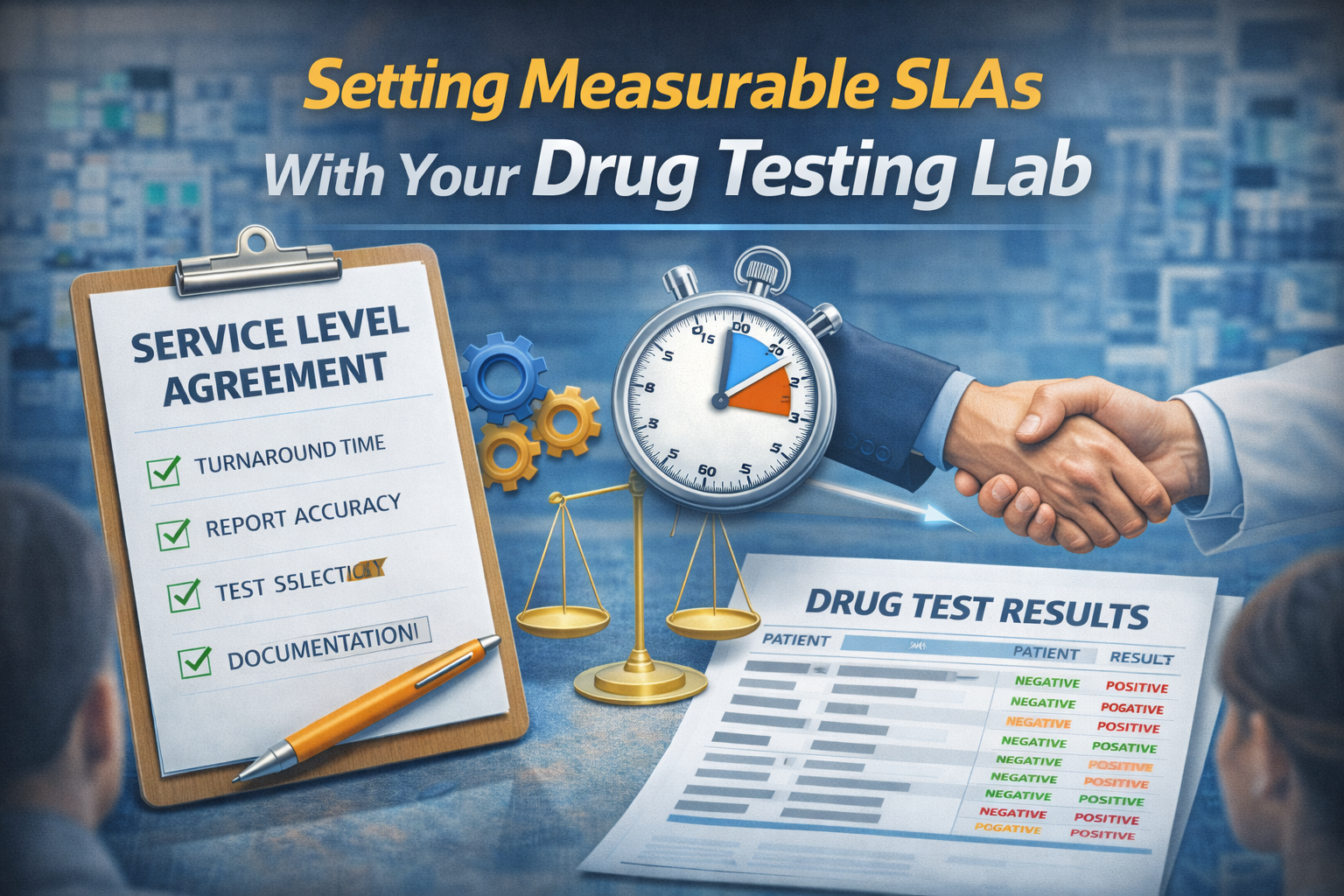
Key components of SLAs include turnaround time, accuracy rates, and reporting frequency. Turnaround time specifies how quickly test results will be delivered, while accuracy rates define the acceptable levels of precision in test results. Reporting frequency outlines how often clients will receive updates or reports on testing activities. Each of these components directly impacts lab performance and client satisfaction, making them critical for effective SLAs.
How Do SLAs Support Addiction Recovery and Relapse Prevention?
SLAs play a vital role in supporting addiction recovery by ensuring that drug testing is conducted accurately and efficiently. For treatment centers, having reliable SLAs means they can trust the results provided by their lab partners, which is essential for making informed decisions about patient care. Successful SLAs can lead to improved outcomes for clients, as timely and accurate testing helps in monitoring compliance and preventing relapse.
What Key Performance Indicators Measure Drug Testing Lab Quality?
Key performance indicators (KPIs) are metrics used to evaluate the quality of services provided by drug testing labs. These indicators help clients assess whether their lab partners are meeting the agreed-upon standards outlined in the SLAs.
How Is Turnaround Time Monitored and Optimized?
Turnaround time is monitored through tracking systems that log the time taken from sample collection to result reporting. Labs can optimize this process by implementing efficient workflows, utilizing advanced technology, and ensuring adequate staffing levels. Regular reviews of turnaround times can help identify bottlenecks and areas for improvement, ultimately enhancing service delivery.
The critical role of turnaround time in assessing laboratory service quality and its impact on patient outcomes is a well-documented area of focus for optimization.
Optimizing Lab Turnaround Time for Quality Service
Laboratory Turnaround Time (TAT) is a critical metric in assessing the quality of laboratory services, directly impacting diagnostic speed and patient outcomes. Many laboratories in resource-constrained environments face challenges such as inefficiencies in workflow, resource limitations, and administrative redundancies, which hinder optimal TAT performance.
Maximizing Laboratory Turnaround Time Efficiency: Workflow Optimization in Resource-Limited Settings, R Febrian, 2024
What Are Acceptable Accuracy and Compliance Standards?
Accuracy and compliance standards are defined by regulatory guidelines and industry benchmarks. Labs must adhere to these standards to ensure the reliability of their testing results. Compliance with these standards not only enhances lab performance but also builds trust with clients, as they can be confident in the accuracy of the results provided.
How to Negotiate and Enforce Effective SLAs With Your Drug Testing Lab?
Negotiating effective SLAs requires clear communication and a mutual understanding of expectations between clients and labs. Establishing well-defined terms is crucial for ensuring that both parties are aligned on service delivery.
What Best Practices Ensure Clear SLA Terms and Expectations?
Best practices for ensuring clear SLA terms include documenting all agreements in writing, using specific language to define performance metrics, and setting realistic expectations. Regular meetings to review SLA performance can also help maintain clarity and address any issues that arise.
How Can Clients Monitor SLA Compliance and Lab Performance?
Clients can monitor SLA compliance through regular performance reviews and audits. Utilizing technology tools that provide real-time data on lab performance can enhance transparency and accountability. By actively engaging in the monitoring process, clients can ensure that their lab partners are meeting the agreed-upon standards.
Which Technology Tools Enhance SLA Monitoring and Communication?
Technology plays a significant role in enhancing SLA monitoring and communication between clients and drug testing labs. Various tools can streamline the process and improve overall efficiency.
Indeed, specific technological advancements, such as web applications, are being developed to directly improve the efficiency of delivering toxicology results.
Web Application for Efficient Toxicology Lab Results
In this work, we describe the development of a web application that improves the efficiency of pathologists and laboratory staff in delivering actionable toxicology results.
A web application to support the coordination of reflexive, interpretative toxicology testing, TJ Laha, 2023
How Do Real-Time Dashboards Improve Lab Performance Tracking?
Real-time dashboards provide clients with immediate access to performance metrics, allowing them to track lab performance against SLA standards. These dashboards can display key indicators such as turnaround times, accuracy rates, and compliance levels, enabling clients to make informed decisions quickly.
These real-time dashboards are part of a broader trend towards unified systems that offer comprehensive data health monitoring and compliance assurance.
Real-time SLA Tracking & Quality Scorecards for Lab Performance
Unified dashboards often feature dynamic lineage visualizations, real-time SLA tracking, quality scorecards, and alerting systems tied to businesscritical assets, enabling organizations to proactively monitor data health, identify anomalies, and ensure compliance with data governance policies.
Advances in End-to-End Pipeline Observability for Data Quality Assurance in Complex Analytics Systems, TT Bukhari, 2024
What Integration Capabilities Support SLA Data Transparency?
Integration capabilities that connect lab systems with client platforms enhance data transparency. By sharing data seamlessly, both parties can access the same information, reducing misunderstandings and fostering a collaborative relationship. This transparency is essential for maintaining trust and accountability in the testing process.
What Are Real-World Examples of Successful SLA Implementations?
Real-world examples of successful SLA implementations demonstrate the tangible benefits of establishing clear agreements between drug testing labs and their clients.
How Have Treatment Centers Benefited From Measurable SLAs?
Treatment centers that have implemented measurable SLAs report improved patient outcomes due to the reliability of test results. By ensuring that labs meet their performance metrics, these centers can make timely decisions regarding patient care, ultimately supporting recovery efforts.
What Case Studies Demonstrate Improved Lab Turnaround and Accuracy?
Case studies reveal that labs that adhere to strict SLAs experience significant improvements in turnaround times and accuracy rates. For instance, a lab that implemented a new tracking system reduced its turnaround time by approximately 30%, leading to higher client satisfaction and better patient management for treatment centers.
What Are Compliance Requirements and Quality Assurance Standards for Drug Testing Labs?
Compliance requirements and quality assurance standards are critical for ensuring that drug testing labs operate within legal and ethical boundaries.
Which Regulatory Guidelines Impact SLA Development?
Regulatory guidelines, such as those set by the Substance Abuse and Mental Health Services Administration (SAMHSA) and the Clinical Laboratory Improvement Amendments (CLIA), impact SLA development by establishing minimum standards for testing accuracy and reporting. Labs must comply with these guidelines to maintain their certifications and ensure the reliability of their services.
How Do Labs Maintain Quality and Client Communication Protocols?
Labs maintain quality by implementing rigorous quality assurance protocols and regular training for staff. Effective client communication protocols, including timely updates and transparent reporting, are essential for building trust and ensuring that clients are informed about their testing processes.
| SLA Component | Description | Importance |
|---|---|---|
| Turnaround Time | Time taken from sample collection to result reporting | Critical for timely decision-making |
| Accuracy Rate | Percentage of correct test results | Essential for trust and reliability |
| Reporting Frequency | How often clients receive updates | Keeps clients informed and engaged |
This table highlights the key components of SLAs and their significance in ensuring reliable drug testing services.
Drug testing labs that implement effective SLAs can significantly enhance their service delivery, leading to improved client satisfaction and better patient outcomes. By focusing on measurable performance metrics and maintaining open communication, both labs and clients can foster a successful partnership that supports addiction recovery and relapse prevention.
Frequently Asked Questions
1) What SLA metrics matter most for rehab drug testing?
Turnaround time, pickup reliability, specimen rejection rate, corrected report rate, and response time for critical issues.
2) How do we define turnaround time so it’s measurable?
Set exact timestamps (collection, pickup, lab receipt, result release) and specify which ones count for SLA measurement.
3) Should we include performance penalties or credits?
Many facilities use service credits or remediation plans tied to consistent misses, especially for repeated TAT failures.
4) How do we ensure results reporting is consistent?
Define standardized report formats, naming conventions for panels/analytes, and clear confirmatory reporting rules.
5) How often should SLA performance be reviewed?
Monthly at first, then quarterly—using a shared scorecard and documented action items with due dates.
Resources
- CMS CLIA overview: https://www.cms.gov/medicare/quality/clinical-laboratory-improvement-amendments
- CAP Laboratory Accreditation resources: https://www.cap.org/laboratory-improvement/accreditation
- HHS HIPAA Security Rule: https://www.hhs.gov/hipaa/for-professionals/security/laws-regulations/index.html
- AHRQ Patient Safety resources: https://www.ahrq.gov/patient-safety/index.html