Why Proper Storage and Transport of Drug Test Specimens Matters
Drug testing plays a big role in addiction treatment and recovery programs. In rehab facilities, drug tests help guide clinical decisions, support patient safety, and protect program integrity. But a drug test is only as reliable as the specimen handling process behind it.
Best practices for storing and transporting drug test specimens in rehab are important for:
- Accurate test results
- Patient safety
- Legal compliance
- Chain of custody protection
- Avoiding contamination or tampering
If specimens are stored the wrong way, exposed to heat, or mislabeled, results can become invalid. This can affect treatment plans and trust between patients and providers.
At Lynk Diagnostics, we work closely with rehab facilities to make sure specimen storage and transportation meet high standards for safety, compliance, and accuracy.
Understanding Drug Test Specimens in Rehab Settings
Rehab programs often use different types of drug testing specimens. Each type has its own storage and handling needs.
Common Specimen Types
- Urine drug tests – Most common in addiction treatment
- Oral fluid (saliva) tests – Easy to collect and observe
- Blood tests – Used in certain medical cases
- Hair testing – Detects longer-term substance use
Each specimen type must be handled carefully to prevent contamination, degradation, or false results.
Drug metabolites, specimen validity testing, and confirmatory testing all depend on proper handling from the start.
Chain of Custody: The Foundation of Specimen Integrity
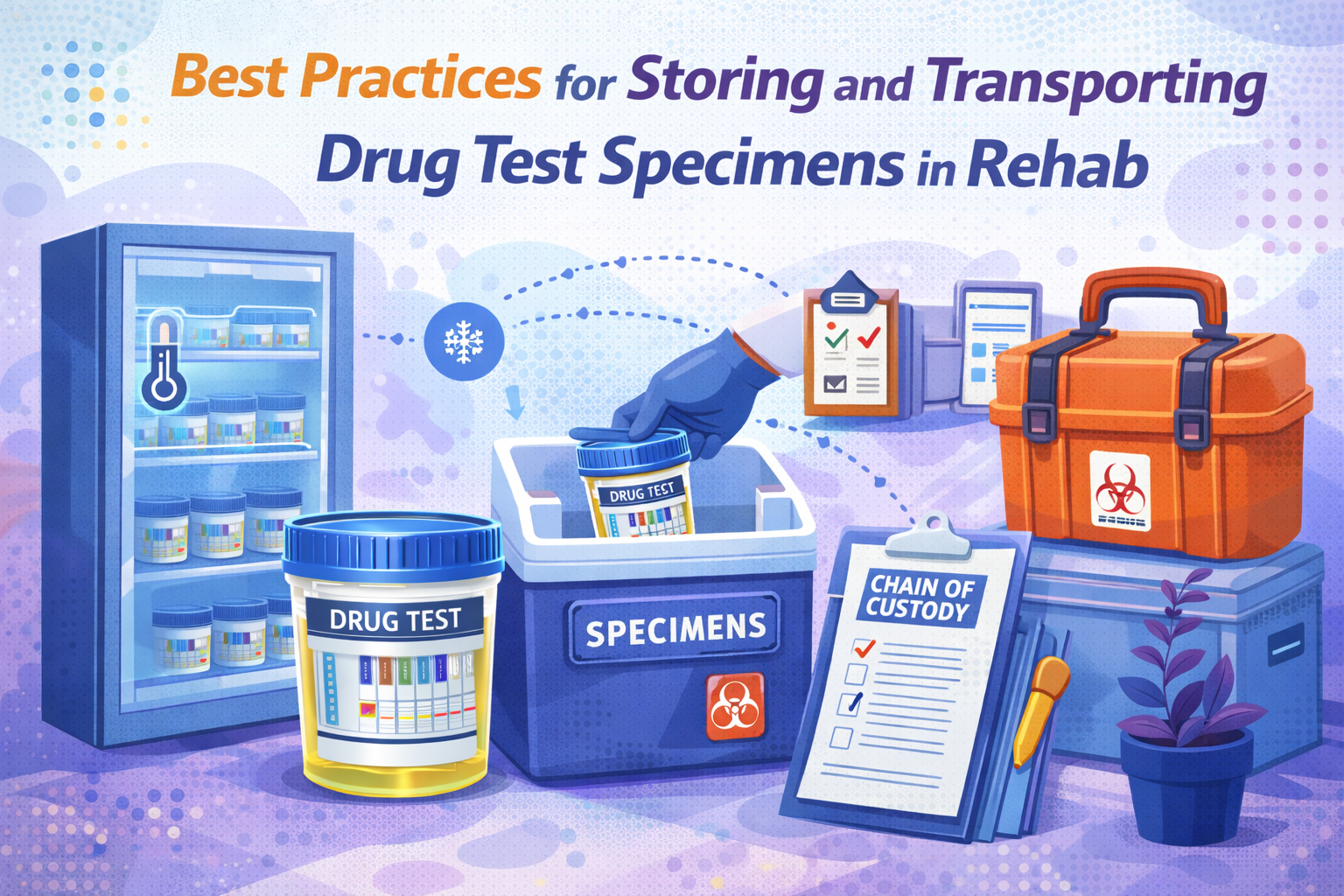
Chain of custody means tracking a specimen from the moment it is collected until it reaches the laboratory. This process protects against tampering, mislabeling, substitution, or loss.
Key Parts of Chain of Custody
- Correct patient identification
- Proper labeling of specimen containers
- Signed documentation forms
- Secure storage before shipment
- Documented transfer to the courier or laboratory
Rehab facilities should train staff to follow strict chain of custody procedures every time. Even small mistakes can lead to rejected specimens or questioned drug test results.
Strong chain of custody practices support regulatory compliance, clinical accuracy, and program credibility.
Best Practices for Storing Drug Test Specimens in Rehab
Proper storage protects the specimen from damage and keeps results accurate.
Store at the Correct Temperature
Temperature control is very important in specimen handling.
- Urine specimens are usually stored refrigerated if not shipped right away.
- Avoid freezing unless instructed by the laboratory.
- Do not leave specimens at room temperature for long periods.
Heat can break down drug metabolites. Improper cold storage can also affect specimen integrity if not done correctly.
Use Secure Storage Areas
Specimens should be stored in:
- Locked refrigerators
- Limited-access rooms
- Clearly marked containers
Only trained and authorized staff should have access. This protects patient privacy and prevents tampering.
Label Clearly and Immediately
Every specimen must include:
- Patient name or ID number
- Date and time of collection
- Collector’s initials
- Type of drug test ordered
Never delay labeling. Label the specimen in front of the patient to reduce errors and strengthen chain of custody documentation.
Avoid Cross-Contamination
Use gloves and clean surfaces during specimen collection and storage. Keep containers sealed tightly. Never place open containers near each other.
Cross-contamination can lead to false positive results or invalid testing outcomes.
Best Practices for Transporting Drug Test Specimens
Transportation is just as important as storage. Even a perfectly collected specimen can become unusable if transported the wrong way.
Use Proper Packaging Materials
Specimens should be placed in:
- Leak-proof specimen containers
- Biohazard bags with absorbent material
- Secondary protective packaging
Proper packaging protects staff and ensures safe transport to the laboratory.
Maintain Temperature During Transport
Some specimens require cold packs during shipping. Others may require delivery within a certain time window.
Work with your drug testing laboratory, like Lynk Diagnostics, to understand exact transport requirements for urine drug testing, oral fluid testing, or other specimen types.
Ship Promptly
Delays can lead to:
- Bacterial growth
- Specimen degradation
- Inaccurate drug test results
Send specimens to the laboratory as soon as possible, ideally the same day as collection.
Use Reliable Couriers
Choose transportation partners that understand medical specimen handling and compliance requirements.
Documentation should include:
- Date and time picked up
- Name of courier
- Condition of package
Clear documentation protects the integrity of the drug testing process.
Compliance and Regulatory Guidelines in Rehab Drug Testing
Rehab facilities must follow federal and state regulations when handling biological specimens.
These regulations are designed to protect:
- Patient rights
- Workplace safety
- Laboratory accuracy
- Program integrity
Agencies such as SAMHSA, DOT, CLIA, OSHA, CDC, and HIPAA set guidelines that influence drug testing programs in addiction treatment settings.
Following regulatory standards supports ethical care, reduces liability risks, and strengthens trust with referral partners.
Staff Training and Standard Operating Procedures
Even strong policies will fail without proper staff training.
Create Written Standard Operating Procedures (SOPs)
Rehab facilities should develop clear procedures that cover:
- Drug test collection
- Specimen labeling
- Storage protocols
- Transportation procedures
- Chain of custody documentation
- Incident reporting
Written SOPs create consistency across shifts and locations.
Provide Ongoing Staff Training
Train new employees during onboarding. Offer refresher courses each year. Include training on:
- Specimen integrity
- Compliance requirements
- HIPAA privacy rules
- Proper documentation
Lynk Diagnostics helps rehab facilities improve drug testing workflows and reduce errors through education and support.
Preventing Common Mistakes in Specimen Handling
Here are common errors rehab programs should avoid:
- Forgetting to refrigerate urine drug test specimens
- Missing signatures on chain of custody forms
- Using expired collection kits
- Delaying shipment over weekends
- Improper specimen labeling
- Storing specimens near food or drinks
Small errors can lead to:
- Rejected specimens
- Retesting costs
- Delayed treatment decisions
- Compliance violations
A strong quality assurance process can prevent these problems.
Protecting Patient Privacy and Data Security
Drug testing involves protected health information (PHI). Rehab centers must protect:
- Patient identity
- Drug test results
- Electronic medical records
Limit access to authorized staff only. Use secure electronic systems when sending results between your facility and Lynk Diagnostics.
Maintaining HIPAA compliance is a key part of responsible specimen handling and data protection.
Quality Control and Continuous Improvement
Best practices for storing and transporting drug test specimens in rehab should include regular review and improvement.
Conduct Internal Audits
Check for:
- Proper storage temperatures
- Completed documentation
- Timely shipping records
- Staff compliance with SOPs
Review Rejected Specimens
If a specimen is rejected, ask:
- Was there a labeling error?
- Was temperature control maintained?
- Was the chain of custody complete?
Learning from mistakes strengthens your drug testing program.
Continuous quality improvement builds trust with patients, staff, and referral partners.
How Lynk Diagnostics Supports Rehab Facilities
Lynk Diagnostics is a drug testing center dedicated to rehab facilities. We understand the clinical, operational, and compliance needs of addiction treatment programs.
We support best practices by offering:
- Clear specimen handling guidelines
- Reliable transport coordination
- Secure chain of custody systems
- Regulatory-compliant laboratory testing
- Ongoing education for rehab staff
By partnering with a specialized drug testing provider like Lynk Diagnostics, rehab facilities can protect specimen integrity and ensure accurate, defensible drug test results.
Building a Culture of Accuracy and Accountability
Drug testing is not just about detecting substances. It supports:
- Recovery monitoring
- Patient accountability
- Clinical decision-making
- Program credibility
When rehab facilities follow best practices for storing and transporting drug test specimens, they show a commitment to high-quality care.
Strong systems reduce errors. Clear policies build trust. Proper storage and transport protect every step of the drug testing process.
FAQs About Storing and Transporting Drug Test Specimens in Rehab
What happens if a drug test specimen is stored incorrectly?
If a specimen is stored at the wrong temperature or left out too long, it can degrade. This may cause inaccurate or invalid results. The laboratory may reject the specimen and require recollection.
How long can a urine specimen sit before shipping?
Urine specimens should be shipped as soon as possible, usually the same day. If there is a delay, they should be stored according to laboratory guidelines to protect specimen integrity.
Why is chain of custody important in rehab drug testing?
Chain of custody tracks the specimen from collection to testing. It prevents tampering, protects legal integrity, and ensures accurate and defensible results.
Do all specimens need refrigeration?
Not all specimens require refrigeration, but many urine samples do if not shipped quickly. Always follow specific laboratory instructions.
What training should rehab staff receive?
Staff should be trained in specimen collection, labeling, storage, documentation, transportation procedures, HIPAA compliance, and chain of custody protocols.
Resources
- Substance Abuse and Mental Health Services Administration (SAMHSA) – Drug Testing Guidance
https://www.samhsa.gov/workplace/drug-testing - Centers for Disease Control and Prevention (CDC) – Laboratory Quality Information
https://www.cdc.gov/laboratory - Occupational Safety and Health Administration (OSHA) – Bloodborne Pathogens Standard
https://www.osha.gov - U.S. Department of Health & Human Services – HIPAA Privacy Rule
https://www.hhs.gov/hipaa
Following best practices for storing and transporting drug test specimens in rehab helps protect patients, staff, and the integrity of your program. With strong procedures and support from Lynk Diagnostics, rehab facilities can maintain accurate, compliant, and reliable drug testing systems that support recovery every step of the way.