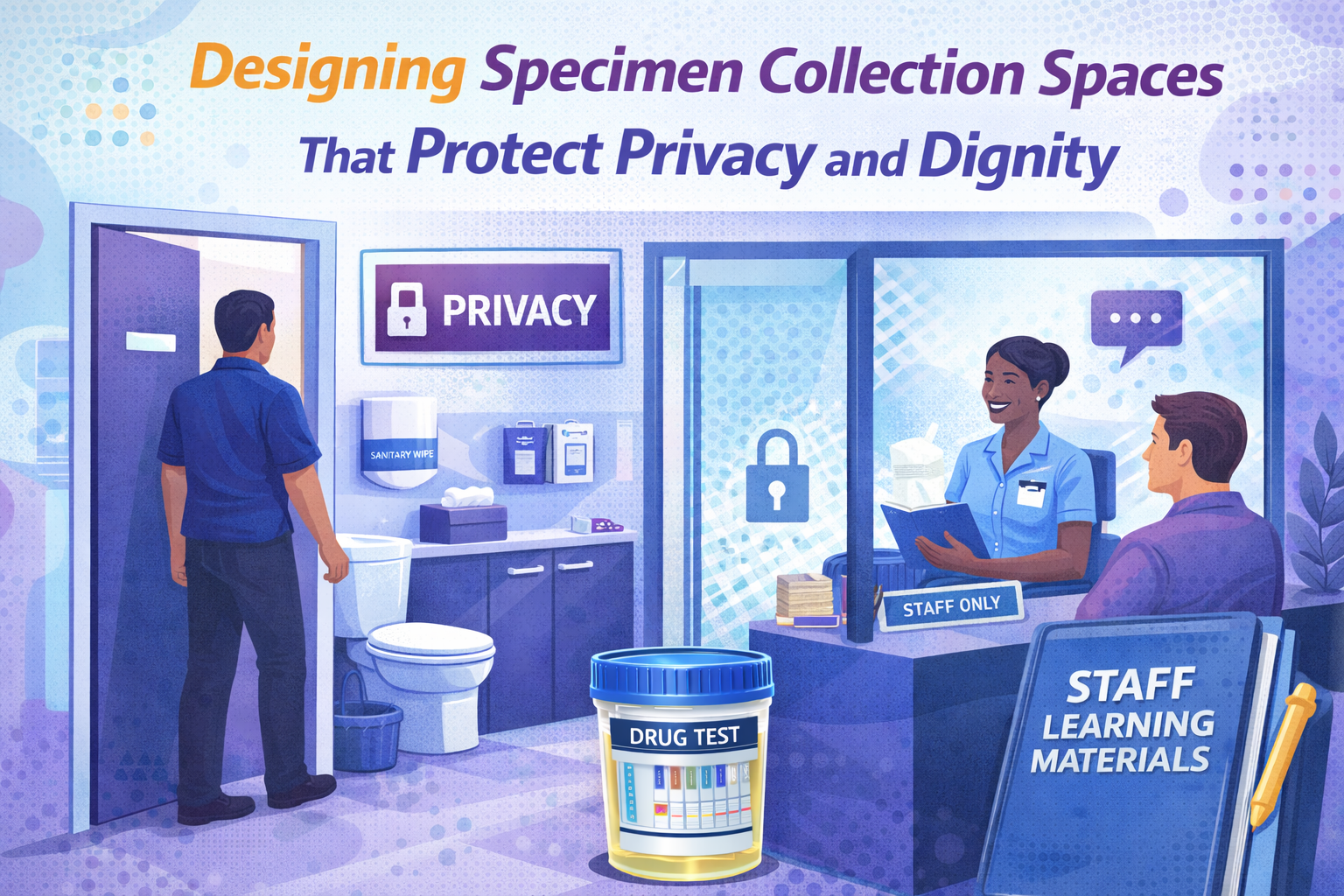
Designing Specimen Collection Spaces That Protect Privacy and Dignity
Designing specimen collection spaces that protect privacy and dignity is very important in modern healthcare. When a patient visits a clinic or rehab center for drug testing, they may already feel nervous. The space, design, and environment can make a big impact on their patient experience.
At Lynk Diagnostics, we understand that drug testing in a rehab facility is not just about collecting a sample. It is about patient privacy, confidentiality, and respect. A well-designed room can help patients feel safe, calm, and valued.
This article explains how healthcare design, architecture, and smart planning can improve patient satisfaction while following the Health Insurance Portability and Accountability Act (HIPAA) and other laws.
Why Privacy and Dignity Matter in Drug Testing
Drug testing is often part of addiction treatment, medication monitoring, and recovery programs. Patients may be dealing with sensitive health issues. Protecting their confidentiality is not only good practice—it is required by law.
The Health Insurance Portability and Accountability Act (HIPAA) protects patient information and data. This includes test results, health insurance details, and medical records. A health facility must protect patient privacy at every step.
If a specimen collection space has poor visibility control or weak sound protection, it can hurt trust. Patients may worry about being seen or heard. That can harm the patient experience and even affect treatment outcomes.
Designing with dignity helps:
- Build trust
- Improve patient satisfaction
- Support compliance with health insurance portability laws
- Reduce stress and anxiety
The Role of Healthcare Design in Specimen Collection
Healthcare design is about more than looks. It is about safety, comfort, and function. Architects and designers who work in modern healthcare focus on creating spaces that are private, clean, and welcoming.
When designing specimen collection spaces, important elements include:
- Private rooms
- Sound control
- Secure storage
- Clear zoning
- Safe construction materials
A thoughtful design protects patients and staff while improving workflow for nursing teams.
Creating True Patient Privacy in the Collection Room
Private Rooms Instead of Open Areas
A specimen collection room should be fully enclosed. Using only a curtain for privacy is not enough in most settings. While a curtain may help in some nursing areas, a closed room with solid walls gives better confidentiality.
Patients should not feel visible to others during the process. A private room helps reduce embarrassment and protects dignity.
Managing Visibility
Visibility is a key part of design. Patients should not be visible from hallways, waiting areas, or other clinic spaces. Frosted glass, careful door placement, and proper zoning can help.
Zoning means organizing spaces in a smart way. For example:
- Waiting area in one zone
- Collection rooms in another zone
- Secure storage and inventory in a staff-only zone
This separation protects privacy and improves workflow.
Sound Control and White Noise for Confidentiality
Sound privacy is just as important as visual privacy. Patients may share personal health information or discuss medication and insurance details during their visit.
To protect confidentiality:
- Use soundproof walls
- Install solid-core doors
- Add white noise machines
White noise helps block conversations from being heard outside the room. This small design feature can make a big impact on patient comfort.
Healthcare providers must protect verbal and written health information under federal privacy laws. Sound control supports compliance and builds trust.
Secure Storage and Inventory Control
Drug testing involves handling sensitive specimens and data. Secure storage solutions are critical.
Locked Storage Areas
Specimens should be stored in locked refrigerators or cabinets. Access should be limited to authorized nursing or lab staff.
Inventory control systems help track:
- Test kits
- Collection supplies
- Medication monitoring tools
This protects patient information and ensures accurate results.
Protecting Digital Data
In modern healthcare, much information is digital. Secure computers, encrypted systems, and restricted access are necessary.
Health facilities must protect digital data under the Health Insurance Portability and Accountability Act. Strong cybersecurity policies are part of responsible healthcare design.
Lynk Diagnostics follows strict procedures to protect patient data in every rehab facility we serve.
Designing for Comfort and Patient Experience
Lighting and Color
Soft lighting and calming colors improve the environment. Harsh lighting can increase anxiety. Art on the walls can make the space feel less clinical.
A small piece of art or thoughtful decor can transform a simple room into a welcoming space.
Clean and Modern Construction
Construction materials should be easy to clean and maintain. Infection control is important in every health facility.
Modern healthcare design often uses:
- Smooth surfaces
- Easy-to-clean flooring
- Proper ventilation systems
These choices protect health and improve patient trust.
The Impact of Architecture on Trust
Architecture shapes how patients feel. A well-designed clinic sends a message of professionalism and care.
When patients walk into a center for health services, they notice:
- Cleanliness
- Organization
- Privacy
- Respectful staff
All these factors impact patient satisfaction.
Research in healthcare design shows that thoughtful environments improve safety and outcomes. The concept of patient-centered design is now central in modern healthcare planning.
Supporting Nursing and Staff Workflow
Designing specimen collection spaces must also support nursing teams and lab staff.
If the room is poorly designed, staff may struggle with:
- Limited storage
- Poor visibility control
- Confusing layout
Smart zoning and storage solutions help staff work efficiently while protecting patient privacy.
A good design balances:
- Patient dignity
- Staff workflow
- Legal compliance
- Safety standards
Following Laws and Regulations
Specimen collection spaces must follow federal and state law. This includes:
- Health Insurance Portability and Accountability Act (HIPAA)
- OSHA safety standards
- Local building codes and zoning regulations
Compliance protects patients, staff, and the facility. It also protects health insurance data and other sensitive information.
Building Trust in Rehab Facilities
Drug testing plays a key role in addiction treatment. Patients in recovery may feel vulnerable. A poorly designed space can feel cold or exposing.
At Lynk Diagnostics, we work closely with rehab centers to provide insight into:
- Private specimen collection setup
- Secure data systems
- Best practices for confidentiality
- Proper storage and inventory systems
Our experience in drug testing for rehab facilities helps ensure every patient is treated with dignity.
Using Research to Improve Design
Healthcare research shows that environment affects healing. When patients feel safe and respected, they are more likely to follow treatment plans and medication guidelines.
Designing with privacy in mind:
- Reduces stress
- Builds trust
- Improves cooperation
- Enhances overall patient experience
Modern healthcare leaders understand that architecture and environment are not just about looks. They directly impact health outcomes.
Common Mistakes to Avoid
When designing specimen collection spaces, avoid these mistakes:
- Using only a curtain instead of solid walls
- Placing collection rooms near high-traffic areas
- Ignoring sound control
- Failing to secure storage
- Allowing sensitive data to be visible on screens
Small design errors can lead to big privacy problems.
How Lynk Diagnostics Supports Smart Design
Lynk Diagnostics is a drug testing center dedicated to rehab facilities. We support healthcare providers in designing specimen collection spaces that protect patient privacy and dignity.
We provide guidance on:
- Room layout
- HIPAA compliance
- Inventory management
- Secure storage solutions
- Protecting patient information
We understand the concept that dignity and privacy are just as important as accurate drug testing results.
By combining healthcare design insight with strong compliance standards, we help facilities build trust with their patients.
Designing for the Future of Modern Healthcare
Modern healthcare continues to evolve. Updated laws, better research, and improved technology shape new standards.
Future-focused specimen collection spaces will include:
- Enhanced digital security
- Improved sound protection
- Better zoning layouts
- Smart inventory tracking systems
Designing with flexibility ensures the space can adapt to future needs.
Conclusion: Protecting Privacy Is Protecting People
Designing specimen collection spaces that protect privacy and dignity is not just about construction. It is about respect, trust, and patient-centered care.
When a patient walks into a clinic for drug testing, they deserve:
- Privacy
- Confidentiality
- A safe environment
- Professional care
A thoughtful design improves patient satisfaction, supports nursing staff, and ensures compliance with health insurance portability laws.
At Lynk Diagnostics, we believe protecting dignity is part of protecting health. Every space should reflect that commitment.
FAQs
Why is patient privacy important in specimen collection spaces?
Patient privacy protects sensitive health information and builds trust. It is required under the Health Insurance Portability and Accountability Act and improves patient satisfaction.
Is using a curtain enough for privacy?
In most cases, no. A fully enclosed room with solid walls offers better visibility control and sound protection than a simple curtain.
How does design affect patient experience?
Lighting, layout, sound control, storage, and overall environment all impact how safe and respected patients feel. Good healthcare design reduces stress and supports dignity.
What laws apply to specimen collection spaces?
HIPAA protects patient information and data. OSHA sets safety standards. Local building codes and zoning laws also apply to healthcare facilities.
How can rehab facilities improve their specimen collection areas?
Facilities can work with experts like Lynk Diagnostics to review room layout, improve storage solutions, strengthen confidentiality, and ensure compliance with healthcare regulations.
Resources
- U.S. Department of Health & Human Services – HIPAA
https://www.hhs.gov/hipaa/index.html - Office for Civil Rights – HIPAA Privacy Rule
https://www.hhs.gov/ocr/privacy/hipaa/index.html - The Center for Health Design
https://www.healthdesign.org/ - Occupational Safety and Health Administration (OSHA) Healthcare Guidance
https://www.osha.gov/healthcare