Using Drug Testing Dashboards to Monitor Trends Across Your Rehab Network
Using drug testing dashboards to monitor trends across your rehab network can help you protect patients, improve care, and reduce risk. In today’s world, substance abuse treatment centers face many challenges. The opioid crisis, fentanyl exposure, and rising overdose rates make careful monitoring more important than ever.
Drug testing dashboards use analytics and information technology to track patterns across multiple facilities. When used correctly, they support better clinical decisions, faster turnaround time, and stronger prevention strategies.
At Lynk Diagnostics, we work closely with rehab facilities to provide drug testing solutions designed for network-wide management and oversight.
What Is a Drug Testing Dashboard?
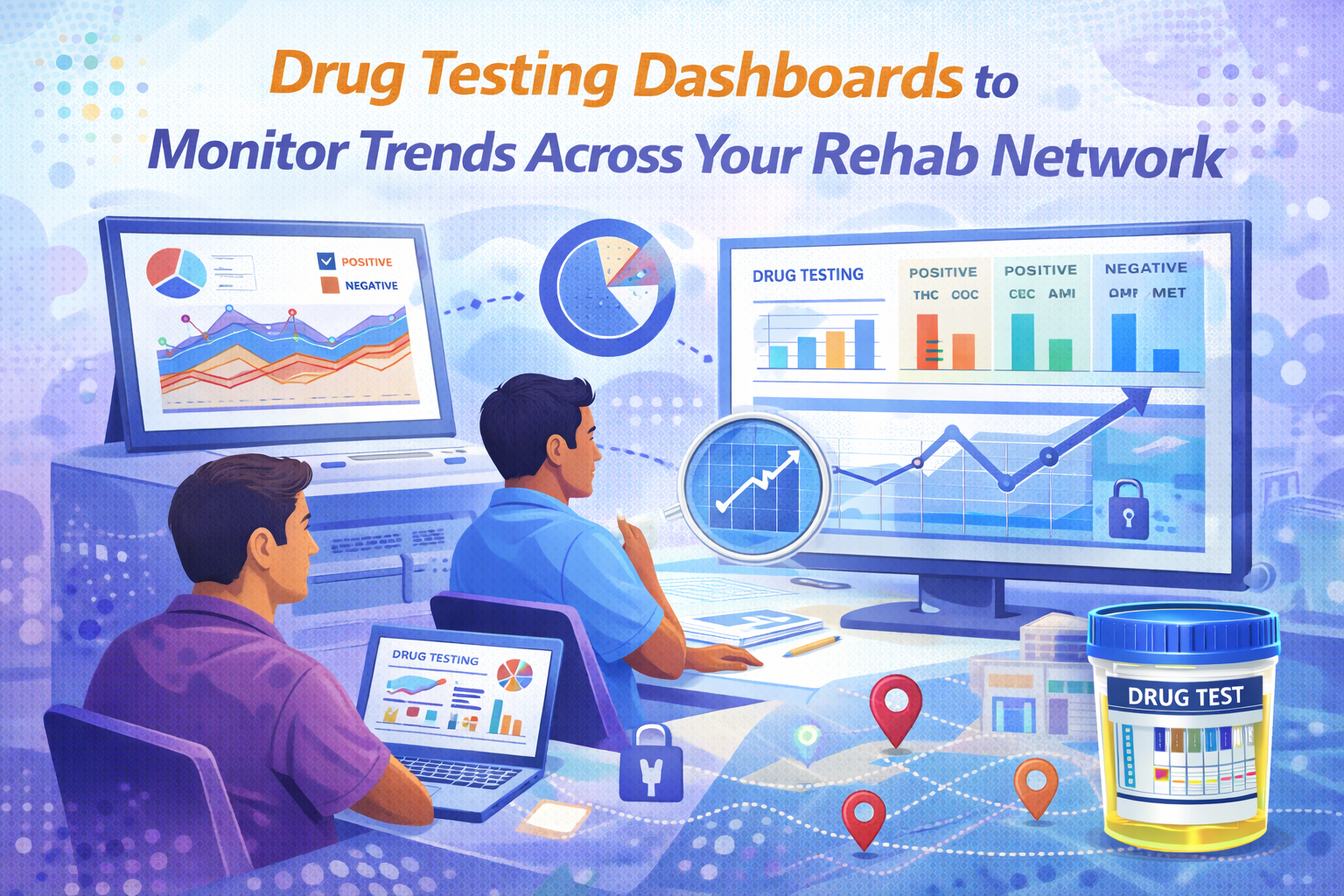
A drug testing dashboard is a digital tool that shows real-time data about drug test results. It collects and displays information in charts, graphs, and simple reports.
These dashboards can track:
- Positive drug test trends
- Substance patterns (like opioid or fentanyl use)
- Turnaround time for lab results
- Patient adherence to treatment
- Risk indicators for relapse or overdose
Instead of looking at reports one by one, leadership teams can see trends across their entire rehab network in one place.
This type of surveillance supports clinical teams and helps improve public health outcomes.
Why Monitoring Trends Matters in Substance Abuse Treatment
Substance abuse treatment is not just about helping one patient at a time. It is also about watching patterns across your entire organization.
When rehab networks monitor trends, they can:
- Identify rising opioid use early
- Spot fentanyl exposure before it spreads
- Reduce overdose risk
- Improve mental health support
- Adjust clinical care plans
For example, if one campus sees an increase in fentanyl positives, leadership can respond quickly. They may update education programs, increase testing frequency, or adjust pharmaceutical support strategies.
This kind of proactive management saves lives.
How Drug Testing Dashboards Support Clinical Decisions
Real-Time Clinical Insights
Clinical teams need accurate data to guide treatment decisions. Dashboards provide clear reports that show:
- Substance use patterns
- Patient adherence to medication
- Risk levels for relapse
- Trends across multiple trials of treatment plans
With this information, providers can make faster and more informed clinical choices.
Improving Adherence and Accountability
Medication adherence is critical in opioid use disorder treatment. If patients are part of a medication-assisted treatment plan, dashboards can highlight non-adherence patterns.
This allows staff to:
- Offer extra support
- Provide education
- Adjust care plans
- Prevent relapse or overdose
Monitoring adherence improves patient safety and supports stronger health outcomes.
Strengthening Public Health and Prevention Efforts
Drug testing dashboards are not just about individual patients. They also support larger public health goals.
Tracking Opioid and Fentanyl Trends
The opioid epidemic continues to affect communities across the country. Fentanyl, a powerful synthetic opioid, increases overdose risk dramatically.
Dashboards allow rehab networks to:
- Detect spikes in fentanyl use
- Share data across campuses
- Alert clinical teams
- Improve prevention programs
Using national data together with internal analytics strengthens your prevention strategy.
Supporting Community Education
When rehab networks see trends in substance abuse, they can adjust their education programs. For example:
- Add fentanyl awareness training
- Improve overdose prevention education
- Provide family support resources
Education reduces risk and supports long-term recovery.
How Dashboards Improve Turnaround Time
Turnaround time is the speed at which drug test results are returned. Slow results can delay treatment changes and increase risk.
Drug testing dashboards can:
- Track average turnaround time
- Compare performance across facilities
- Identify delays in reporting
- Improve information technology workflows
Faster results mean faster clinical action.
At Lynk Diagnostics, we focus on reliable turnaround time because timely information is essential for safe substance abuse treatment.
Using Analytics to Manage Risk Across Your Rehab Network
Identifying High-Risk Patterns
Analytics tools inside dashboards can highlight risk patterns such as:
- Increased opioid positives
- Multiple substances detected in one patient
- Rising non-adherence
- Higher overdose risk indicators
This allows leadership to intervene before small problems become major crises.
Data-Driven Management Decisions
Strong management depends on clear data. Dashboards help executives:
- Compare campuses
- Evaluate testing protocols
- Measure compliance
- Improve surveillance practices
Data-driven management supports better outcomes for patients and staff.
The Role of Information Technology in Drug Testing Dashboards
Information technology plays a key role in modern drug testing.
Dashboards connect:
- Electronic health records (EHR)
- Laboratory systems
- Clinical documentation
- Pharmaceutical treatment tracking
Secure technology ensures:
- Patient privacy
- Accurate reporting
- Regulatory compliance
- Safe data sharing
By combining technology and analytics, rehab networks can strengthen oversight without increasing staff burden.
Supporting Clinical Trials and Research
Some rehab networks participate in clinical trials or research studies related to substance abuse treatment.
Drug testing dashboards can support:
- Clinical trial data collection
- Monitoring adherence during trials
- Tracking patient outcomes
- Identifying disease trends
Accurate surveillance is critical during clinical trials. Reliable data improves trial results and strengthens research findings.
When dashboards support research, they also improve overall patient care.
Enhancing Mental Health and Whole-Person Care
Substance abuse often connects with mental health conditions like anxiety, depression, and trauma.
Dashboards help providers see:
- Substance patterns
- Medication adherence
- Behavioral health trends
- Risk indicators for relapse
This supports whole-person care.
By combining drug testing data with mental health treatment plans, providers can deliver better clinical outcomes.
Compliance, Documentation, and Quality Improvement
Drug testing is a critical part of compliance in rehab settings. Dashboards help track:
- Testing frequency
- Documentation accuracy
- Regulatory requirements
- Policy adherence
Quality improvement teams can use this information to:
- Update testing protocols
- Improve staff training
- Reduce documentation errors
- Strengthen clinical standards
Consistent surveillance protects both patients and facilities.
How Lynk Diagnostics Supports Rehab Networks
Lynk Diagnostics is a drug testing center dedicated to serving rehab facilities. We understand the unique needs of substance abuse treatment programs.
Our approach includes:
- Reliable drug testing services
- Strong turnaround time
- Advanced analytics tools
- Secure information technology integration
- Clear reporting dashboards
We focus on helping rehab networks monitor trends, reduce risk, and improve public health outcomes.
When facilities partner with Lynk Diagnostics, they gain more than test results. They gain insight.
Best Practices for Using Drug Testing Dashboards
Set Clear Goals
Before using a dashboard, define your goals:
- Reduce overdose rates
- Improve adherence
- Shorten turnaround time
- Strengthen prevention
Clear goals guide better analytics.
Train Staff on Data Use
Education is key. Staff should understand:
- How to read reports
- How to identify risk trends
- When to escalate concerns
- How to protect patient data
Training builds confidence and improves management outcomes.
Review Trends Regularly
Dashboards work best when reviewed often. Monthly or weekly reviews allow leadership to:
- Spot changes early
- Compare trial outcomes
- Adjust clinical plans
- Improve surveillance practices
Regular review supports strong health outcomes.
FAQs About Using Drug Testing Dashboards
What is the main benefit of using drug testing dashboards in rehab networks?
The main benefit is real-time insight. Dashboards help facilities monitor substance trends, reduce overdose risk, improve adherence, and support better clinical decisions across multiple campuses.
How do dashboards help with opioid and fentanyl monitoring?
Dashboards track positive test patterns and rising trends. If fentanyl or opioid use increases, leadership can act quickly with prevention strategies and education programs.
Can dashboards improve turnaround time?
Yes. Dashboards monitor how fast results are returned. If delays happen, management can adjust workflows and improve laboratory processes.
Are drug testing dashboards helpful for clinical trials?
Yes. Dashboards support clinical trial data collection, adherence tracking, and outcome monitoring. This improves research quality and patient safety.
How does Lynk Diagnostics support rehab networks with dashboards?
Lynk Diagnostics provides reliable drug testing, strong analytics tools, secure information technology integration, and clear reporting dashboards designed specifically for substance abuse treatment facilities.
Resources
- Centers for Disease Control and Prevention (CDC) – Drug Overdose Prevention
https://www.cdc.gov/drugoverdose/index.html - National Institute on Drug Abuse (NIDA)
https://nida.nih.gov - National Institutes of Health (NIH) – Clinical Research and Trials
https://www.nih.gov/health-information/nih-clinical-research-trials-you - Office of the National Coordinator for Health Information Technology (Health IT)
https://www.healthit.gov
Using drug testing dashboards to monitor trends across your rehab network is more than a management strategy. It is a commitment to patient safety, public health, and better clinical care.
With strong analytics, reliable surveillance, and expert support from Lynk Diagnostics, rehab facilities can reduce risk, improve adherence, and respond quickly to the evolving challenges of substance abuse and opioid treatment.