
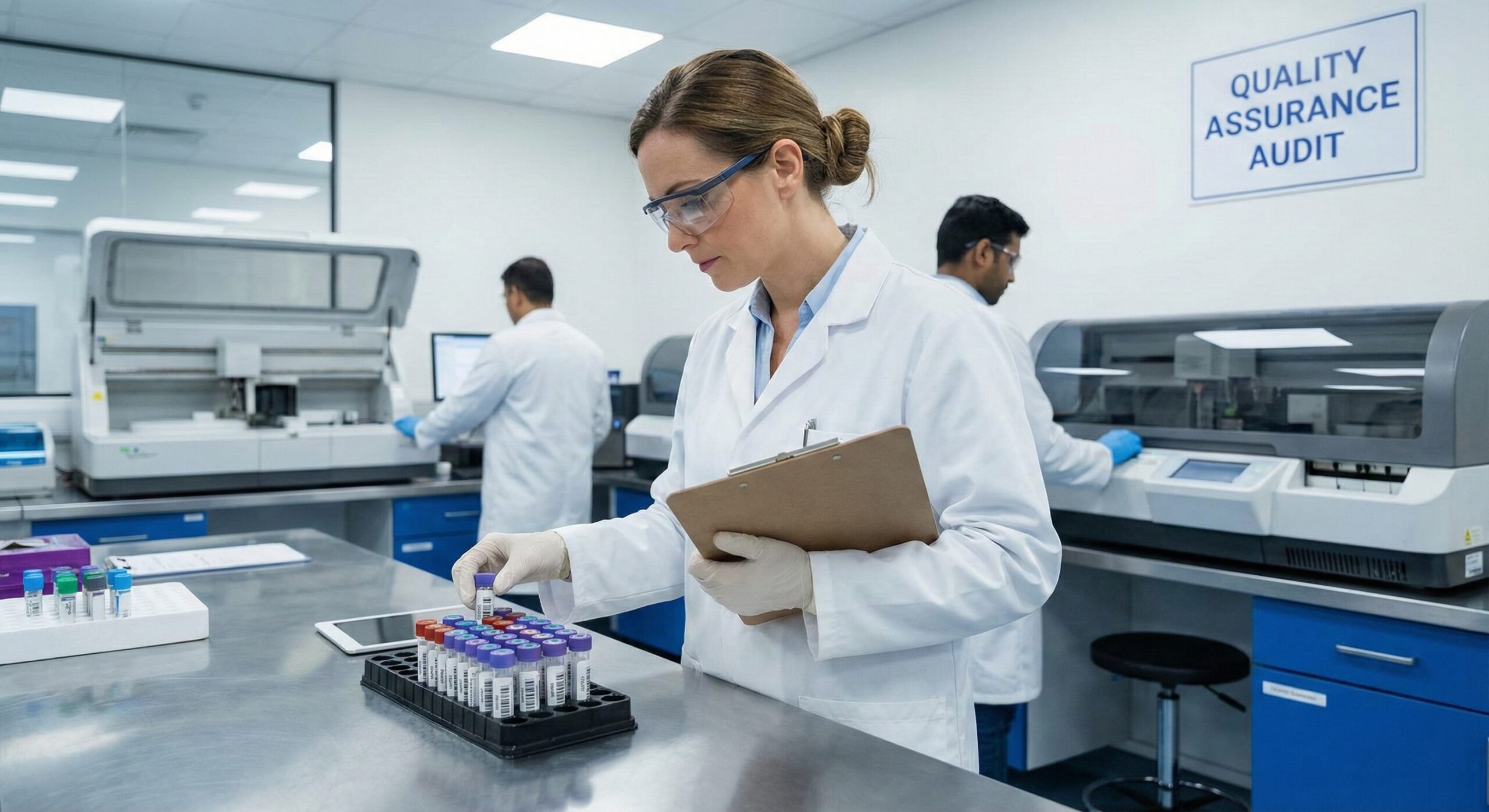
Quality assurance in drug testing means “doing the work the right way, every time.” It helps a laboratory give results that are accurate, fair, and safe to use in care. In rehab settings, drug test results can affect therapy plans, medication choices, trust, and patient safety. That is why Lynk Diagnostics uses a strong quality management system and quality management approach to protect data, reduce risk, and support better health.
Below is a simple, step-by-step guide to how quality assurance works in drug testing, and why it matters.
What “Quality Assurance” Means in Drug Testing
Quality assurance is the big plan that keeps testing reliable. It includes people, tools, rules, training, and checks. Think of it like a seatbelt system for the whole process.
Drug testing quality assurance helps a rehab facility lower risk management problems, improve communication, and keep patient safety at the center. It also supports regulatory compliance and strong documentation for an audit, inspection, or review.
Quality assurance is not only about the final report. It covers the full product lifecycle of a test result—from sample collection to data analysis and final reporting.
Why Quality Assurance Matters for Rehab Programs
When a drug test is wrong, it can cause real harm. A false negative may hide substance use. A false positive may create stress, unfair rules, or the wrong therapy plan.
Quality assurance supports:
- Safety for patients, including people in pregnancy and people with mental health needs
- Better care planning when medication is involved
- Clear risk assessment and risk management for tough cases
- Strong data integrity so the right information reaches the right team
At Lynk Diagnostics, quality assurance is part of quality management and daily management so rehab partners can feel confident in decisions.
The Quality Management System Behind the Scenes
A quality management system (QMS) is the “rulebook plus habit” for doing quality work. It helps the lab stay consistent, even on busy days.
A good QMS includes:
- Written policy and process steps
- Training and competency checks
- Document control (using the right version of each document)
- Quality control rules (daily checks)
- Internal audits and readiness for an audit or inspection
- Corrective actions when something goes wrong
- Ongoing improvement using data analysis and risk assessment
This is similar to what pharmaceutical companies use during drug development, research and development, and pharmaceutical manufacturing. Even though drug testing is not the same as making a medicine, the same quality mindset helps protect people.
From Collection to Report: Where Errors Can Happen
Drug testing has many steps. Quality assurance tries to control each step.
Specimen collection and labeling
If a sample is mixed up, the result is useless. That’s why clear labeling, sealed packaging, and strong chain-of-custody steps matter.
Transport and storage
Heat, time, and contamination can change a sample. Quality assurance includes storage rules and supply chain tracking so samples arrive in good condition.
Testing in the laboratory
The laboratory follows a set method to find an analyte (the substance being measured, like a drug or metabolite). The method must match a clear specification (what counts as positive, negative, or invalid).
Reporting and communication
Results must be shared clearly and safely. Quality assurance supports good communication so the treatment team understands what the result means—and what it does not mean.
Quality Control vs. Quality Assurance
People mix these up, so here is the simple difference:
Quality control (QC)
Quality control is the daily “check the work” step. For example:
- Running controls before patient samples
- Checking calibration settings
- Reviewing instrument flags
- Watching for contamination signals
Quality assurance (QA)
Quality assurance is the full system that makes QC possible and meaningful. QA also includes audits, training, documentation, data integrity, and improvement work.
Both quality control and quality assurance are needed for dependable testing.
Calibration, Instrumentation, and “Is the Machine Telling the Truth?”
Drug testing uses instrumentation (special lab machines) to measure analytes. But machines can drift over time. That is why calibration is so important.
Calibration means the instrument is checked against known values so it stays accurate. QA also tracks:
- Routine maintenance
- “Out-of-range” issues
- Engineer service notes
- Re-checks after repairs
This is normal in science labs, in research, and in industry settings like pharmaceutical manufacturing and biopharmaceutical work.
Method Validation and Process Validation
Before a lab uses a method, it must show the method works. This is often called validation.
Analytical validation (method validation)
This helps prove the test can correctly measure the analyte. It looks at accuracy, precision, and limits.
Process validation
Process validation checks the whole process—people, tools, timing, and steps—so the lab can repeat good results every day.
In the pharmaceutical world, process validation supports good manufacturing practice and good manufacturing practices (GMP). GMP is strongly linked to patient safety and product quality. While drug testing is not the same as manufacture of pharmaceutical products, the same ideas—control the process, reduce variation—still help a lab run safely.
Data Integrity: Keeping Results Honest and Secure
Data integrity means the data is complete, correct, and protected from mistakes or tampering. It includes:
- Who can access results
- How changes are tracked
- How software logs are reviewed
- How reports are stored and backed up
In modern labs, software development and technology choices matter. If software is confusing, staff can click the wrong thing. If systems are not secure, information can be exposed. Quality assurance includes training, access rules, and checks to protect health information.
Good data integrity also supports regulatory compliance and builds credibility—important for rehab partners, clinicians, and even marketing claims (like “fast and accurate”) that must match reality.
Risk Management: What Could Go Wrong, and How Do We Prevent It?
Quality risk management is a structured way to lower harm. It asks:
- What can fail?
- How likely is it?
- How bad would it be?
- How do we prevent or catch it?
In lab work, risk management may focus on:
- Mix-ups (wrong label, wrong patient)
- Contamination
- Instrument failures
- Human error (fatigue, unclear steps)
- Bad raw material (like faulty collection supplies)
Some labs track critical process parameters—key points that must stay in a safe range (like temperature, timing, or instrument settings).
This same “quality risk management” thinking is used across pharmaceutical quality assurance, regulation, and quality management in drug development and clinical trial work, where safety and efficacy are carefully monitored.
Audits, Inspections, and Regulatory Compliance
Labs and programs may face an audit or inspection from payers, partners, or regulators. Regulatory compliance means following rules and guidelines that apply to the work.
Quality assurance prepares the lab by keeping:
- Clean documentation
- Training records
- QC records and calibration logs
- Clear incident reports and fixes
- Proof of process validation and quality control steps
This helps protect patient safety and supports a strong reputation.
How QA Supports Special Patient Situations
Drug testing is used in many settings, and people have different needs.
Mental health and therapy
For some patients, results can be sensitive. QA supports careful communication and strong privacy so results do not cause extra harm.
Pregnancy
Pregnancy can raise extra safety concerns. QA helps the team trust results so care decisions are based on accurate information.
Complex health risks
Some patients have serious illness, including cancer, and may be on complicated medication plans. QA helps reduce mistakes when results could affect care.
How Lynk Diagnostics Uses QA to Support Rehab Facilities
Lynk Diagnostics is a drug testing center dedicated to rehab facility partners. Our quality assurance approach focuses on:
- A clear quality management system
- Strong quality control, calibration, and documentation
- Data integrity protections for information and reporting
- Risk assessment and risk management steps to reduce errors
- Consistent processes designed for patient safety and regulatory compliance
Quality assurance is not just a “lab thing.” It helps rehab teams make safer decisions and build trust with patients.
FAQs
What is quality assurance in drug testing?
Quality assurance is the full system that helps a lab produce accurate, reliable results. It includes training, documentation, audits, quality control, and data integrity checks.
What is the difference between quality control and quality assurance?
Quality control is the daily testing checks (like running controls). Quality assurance is the larger plan that makes sure the whole process stays consistent and safe.
Why does data integrity matter in a laboratory?
Data integrity protects results from mistakes, missing details, or unauthorized changes. It helps keep information reliable for care decisions and compliance reviews.
How do audits and inspections relate to drug testing?
An audit or inspection checks whether the lab follows its process, keeps records, and meets regulatory compliance expectations. Strong QA makes these reviews smoother.
How does quality assurance improve patient safety in rehab?
QA reduces errors, supports clear communication, and helps the care team trust results when planning therapy, adjusting medication, and managing risk.
Resources